






You’ve probably run into this catch-22: You need credit to get credit. Most lenders want to see a track record before they’ll give you an account to start one. The way in is one account that reports to the credit bureaus, paid on time and kept long enough to age.
If you’re new to credit, you’re far from alone: About 7 million U.S. adults had no credit record as of 2020, according to the CFPB. Nearly 1 in 10 more, about 25 million people, had a file too thin or outdated to produce a score. That includes young adults, people new to the U.S., and anyone who hasn’t borrowed in years.
Why building credit matters
Credit is your track record of borrowing money and paying it back. This payment record lives in your credit reports, kept by the three national credit bureaus: Equifax, Experian, and TransUnion.
Lenders check these reports, and the scores calculated from them, to see how likely you are to pay on time. Without a history there, they have little to go on. Insurance companies, employers, and landlords can request your credit report too.
Little or no credit history can affect a wide range of your financial life:
- Housing. Landlords might check your credit before approving an apartment or ask for a bigger deposit if your credit file is thin.
- Borrowing. Lenders usually check your credit before approving you for a home, car, or personal loan and setting your interest rate.
- Insurance. Most states let insurers use credit-based information to help set your auto or home insurance rates.
- Phone and utilities. Providers may check your credit before starting service or setting a deposit.
- Jobs. Employers can check your credit report before hiring you, but only with your written permission.
Read more >> What Are Credit Bureaus?
What you actually need to get a credit score
Lenders and the three credit bureaus use what’s called a scoring model to distill your credit report into a credit score of between 300 and 850. The two main scoring models are FICO and VantageScore.
To get either kind of score, you first need a credit report at one or more of the bureaus. Your first reported account, like a credit card, loan, or rent payment, is what puts you on the map, so you’re no longer credit invisible.
To get a FICO Score, your credit report must include:
- An account that’s been open at least six months
- A recent update, meaning at least one account reported in the last six months
- Nothing on your report that lists you as deceased
Until all three happen, FICO can’t calculate a score for you just yet. You may still have a credit file, but you’re considered unscorable until your history catches up.
VantageScore, a competing model created by the three bureaus, has a lower bar than FICO’s six-month wait. It can score a thin file with as little as a month of history, as long as an account was reported in the past two years.
Why a free app might show a score before a lender can. Many free credit apps show a VantageScore, which needs only a month or two of history. FICO, the scoring model many lenders use, needs six months of history before a score appears.
6 ways to build credit from scratch
To build credit from scratch, you need to get one account onto your credit report and keep it in good shape. Here are six ways to do it, along with their pros and cons.
1. Authorized user accounts
If someone you trust has credit in good standing, ask if they’d add you to their card as an authorized user. This strategy gets you a card on their account, but they’re responsible for paying the bill. If their card issuer reports authorized users to the credit bureaus, the account’s history can show up on your credit report too.
Pros
- You don’t have to apply or pass a credit check to be added.
- The account’s age and on-time payments can count toward your credit history.
Cons
- Late payments or high balances on their account can show up on your report too.
- Not every card issuer reports authorized users, so ask them to check.
2. Secured credit cards
A secured card requires a refundable deposit, often $200 and up, that typically becomes your credit limit. You use it and pay the bill like any other card. Because the deposit lowers the issuer’s risk, it’s easier to get than an unsecured card when you’re starting out.
Pros
- Builds credit history the same way any credit card does.
- Many issuers will return your deposit and upgrade you to an unsecured card with steady on-time payments.
Cons
- You need cash upfront to cover the deposit.
- Interest can add up fast if you carry a balance.
3. Credit-builder accounts
Credit building apps and accounts work slightly differently, but each generally offers a small loan or line of credit with one job: building your payment history. The account reports your on-time payments to the credit bureaus, helping you build your credit over time.
The Kikoff Credit Account is a revolving line of credit that reports your payments to all three bureaus. Since it’s reported as a revolving account, it counts toward your available credit and length of credit history, not just your payment history.
Pros
- No security deposit, so there’s no cash up front.
- Usually no hard credit check to open one.
Cons
- Many carry monthly plan fees.
- Usually can’t be used for everyday spending, like groceries or bills.
4. Rent and bill reporting
Housing is often the biggest payment most renters make, and yet only about 7% of renters have it reported to the bureaus. So you can pay on time every month for years and have nothing to show a lender for it.
Rent reporting fixes that, and some services cover utility and phone bills too. Your landlord may already offer it, so it’s worth asking before you pay anything. If not, a service like Kikoff’s rent reporting sends your qualified payments to the bureaus for you.
Pros
- Get credit for money you already spend.
- You won’t take on new debt.
Cons
- Some services charge fees and report to only one or two bureaus.
- Not every scoring model considers rent.
5. Starter cards
Starter cards are regular credit cards designed for people new to credit, and they can include student cards and retail store cards. Applying usually means a hard inquiry on your credit. And if you’re under 21, the Credit CARD Act requires issuers to confirm you can independently cover payments, or have a cosigner or guarantor to pick up the payments if you default.
Pros
- No deposit required.
- You can use it for everyday purchases.
Cons
- Approval isn’t guaranteed without a credit history.
- Limits can be low, and interest rates.
Choosing and using your first card
Look for a card that reports to all three credit bureaus, so your payments count everywhere, as well as low or no annual fee and a way to upgrade to a better card over time.
To build credit, pay on time every month, since that matters most. Keep your balance well below your limit, pay in full to avoid interest, and don’t close the account so your history can grow.
6. Credit-builder loans
A credit-builder loan works in reverse from a regular loan: The lender locks the loan amount in an account while you make fixed monthly payments, typically over six to 24 months. Your payments get reported, and when the loan’s paid off, you get the money. Your payments include interest and any fees, so you pay back more than you receive.
A 2020 CFPB study of credit union members found that for people without an existing loan, opening a credit-builder loan made them 24% more likely to have a credit score at all. For people already carrying debt, scores dipped slightly, likely from the weight of one more payment to keep up with.
Look for a small loan amount and a payment you can comfortably make. Late or missed payments get reported too, so a loan meant to build credit could end up hurting it.
Pros
- No upfront deposit.
- Your payments build savings you get back at the end of the term.
- Widely available at credit unions, community banks, and online lenders.
Cons
- You don’t get the money until the loan is paid off.
- You pay interest and fees.
- An extra monthly payment is hard to keep up with when money’s tight.
Read more >> What Is a Good Credit Score in 2026?
What to do if you can’t put down a deposit
• Become an authorized user. Ask someone you trust to add you to their card. It usually costs nothing, and their on-time payments can show up on your report too.
• Report your rent. Some landlords do it for free, or you can use a service like Kikoff’s rent reporting. Either way, you get credit for a bill you already pay on time.
• Use a credit building app. Many don’t require a deposit, but they often charge a monthly fee, so check the cost first.
Habits that help move the number
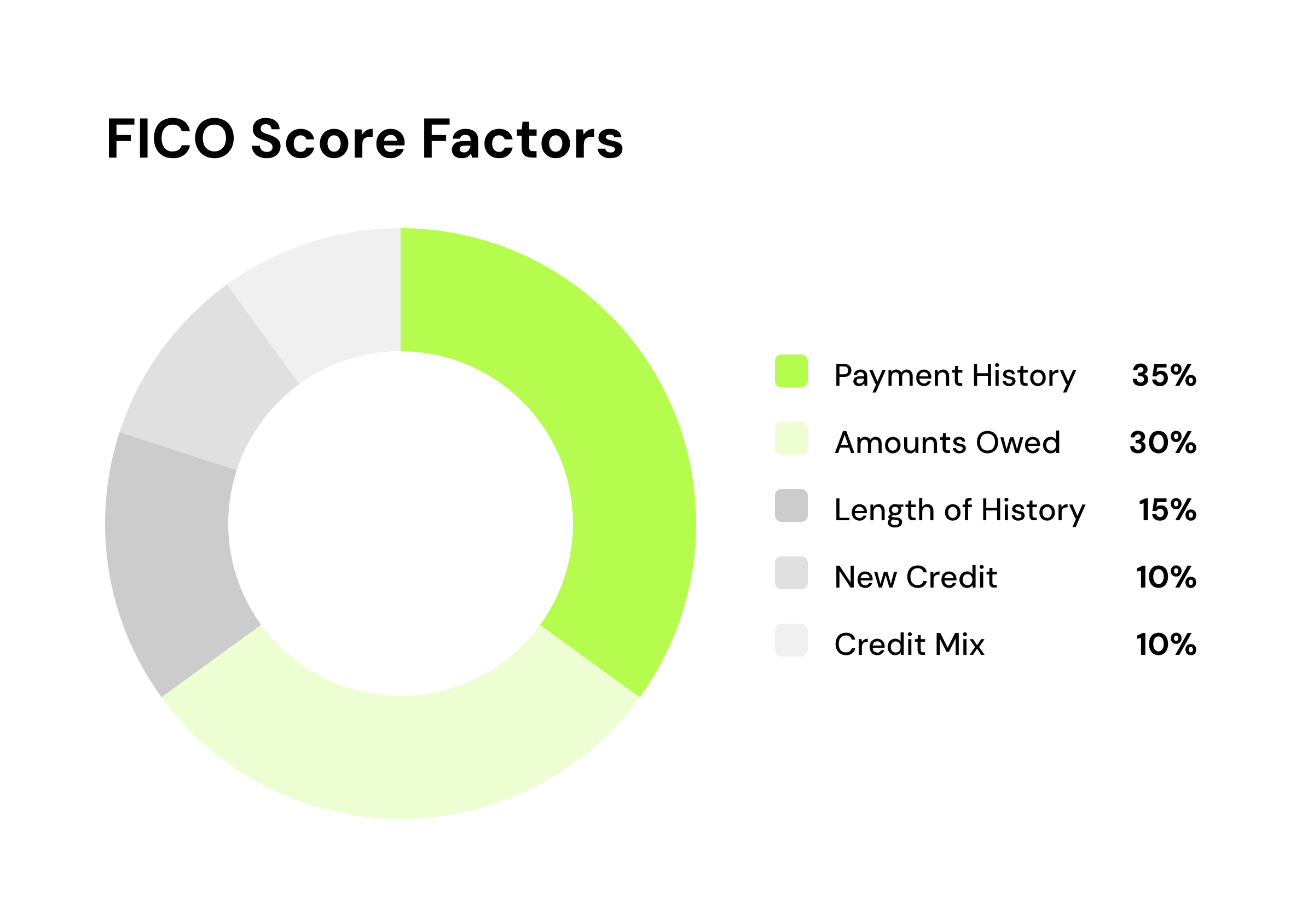
Opening your first account gets you in the door. From there, your habits shape what your credit report says about you. FICO weighs five categories, and the first two make up nearly two-thirds of your credit score.
Pay on time, every time
Payment history is the biggest factor in your FICO Score at 35%. These habits can help you stay on track:
- Set up autopay for at least the minimum payment, and keep enough on hand to cover it and avoid late payments and overdraft fees.
- Ask your issuer to move your due date to a few days after your payday.
- Turn on payment reminders in your card or banking app as backup.
Keep your balances low
Amounts owed make up 30% of your FICO Score, and a big part of that is your credit utilization, or how much of your available credit you’re using. For example, a $300 balance on a $1,000 limit means you’re using 30% of your credit.
You’ll often hear experts saying to keep your utilization under 30%. While that’s only a rule of thumb, lower is better, and paying down your balance before your statement closes can help too.
Let first accounts grow old
The length of your credit history makes up 15% of your FICO Score. It measures how long your accounts have been open, and the older your accounts are, the better for your score.
Keep your first card open and use it occasionally, so the issuer doesn’t close it for inactivity. Closing it also lowers your total available credit, which can push up your utilization and pull down your score.
Space out new applications
New credit makes up 10% of your FICO Score. When you apply for credit, each application leaves a hard inquiry on your credit, which can lower your score by a few points. Hard inquiries can stay on your report for two years, but they tend to affect your score for only about a year, according to Equifax.
A few checks close together can make you look risky to lenders, and that matters more when you’re new to credit and don’t have much history to balance them out. So apply only when you need to, and give it at least a few months between applications.
Rate shopping doesn’t count against you. Mortgage and auto loan inquiries made close together get grouped and counted as one, so three quotes can cost about what one application would. Keep them within two weeks to be safe. The window ranges from 14 to 45 days, depending on the scoring model, and you may not know which one a lender pulls.
Let your credit mix fill in on its own
Credit mix makes up 10% of your FICO Score, the smallest of the five factors. It looks at whether you have both installment loans and revolving credit, meaning something like a car loan alongside something like a credit card.
When you’re starting out, you'll almost certainly have one and not the other. That’s fine. A thin mix costs you a few points at most, and the fix isn’t worth buying. If you tried, you’d pay interest for years on a loan you don’t need to gain a handful of points. The mix fills in on its own the first time you finance a car or a home.
How long it takes to build credit from scratch
A VantageScore may show up within a month or two, and a FICO Score after about six months. A strong credit file takes longer, often a year or more of on-time payments.
If progress feels slow, that’s normal. Scores are built on time and consistency, and every on-time month adds to the record.
Read more >> How Long Does It Take to Build Credit?
Common mistakes that can cost you
- Carrying a balance to "build credit." You don’t need to pay interest to build credit. Paying your statement balance in full counts toward your on-time payment history without it.
- Applying for several accounts at once. Each application results in a hard inquiry that can stay on your report for up to two years.
- Closing your first card once you have a better one. Closing your oldest account can shorten your credit history once it drops off your report. If there’s no annual fee, keeping it open can be the smarter move.
- Missing a payment early on, or forgetting a small bill. A payment that’s 30 or more days late can be reported, and most negative information stays on your report for seven years, according to the FTC. Even a forgotten $20 balance can end up in collections, and that weighs more heavily on a thin file.
- Maxing out a small limit. On a $300 secured card, a $270 balance is 90% utilization — the same as owing $9,000 on a $10K card. Small limits fill up fast, so pay down your balance before your statement closes, not just before the due date.
- Buying a "credit privacy number." Sellers market CPNs as a clean slate, but the government doesn’t issue them. Apply with one, and you could face fines or prison.
Having trouble keeping up with payments? Call your card issuer or lender before the due date. Some offer hardship programs that can temporarily lower your payment or interest rate. A nonprofit credit counselor can help you work out a plan. The National Foundation for Credit Counseling (NFCC) connects you with free or low-cost debt counseling at 800-388-2227.
How to check your reports for free while you build
You can get your credit reports from all three bureaus every week at AnnualCreditReport.com, the only site authorized by federal law to provide free reports. Checking your own report doesn’t affect your credit, no matter how many times you look
Keep in mind that your report and your score aren’t the same thing. Your report is the detailed record of your accounts and payments. Your score is a number calculated from it, and AnnualCreditReport.com gives you the report, not the score.
When reviewing your report, watch for common reporting errors like:
- Accounts you don’t recognize
- A misspelled name or an address you’ve never lived at
- A payment marked late that you paid on time
- The same account listed twice
If something’s wrong, you can dispute it with the credit bureau and the company that reported it, and disputing is free. Or let Kikoff’s AI Credit Disputes draft letters and track responses in a few taps.
If you're not applying for credit soon, freeze it. A credit freeze is free and blocks anyone from opening new accounts in your name. It doesn't affect your score or your existing accounts, and you can lift it whenever you're ready to apply. You'll need to place one with each bureau separately.
Read more >> How to Dispute Credit Report Errors
Guides for your situation
The steps above work for almost anyone starting out. Some situations add their own complications, like a visa timeline, a gap in income, or accounts that were only in a spouse's name.
New to U.S. credit
Starting over after a life change
Military and self-employed
Read more >> Browse Kikoff guides to building credit
Bottom line
Building credit from scratch starts with one reported account, paid on time and kept open long enough to age. FICO can score you after six months, and a strong file takes a year or longer.
The hard part is getting that first account. Most options ask for a deposit, an approval you don’t have the history for yet, or someone else’s card.
A Kikoff Credit Account asks for none of those. There’s no credit check to sign up and no deposit, and it reports your on-time payments to Equifax, Experian, and TransUnion. Plans start at $5 a month.
Frequently Asked Questions
Article Sources
Disclaimer: The information provided in this blog post is meant for informational purposes only and does not constitute financial advice.