.jpg)
.jpg)



Nobody is born with a credit score. If you’re starting from scratch, it generally takes at least six months of account history to meet the requirements for a FICO Score, while a VantageScore may be available sooner.
Getting your first score is different from building a well-established credit history. There is no fixed deadline for reaching a particular score, but you can start with an affordable account that reports your activity and payments you can consistently manage.
How long does it take to build credit?
The timeline depends on your starting credit history and the scoring model. If you have no reported accounts, you’ll first need activity that appears on a credit report.
Before opening an account, ask which credit bureaus it reports to:
- Experian
- Equifax
- TransUnion
An account that reports to all three can help you establish history across your reports. Not every provider reports to every bureau, so check before applying.
For most FICO Scores, your report must include an account opened at least six months ago and an account reported to the bureau within the past six months. The same account can satisfy both requirements.
VantageScore can score shorter credit histories, so you may see one before you qualify for a FICO Score. When it appears also depends on when your account information is reported and when your score provider updates it.
Your first score is a starting point: Meeting a scoring model’s minimum requirements does not guarantee a particular score or approval for a loan. Lenders may use a different score from the one you see in an app.
If you already have credit history, you are not starting the six-month clock over after a setback. What happens next depends on the information already on your reports and the activity added over time.
Read more >> How to Read a Credit Report
What does length of credit history mean?
Length of credit history describes how long you’ve had reported credit accounts. It is not just the time since you first borrowed money.
FICO considers several aspects of account age, including:
- Age of your oldest account: How long your longest-established account has been open
- Average account age: The average age of the accounts considered in the calculation
- Age of your newest account: How recently you opened an account
Opening a new account can lower your average account age. Several applications can also add hard inquiries, which are credit checks associated with applications and can affect your scores.
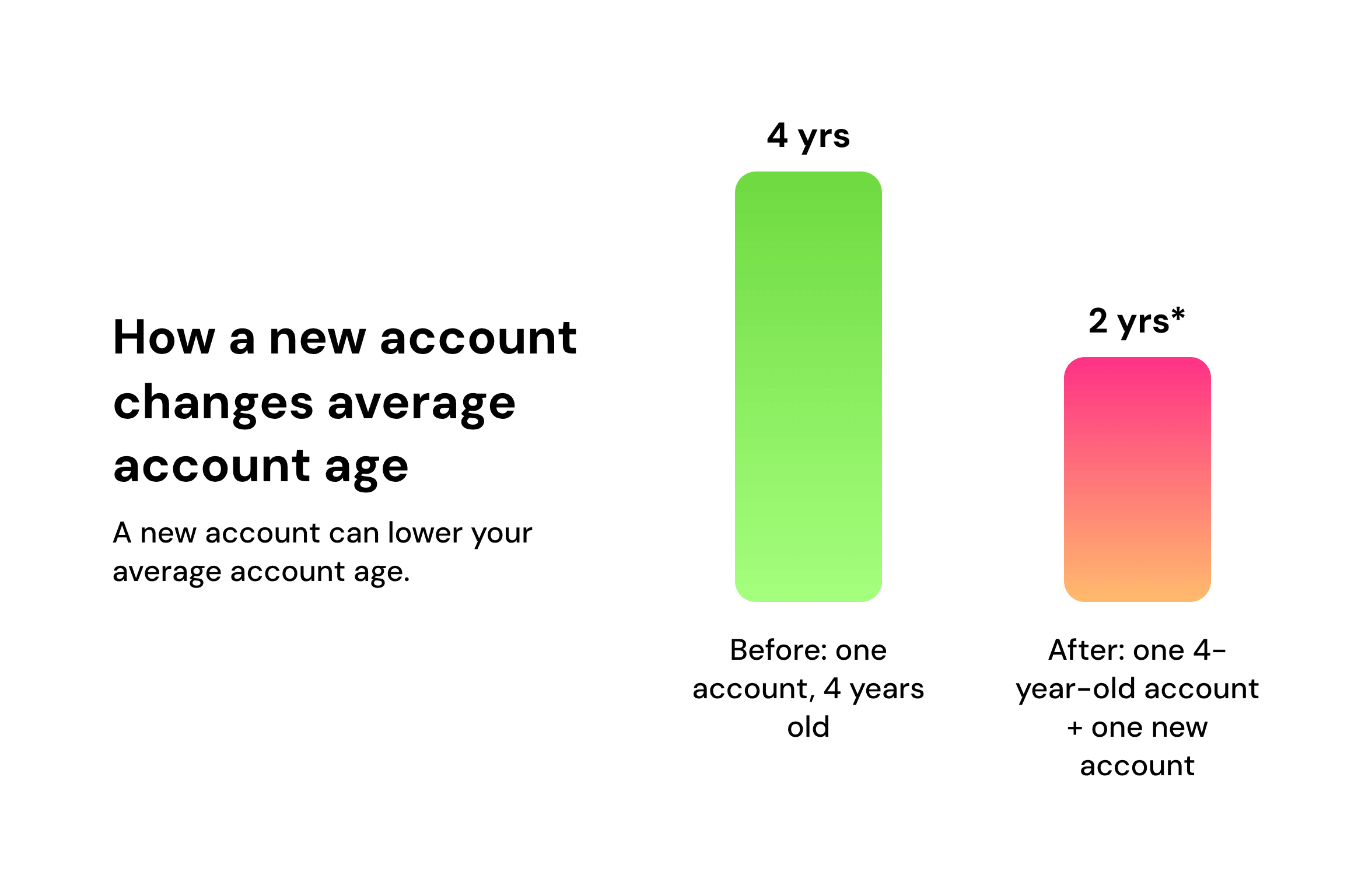
That does not mean opening an account is always a mistake. Choose accounts because they fit your needs and budget, not because you expect more accounts to build credit faster.
How does credit history length impact credit scores?
Length of credit history accounts for 15% of a typical FICO Score. The five main categories are:
- Payment history: 35%. Whether you pay credit accounts on time
- Amounts owed: 30%. Your balances, including how much available revolving credit you use
- Length of credit history: 15%. The ages of your credit accounts
- Credit mix: 10%. The types of credit accounts you have
- New credit: 10%. Recent applications and newly opened accounts
Credit utilization is part of amounts owed, not the entire category. It measures how much of your available revolving credit, such as credit card limits, you are using.
VantageScore also considers account history, but its categories and weights differ by model version. A single percentage breakdown does not apply to every VantageScore.
Time matters, but it is not the only factor. A longer history does not cancel out missed payments or high balances, and a short history does not automatically mean a poor score.
You do not need to borrow for variety: Credit mix is one scoring factor, not a reason to take out a loan you do not need. Focus on managing accounts that serve a purpose and fit your budget.
Read more >> What Is a FICO Score?
How to get approved for credit with little credit history
Some accounts are designed for people with limited credit history, but approval is not automatic. Compare eligibility requirements, fees, and payment obligations before applying.
Apply for a secured or student credit card
A secured credit card requires a security deposit, which often determines your credit limit. The deposit backs the account; it does not replace your monthly payments.
Choose a card that reports to the credit bureaus and has costs you can afford. Paying the full statement balance by the due date generally lets you avoid interest on purchases when the card offers a grace period.
Some issuers let eligible customers move to an unsecured card and receive their deposit back, but the requirements vary. Do not assume an upgrade will happen on a particular schedule.
Student credit cards may be another option if you meet the issuer’s requirements. Being a student does not guarantee approval, and you still need to be able to make the required payments.
Try a credit-builder app
Credit-builder apps offer different products, so check what you are signing up for. Some provide credit accounts, while others offer loans or payment-reporting services with different fees and bureau coverage.
Kikoff’s Credit Account is a free revolving credit line used only for purchases in the Kikoff Store. It charges no interest and reports on-time payments to all three credit bureaus, with no hard credit check to sign up.
Approval and identity verification requirements apply. Any purchases you finance still need to fit your budget, and missed payments can negatively affect your credit.
Become an authorized user
A trusted friend or family member may be willing to add you as an authorized user on a credit card. That lets you use the account, but it does not make you a joint account holder.
Before being added, ask whether the issuer reports authorized-user accounts to the bureaus. Whether the account helps depends on its history, reported balances, and how the scoring model treats it.
Choose an account with a reliable payment history and manageable balances. Missed payments or high balances can also affect your credit, so being added is not a guaranteed benefit.
Bottom line
Building credit takes reported activity and time. Your first score may become available within months, but there is no universal schedule for reaching a particular score or qualifying for financing.
Start with an account you can afford, make payments on time, and check that your reports reflect the activity correctly. You do not need several new accounts or interest charges just to get started.
If a store-based credit line fits your needs, explore Kikoff’s Credit Account. It reports on-time payments to all three credit bureaus, with no interest and no hard credit check to sign up. Get started with Kikoff.
Frequently Asked Questions
Article Sources
Disclaimer: The information provided in this blog post is meant for informational purposes only and does not constitute financial advice.