.jpg)
.jpg)



Military life can make it difficult to build credit in your own name. Frequent moves may interrupt employment, and household accounts may be opened primarily in the servicemember’s name.
But your income, job title, and military-spouse status are not part of your FICO Scores. You can build an independent credit history from wherever you are stationed. Here are the tools, military protections, and risks to understand.
How to build credit as a military spouse
If you’re married to a servicemember and want to build credit in your own name, these strategies can help you get started.
Understand when SCRA benefits apply
The Servicemembers Civil Relief Act provides several financial and legal protections to eligible servicemembers and, in certain situations, their families.
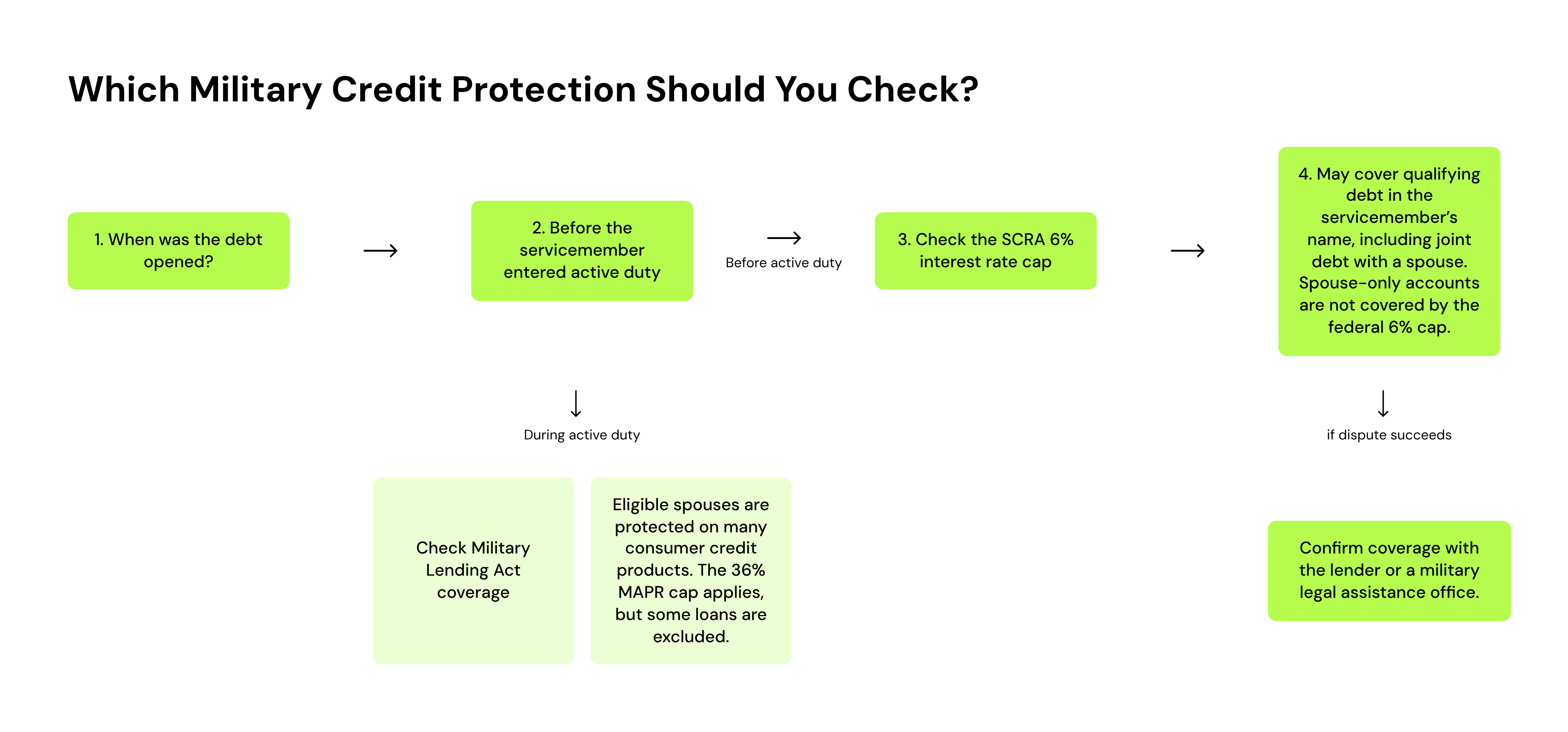
The SCRA’s 6% interest rate cap applies to most debts the servicemember took out before entering military service, including joint debts with a spouse. It does not apply to an account held only in the military spouse’s name, although a lender or state law may provide additional benefits.
To request the cap, the servicemember generally must send the creditor written notice and a copy of their military orders no later than 180 days after military service ends. For a qualifying request, the creditor must forgive interest above 6%, not postpone it for later.
The lower rate and payment may make a qualifying debt easier to manage, but the SCRA cap does not directly reduce credit utilization or guarantee a credit score change.
If you’re unsure whether a debt qualifies, contact a military legal assistance office.
Military spouse protection: The Military Lending Act protects eligible spouses on many consumer credit products opened during active duty. It generally caps the Military Annual Percentage Rate at 36% and prohibits certain loan terms. Mortgages and auto loans secured by the vehicle being purchased are generally excluded. Check MLA coverage before borrowing.
Consider a secured credit card
A secured credit card may be an option if you have limited credit history or cannot qualify for a traditional card. You provide a deposit that usually helps determine your credit limit, then use and repay the card like a traditional credit card.
Before applying, compare the annual fee, APR, deposit requirements, and which credit bureaus receive payment information. Use the card only for purchases you can afford, and pay the bill on time. Paying the statement balance in full can also help you avoid interest.
If you’re 21 or older, a card issuer may consider income you can reasonably access, including income regularly deposited into a joint account or used to pay your expenses.
Use a credit-building product
Online credit-building products can be convenient when military life involves frequent moves. However, their costs, terms, and credit-bureau reporting vary, so review those details before signing up.
Kikoff’s Credit Account is a free revolving line of credit used only for purchases in the Kikoff Store. It charges no interest and reports your on-time payments to Equifax, Experian, and TransUnion. There’s no hard credit check to sign up.
Become an authorized user
If your spouse has a well-managed credit card, consider asking to become an authorized user. First, ask whether the issuer reports authorized users to the credit bureaus. If it does, the account may appear on your credit reports.
An account with on-time payments and low balances may help your credit, while late payments or high balances could hurt it. Results vary, and you are relying on your spouse to manage the account responsibly.
Authorized-user status can help add information to your credit reports, but it is not the same as holding an independent account in your own name.
Monitor both credit files
You and your spouse have separate credit reports, even if you share accounts. Each of you should review your reports through AnnualCreditReport.com and check for unfamiliar accounts, incorrect balances, and reporting errors.
An eligible servicemember can place an active-duty fraud alert and enroll in free electronic credit monitoring through each nationwide credit bureau. These military benefits do not automatically extend to a spouse’s separate credit file.
Military spouses can still freeze their credit for free. If you find signs of identity theft, report them at IdentityTheft.gov.
Read more >> How to Build Credit While on Active Duty
How credit works for military spouses
Your income, occupation, employment history, and military-spouse status are not included in FICO Scores. FICO generally groups the information it does use into five categories:
- Payment history: 35%
- Amounts owed: 30%
- Length of credit history: 15%
- Credit mix: 10%
- New credit: 10%
These percentages reflect the general population. Their importance can vary depending on your credit profile.
Income can still affect whether you qualify for new credit because lenders consider your ability to repay. That is separate from how your credit score is calculated.
If military moves interrupt your employment, focus on accounts you can afford and manage consistently from anywhere. An account in your own name can also help you maintain credit history that does not depend entirely on your spouse’s accounts.
Read more >> How to Lower Your Credit Utilization
Common mistakes to avoid
As you build credit as a military spouse, watch for these common mistakes:
- Assuming a debt held only in your name qualifies for the SCRA’s 6% cap
- Taking out high-cost credit without checking whether the MLA applies
- Assuming an active-duty alert or military credit monitoring covers your separate credit file
- Using credit cards to cover more PCS or deployment expenses than you can repay
- Closing older accounts without first considering the fees, spending risk, and possible credit effects
- Submitting several credit applications within a short period
- Checking only your spouse’s credit reports instead of reviewing your own
Moves and deployments can make bills easier to overlook. Account alerts and automatic payments may help, but check that enough money is available before each withdrawal and continue reviewing your statements.
Read more >> How to Place a Fraud Alert
Bottom line
Military life may complicate employment and account management, but it does not prevent you from building credit in your own name.
Start by understanding which debts qualify for SCRA protection and whether the MLA applies before taking out new credit. Then choose an affordable account that reports your payments, keep balances manageable, and review your credit reports separately from your spouse’s.
Kikoff’s Credit Account reports your on-time payments to all three credit bureaus, with no hard credit check to sign up. Get started today.
Frequently Asked Questions
Article Sources
Disclaimer: The information provided in this blog post is meant for informational purposes only and does not constitute financial advice.