.jpg)
.jpg)



If you’re a member of the military on active duty, you might not spend much time thinking about your credit. However, military life can be financially complex. If you aren’t paying close attention, your credit could change without your knowledge.
In this article, we’ll look at how to build credit while serving on active duty.
How credit works for active-duty military
Frequent moves, deployments, and changes in expenses can make it harder to stay on top of your credit. Military service itself is not a factor in your FICO Scores, but missed payments and growing card balances can affect them.
The Servicemembers Civil Relief Act (SCRA) provides financial and legal protections to eligible servicemembers. According to the U.S. Department of Justice, these protections include:
- A 6% interest rate cap, including most fees, on qualifying debts taken out before military service
- The right to end certain residential and vehicle leases after qualifying military orders
- Protections involving some evictions, foreclosures, repossessions, and default judgments
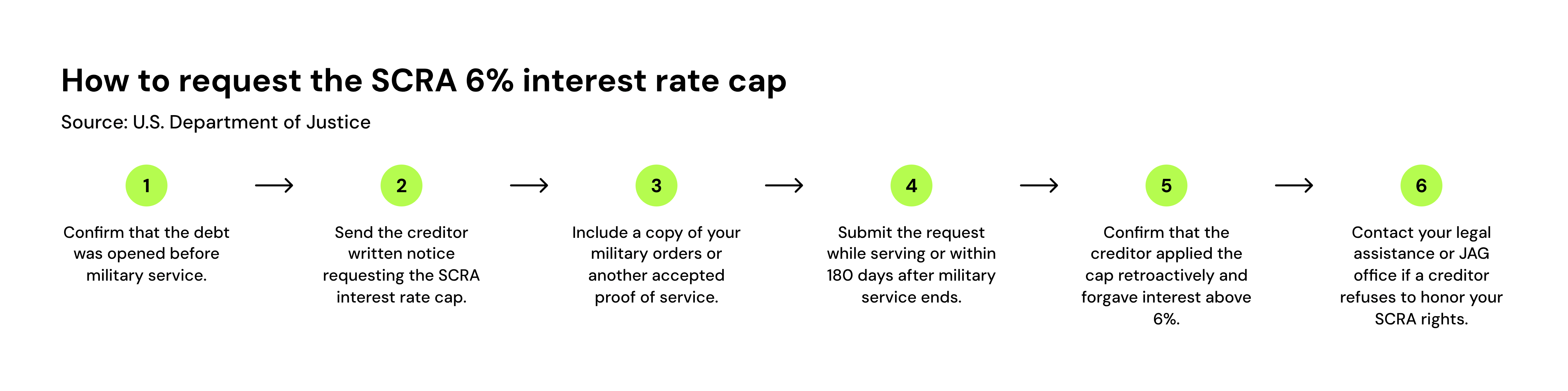
Some SCRA protections require you to take action. To request the 6% interest rate cap, send each creditor written notice and a copy of your military orders. You can make the request while serving or within 180 days after your service ends. Once the creditor receives a valid request, it must apply the cap retroactively and forgive interest above 6% rather than postponing it.
If a creditor refuses to honor your SCRA rights, contact your installation’s legal assistance or JAG office.
Know the difference: The SCRA’s 6% cap applies to qualifying debts opened before military service. The Military Lending Act applies to many types of consumer credit opened while you are covered and limits the Military Annual Percentage Rate to 36%.
How to build credit while on active duty
For people wondering how to build credit while serving on active duty, these are a few options that may help.
Open a secured credit card
If you have poor credit or a limited credit history, you may not be approved for a traditional credit card. A secured credit card can be a useful alternative, whether you’re in the military or not.
Here’s how a secured card works:
- If you’re approved, you provide a refundable security deposit
- The deposit usually helps determine your credit limit
- You use the card and make payments like a traditional credit card
- Some issuers may eventually offer to move you to an unsecured card and return your deposit
The deposit reduces the issuer’s risk, but it does not replace your monthly payments. If you don’t repay what you owe, the issuer may use the deposit to cover the unpaid balance. Review the card’s terms to learn when and how your deposit will be returned.
Try a credit-builder app
Credit-building apps can be useful if you want to add positive payment history without applying for a traditional credit card. Before signing up, compare the cost, payment requirements, bureau reporting, and what happens if you miss a payment.
Kikoff’s Credit Account is a free revolving line of credit used for purchases in the Kikoff Store. It charges no interest and reports your on-time payments to all three credit bureaus. There’s no hard credit check to sign up.
Make all payments on time
Paying on time is one of the most important things you can do for your credit. Payment history accounts for about 35% of a FICO Score for the general population, according to FICO.
A missed payment can hurt your credit, but the effect depends on factors such as how late it is, how recently it happened, and the rest of your credit profile. Accounts sent to collections can cause additional damage.
Try to make at least the minimum payment by the due date. If you think you may not be able to pay, contact the creditor before the payment is due and ask about hardship options.
Ask to become an authorized user
This may not be an option for everyone. However, if you have a friend or relative with good credit, you might ask about becoming an authorized user on their account.
If the card issuer reports authorized users, the account may appear on your credit reports. Before being added, ask which credit bureaus the issuer reports to.
An account with on-time payments and low balances may help your credit. Late payments or high balances could hurt it. Choose someone you trust and review the account’s payment history and current balance before agreeing.
Read more >> Why on-time payments matter when building credit
Common mistakes to avoid
People wondering how to build credit while serving on active duty should be especially wary of these common mistakes:
- Not requesting SCRA protections when you qualify
- Missing payments
- Carrying card balances that are difficult to repay
- Failing to monitor your credit reports
Active-duty servicemembers have the right to free electronic credit monitoring from the nationwide credit bureaus, according to the Federal Trade Commission. You can also place a free active-duty fraud alert on your credit reports. The alert tells businesses to verify your identity before opening new credit in your name.
Autopay can reduce the chance of accidentally missing a payment during a move or deployment. Check your bank balance and confirm that each payment went through, since a failed automatic payment could still lead to late or overdraft fees.
Bottom line
Military life can make credit easy to neglect, but the fundamentals stay the same wherever you are stationed. Make payments on time, keep card balances manageable, monitor your credit reports, and use the military protections available to you.
Request SCRA benefits when you qualify rather than assuming they have been applied. If you have questions about your rights, contact your installation’s legal assistance or JAG office.
Kikoff’s Credit Account reports your on-time payments to all three credit bureaus, with no hard credit check to sign up. Every month you pay on time adds to the payment history in your credit profile. Get started today.
Frequently Asked Questions
Article Sources
Disclaimer: The information provided in this blog post is meant for informational purposes only and does not constitute financial advice.