


.jpg)
.jpg)



Want to build credit without creating avoidable setbacks? Focus on a few habits that matter most: pay reported accounts on time, keep credit card balances manageable, apply for new credit only when it serves a purpose, and review your credit reports for errors.
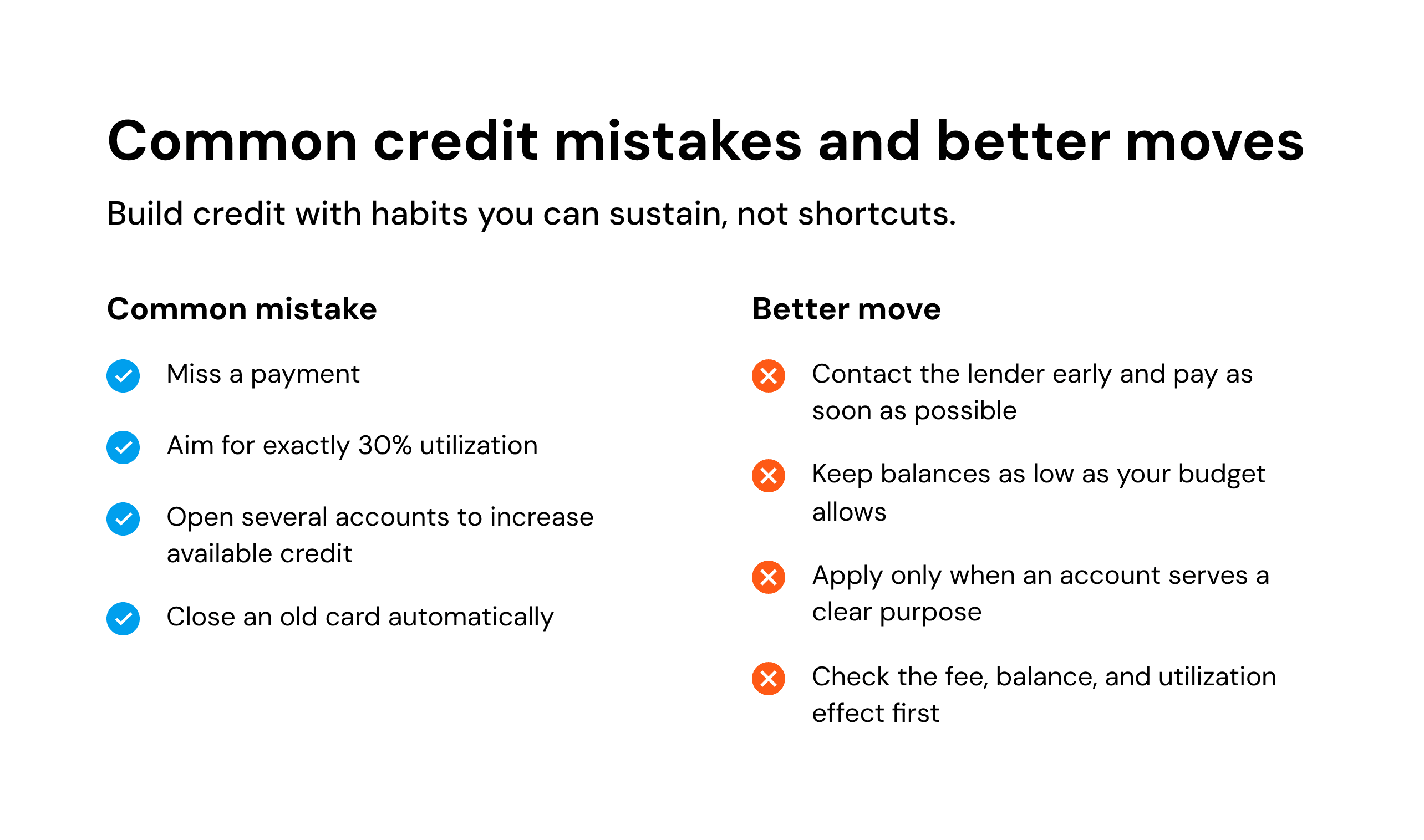
Some common credit-building mistakes come from advice that is incomplete or oversimplified. For example, 30% is not a magic utilization target, closing a credit card does not immediately erase its history, and making the minimum payment on time is better than missing the payment entirely.
What are the most common credit-building mistakes?
The same habits that make credit harder to manage can also affect the information used to calculate your credit scores. Here are six mistakes to watch for.
Missing payments
Payment history carries more weight than any other category in a typical FICO Score calculation. A payment reported as late can affect your score, although the impact depends on your overall credit profile and how recent, frequent, and severe the late payments are.
Accurate late-payment information can generally remain on a credit report for up to seven years. Its effect may lessen as it gets older and you add more positive payment history.
If you expect to miss a payment, contact the lender before the due date. Ask whether it offers a hardship program, payment arrangement, or due-date change, but confirm how any arrangement will be reported.
Already missed the due date? Pay as soon as you can and contact the lender. Fees may apply before a late payment appears on your credit report, and waiting longer can make the problem more expensive.
If debt payments are becoming difficult to manage, consider speaking with a nonprofit credit counselor about your options.
Carrying high credit card balances
Credit utilization is the percentage of your available revolving credit that is currently in use. Scoring models may look at utilization on each card and across all your cards.
For example, $3,000 in reported balances against $10,000 in total limits equals 30% utilization. That does not make 30% a guaranteed safe target. FICO says there is no sharp score drop at exactly 30%, although lower reported utilization is generally better for your scores.
You do not need to carry a balance or pay interest to build credit. Paying the full statement balance by the due date can help you avoid interest on purchases when your card provides a grace period.
Applying for too many accounts at once
A credit card application typically creates a hard inquiry, which may affect your score. Opening several accounts over a short period can also lower the average age of your accounts and add payments to your budget.
A larger total credit limit might lower your utilization, but that alone is not a good reason to submit several applications. Before applying, compare the account’s fees, interest rate, eligibility requirements, and actual value to you.
Checking your own credit is a soft inquiry and does not affect your score.
Closing an old credit card without checking the effect
Closing a credit card does not immediately remove its history from your credit reports. A closed account in good standing may remain on your reports and contribute to your credit history for years.
However, closing the card removes its credit limit from your available revolving credit. That can raise your utilization if you carry balances on other cards.
Before closing a card: Check whether it has an annual fee, whether any balance or recurring charge remains, and how losing its credit limit would affect your utilization. Closing may still make sense if the fee is not worthwhile or keeping the account open encourages overspending.
Ignoring your credit reports
Your credit reports show the accounts and payment information being reported about you. Reviewing all three can help you find unfamiliar accounts, incorrect balances, or payments mistakenly marked late.
You can currently request a free report from Equifax, Experian, and TransUnion every week through AnnualCreditReport.com. The information may differ between reports, so review each one rather than assuming they match.
If you find inaccurate information, dispute it with each bureau displaying the error and with the company that supplied it. Accurate negative information generally cannot be removed simply because it hurts your credit.
Making only the minimum payment
Making at least the minimum payment by the due date keeps the account from becoming delinquent. The mistake is assuming that minimum payments are the fastest or least expensive way to manage a balance.
If you make only minimum payments, paying off the balance can take years and cost more in interest. A continuing balance can also keep your reported utilization elevated.
Pay the full statement balance when you can do so without neglecting essentials. If that is not realistic, pay at least the minimum on time and put additional money toward the balance when your budget allows.
Read more >> Why Only Paying the Minimum Hurts Your Credit
What habits help you avoid these mistakes?
You do not need a complicated credit strategy. A few repeatable habits can prevent most of the problems above.
Make payment dates easier to manage
List the due dates for every credit account and compare them with your paydays. Set reminders or use autopay for at least the minimum if you can reliably keep enough money in the payment account.
Some card issuers allow you to move your due date. Grouping payments into one or two predictable parts of the month may make them easier to track.
Keep credit card balances manageable
Aim to charge only what your budget can repay. If a card balance is growing, stop adding new purchases when possible and choose a repayment amount you can sustain.
Credit card issuers typically report balances periodically, often around the end of a billing cycle. This means the balance shown on your credit report may not be the same as the current balance in your account.
Apply with a purpose
Before applying for an account, ask what it adds to your financial plan. A card or loan should offer a useful benefit and a payment you can afford, not just the possibility of changing your score.
When available, check whether the lender offers prequalification with a soft inquiry. Prequalification is not a guarantee of approval, but it may help you compare options before submitting a full application.
Review your credit regularly
Check your credit reports for unfamiliar accounts, incorrect balances, and payment errors. You can also use a monitoring service for alerts, but an alert does not replace reviewing the underlying reports.
If you check a credit score, note which scoring model and bureau supplied it. Different models and different credit-report data can produce different scores.
Read more >> How to Read a Credit Report
How to build credit effectively
Building credit takes reported activity and time. Start with accounts you already have before adding something new.
- Pay every reported account by its due date.
- Keep credit card balances low enough to fit your repayment plan.
- Apply for new credit only when the account serves a clear purpose.
- Review all three credit reports and dispute inaccurate information.
- Avoid paying interest solely because you think it will build credit.
- Choose credit-building products only after reviewing their costs and terms.
If you have little or no credit history, one affordable account that reports your payments may be enough to get started. Adding several accounts at once is not necessary.
Kikoff offers paid plans that use a Kikoff Credit Account to finance the monthly plan. Your balance and repayments are reported to Equifax, Experian, and TransUnion, with no credit check to sign up. Plans currently start at $5 per month, and features vary by plan, so review the current terms before choosing one.
Read more >> How Long Does It Take to Build Credit?
Bottom line
Avoiding common credit-building mistakes is mostly about making deliberate choices. Pay reported accounts on time, keep balances manageable, review your reports, and understand the possible effects before applying for or closing an account.
If you make a mistake, focus on getting current and returning to habits you can sustain. One setback does not determine your entire credit history.
When you are ready to add positive payment activity, start building credit with Kikoff.
Frequently Asked Questions
Article Sources
Disclaimer: The information provided in this blog post is meant for informational purposes only and does not constitute financial advice.