.jpg)
.jpg)


If you’ve filed for bankruptcy, you may be wondering what comes next for your credit. Bankruptcy can provide relief from overwhelming debt, but it doesn’t erase every obligation or wipe your credit history clean.
You can build credit after bankruptcy by checking your credit reports, keeping remaining payments manageable, and choosing new accounts carefully. You don’t have to wait until the bankruptcy disappears from your reports to start moving forward.
How to build credit after bankruptcy
Start with a budget that leaves room for housing, food, transportation, and any debts you still owe. A new credit account should fit around those needs, not make them harder to cover.
If your bankruptcy case is still active, talk with your bankruptcy attorney before applying for credit. During a Chapter 13 repayment plan, taking on new debt requires consulting the trustee, and court approval may be required.
Take out a secured credit card
A secured credit card may be an option if you don’t qualify for a traditional card. You provide a security deposit, which usually determines your credit limit, and then make payments on your purchases.
The deposit is not a substitute for monthly payments. Check the card’s fees, deposit-refund terms, and whether it reports to all three credit bureaus before applying.
Use the card for a small expense you’ve already budgeted for, and aim to pay the full statement balance by the due date. Some issuers offer a path to an unsecured card, but an upgrade isn’t guaranteed.
Use a credit-builder app
Credit-building apps offer different products, so check what you’re signing up for and what it costs. Some offer loans, while others offer credit lines or payment-reporting services.
Kikoff’s Credit Account is a free revolving credit line used only for purchases in the Kikoff Store. There’s no interest and no hard credit check to sign up, and Kikoff reports your on-time payments to all three credit bureaus.
The Credit Account itself is free, but purchases and paid Kikoff Credit Service plans have costs. Review the payment commitment before signing up, especially if your budget is still settling after bankruptcy.
Ask about becoming an authorized user
A trusted friend or family member may be willing to add you to their credit card as an authorized user. If the issuer reports authorized-user accounts, the account’s history may appear on your credit report.
Choose an account with consistent on-time payments and low balances. Late payments or high balances could work against you, and the effect depends on the issuer’s reporting practices and the scoring model.
Agree on whether you’ll use the card and how any purchases will be repaid. The primary account holder remains responsible for the bill.
Read more >> How to Get a Secured Credit Card
How bankruptcy affects your credit score
Bankruptcy is a negative item on your credit report and can make qualifying for credit more difficult. Its effect depends on your existing credit history, including any missed payments or collections already reported.
There isn’t one reliable point-drop estimate that applies to everyone. The type of bankruptcy also affects how long the filing generally remains on your reports.
Chapter 7 vs. Chapter 13
Chapter 7 and Chapter 13 handle debts differently. Neither guarantees that every debt will be discharged, meaning you’re no longer personally required to repay it.
The Chapter 7 and Chapter 13 rules also differ in how they protect property and handle repayment. The credit-report timelines start with the filing date, not the discharge date.
Child support, alimony, certain taxes, and many student loans generally aren’t discharged. A bankruptcy attorney can explain which debts and property protections apply to your situation.
What to do immediately after bankruptcy is discharged
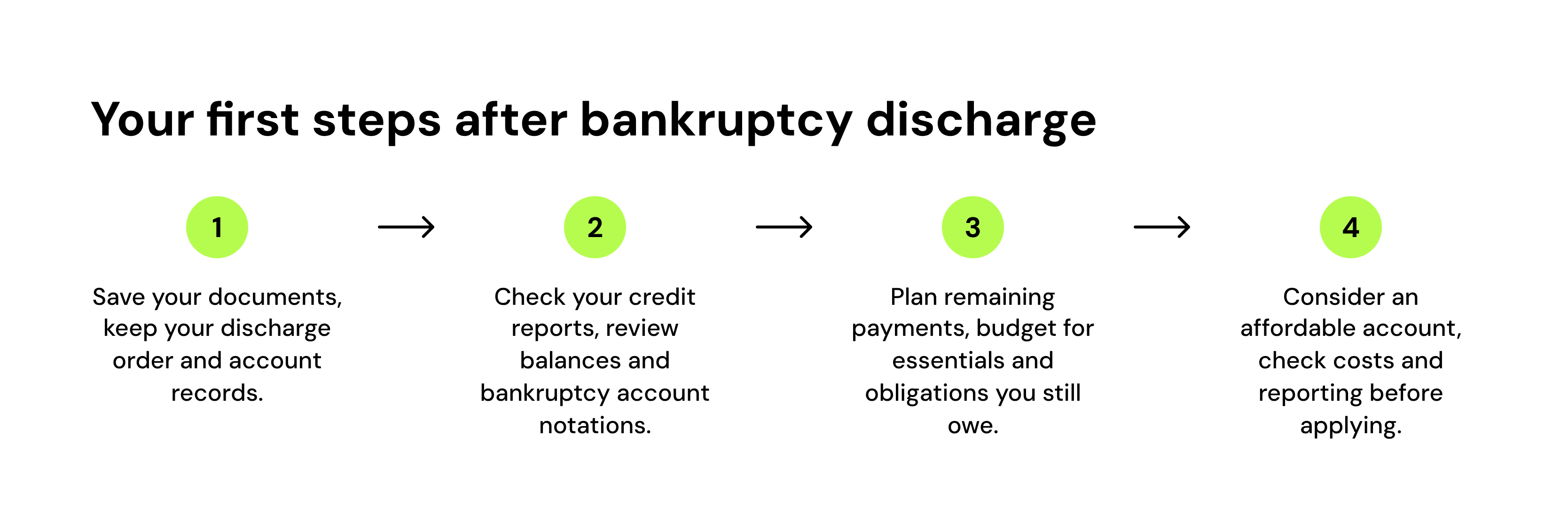
A discharge is an important milestone, but there are still a few things to check. Start with your paperwork, your reports, and the payments you remain responsible for.
Keep copies of documents
Keep your discharge order and other bankruptcy documents somewhere safe. They can help you explain your case or support a dispute if an account is reported incorrectly.
Ask your attorney which obligations remain and what records you should retain. A bankruptcy discharge does not necessarily remove a lender’s rights against property securing a debt, such as a home or car.
Review your credit report
Get your credit reports through AnnualCreditReport.com and check how the bankruptcy and affected accounts are listed. Accounts whose debts were fully discharged generally should show a zero balance and a bankruptcy notation, rather than an ongoing past-due balance.
Discharge does not erase accurate payment history from before bankruptcy. Debts you took on afterward, or obligations that weren’t discharged, can still be reported as late if you miss payments.
If something looks wrong, dispute it with the credit bureau and the company that reported it. Ask your bankruptcy attorney for help if you’re unsure whether a particular debt was discharged.
Start taking steps to build your credit
Build a budget around your current income, essential expenses, and remaining obligations. Payment reminders can help, and autopay may be useful if you can reliably keep enough money in the account.
If your budget allows, consider one affordable account that reports payment activity. You don’t need several new accounts, and you don’t need to pay interest to build credit.
A nonprofit credit counselor can help you review your budget if you’re unsure what you can comfortably afford.
Read more >> How to Read a Credit Report
Common mistakes to avoid
After bankruptcy, the goal is to build a payment routine you can sustain. Watch for products or decisions that add costs without fitting your needs.
Using too much available credit
A small credit limit can be easy to use up, even with everyday purchases. Credit utilization is the percentage of your available revolving credit you’re using, and lower reported balances are generally better for your credit.
Keep purchases within your budget and aim to pay the full statement balance by the due date. If you can’t pay it in full, make at least the minimum payment on time and work toward reducing the balance.
Carrying debt from month to month isn’t required to build credit and can lead to interest charges.
Applying for too much credit at once
Many credit applications trigger a hard inquiry, which can affect your credit score. Several applications also create more opportunities to take on payments you may not need.
Check eligibility requirements and fees before applying. If a lender offers prequalification using a soft credit check, it can help you explore options, though it doesn’t guarantee approval.
Falling for credit repair scams
Be cautious of companies that promise to erase your bankruptcy or charge upfront for credit repair. Accurate, current negative information cannot legally be removed just because you pay a company.
You can dispute errors yourself for free. If someone tells you to dispute information you know is accurate or apply for credit using a different identity, walk away.
Bottom line
Bankruptcy can stay on your credit reports for years, but you can start building positive payment history before it disappears. Keep your discharge documents, review your reports for errors, and make a plan for the obligations you still owe.
When you’re ready for a new account, choose one that fits your budget. Consistent payments matter more than opening several accounts at once.
Kikoff’s Credit Account reports your on-time payments to all three credit bureaus, with no interest and no hard credit check to sign up. If it fits your post-bankruptcy budget, build credit with Kikoff.
Frequently Asked Questions
Article Sources
Disclaimer: The information provided in this blog post is meant for informational purposes only and does not constitute financial advice.