.jpg)



You probably already know that your credit score is an indicator of your overall financial health. It might be tempting to dismiss it as “just a number,” but it’s the number lenders look at when they’re trying to decide whether to extend credit to you.
But did you know that there are multiple types of credit scores? Today, we’ll be focusing on the credit score used by most top lenders: the FICO score.
What is a FICO score?
What is FICO? Scores are created using a numerical calculation based on several weighted factors (more on that in a minute). FICO scores range from 300 to 850, with 850 being perfect credit. “FICO” stands for “Fair Isaac Corporation,” the name of the data analytics company that came up with the calculation.
So what is a decent FICO score? These are some general FICO score ranges:
- Exceptional: 800-850
- Very Good: 740-799
- Good: 670-739
- Fair: 580-669
- Poor: 300-579
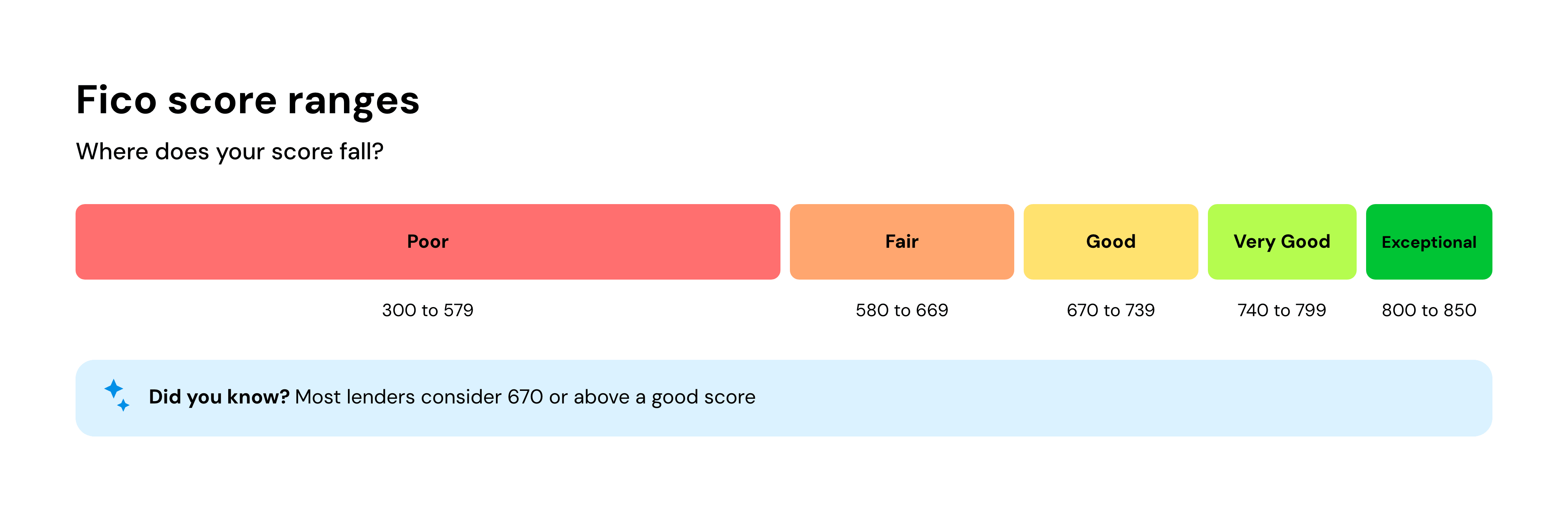
Your FICO score is what lenders use to determine how risky it may be to lend to you. Lower scores generally lead to denial of credit or poor loan terms, like higher interest rates.
How FICO scores are calculated
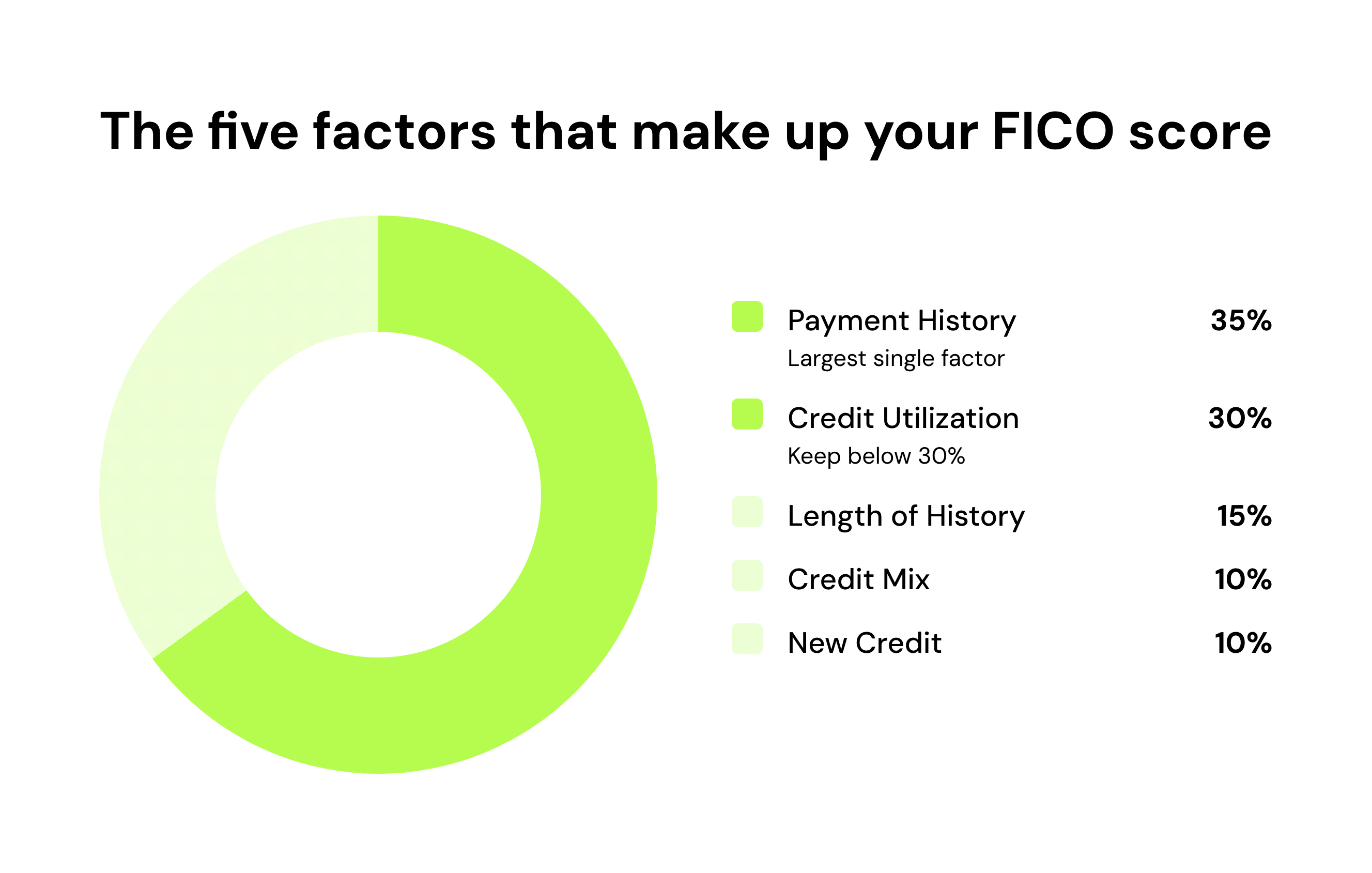
When calculating your FICO score, lenders take five key factors into account. Each factor is weighted:
- Payment History: 35%
- Credit Utilization: 30%
- Length of Credit History: 15%
- New Credit: 10%
- Credit Mix: 10%
Here’s a closer look at what each of these factors means:
Payment history
When it comes to your credit score, having a history of making payments on time and in full is the most important factor. Even a single late payment can cause significant credit damage, and like other derogatory marks on your credit report, late payments remain for seven years.
The good news is that most lenders will give you 30 days before they report a late payment to a credit bureau. And even though late payments stay on your credit report for seven years, their effect on your score lessens over time.
Credit utilization
Lenders want to see that you’re managing your credit well and that you aren’t financially stressed. That’s why they look closely at the percentage of your available credit you’re using. If you have revolving lines of credit (like credit cards), do your best to use no more than 30% of available credit. Using less than 10% is even better!
Here’s an example of why credit utilization matters to lenders. Imagine you have three credit cards, each with a credit limit of $1,000. If you have a balance of $100 on each one, a lender can see that you aren’t desperately relying on credit. However, if the balance on each one is $995, it may signal that you’re too financially stressed to reliably pay back debts.
Length of credit history
Lenders will also take the length of your credit history into account when calculating your credit score. In many cases, having no credit is just as disadvantageous as having poor credit. If you have no credit history or a very limited credit history, a lender may not have enough information to determine whether you’re risky to lend to or not.
New credit
You might know that when you apply for new credit, and a lender does a hard inquiry into your credit, your score will likely drop a few points. However, if you apply for a lot of new credit in a short period of time, you might see your credit score decline significantly.
Sending multiple applications within a short period of time suggests to lenders that you’re desperate for credit, so they may be less likely to lend to you.
Credit mix
Lenders like to see that you can manage multiple kinds of credit at once. Having a mix of credit types (like credit cards, personal loans, auto loans, etc.) looks good to lenders if you can manage it well.
Where to view your FICO score
What is FICO score reporting? There are several ways to keep track of your FICO score. Many banks and financial institutions offer credit monitoring to account holders. You can also access a copy of your complete credit report at AnnualCreditReport.com.
If you want to keep a close eye on your credit score, it might be worth signing up for a credit monitoring service.
What is FICO score vs. VantageScore?
FICO and VantageScore are both types of credit scores, but they’re calculated slightly differently. Here are the weighted factors VantageScore uses:
- Payment History: 40%
- Depth of Credit: 21%
- Credit Utilization: 20%
- Balances: 11%
- Recent Credit: 5%
- Available Credit: 3%
Although some lenders may use VantageScore, it’s important to note that FICO is considered the industry standard. About 90% of top lenders will use your FICO score when evaluating your creditworthiness.
How to improve your FICO score
Does your FICO score need some work? These strategies may help you improve it:
- Always pay bills on time
- Try a credit-builder app or secured credit card
- Don’t close old accounts
- Pay down balances on existing accounts
- Monitor your credit report and dispute any suspicious items
If you need to start building your credit history, Kikoff can help! We help people from all walks of life build credit. When you’re approved, you gain access to a small credit line that you can use to make purchases in the Kikoff store. You make regular (interest-free!) payments toward your balance, and we report those payments to credit bureaus.
Conclusion
Your FICO score is the number roughly 90% of top lenders reach for, so it's worth understanding what actually moves it.
Payment history and credit utilization together account for 65% of the calculation, which means on-time payments and low balances do most of the work. The other three factors reward patience more than action, so leave old accounts open and space out new applications.
If you don't have enough history for a score at all, the first step is simply getting one reported account open.
Kikoff gives eligible users access to a Kikoff Credit Account with no interest and no hard credit check to sign up, and reports monthly payments to all three credit bureaus.
Build credit with Kikoff and start building the payment history your score is based on.
Frequently Asked Questions
About the editor

Disclaimer: The information provided in this blog post is meant for informational purposes only and does not constitute financial advice.