.jpg)
.jpg)



You can freeze your credit for free by contacting Equifax, Experian, and TransUnion separately. A freeze restricts access to your credit reports, making it harder for someone to open new credit in your name.
You do not have to wait for identity theft or a data breach to take this step. Just remember that a freeze does not protect existing accounts from unauthorized charges, so you still need to check your statements and account alerts.
How to freeze your credit
You’ll need to request a freeze with each of the three major credit bureaus. Freezing one report does not freeze the others.
Start with the bureaus’ official freeze pages:
- Equifax
- Experian
- TransUnion
For each bureau:
- Choose how to submit your request. You can request a freeze online, by phone, or by mail.
- Verify your identity. Have your Social Security number, date of birth, and address ready. The bureau may request additional information or identification documents.
- Save your access details securely. If you create an online account, use a unique password and keep any confirmation or instructions for managing your freeze.
- Confirm the freeze is in place. Check the status with each bureau rather than assuming all three requests are complete.
Online or phone requests must be processed within one business day. Mailed requests must be processed within three business days after receipt.
You do not need a paid plan: Placing, temporarily lifting, and removing a security freeze are free. A credit lock or paid monitoring service is a separate product, not something you need to purchase to freeze your credit.
What is a credit freeze?
A credit freeze, also called a security freeze, restricts prospective creditors’ access to your credit report. Because lenders typically review your credit before approving an application, a freeze can make new-account fraud harder.
It does not block every kind of access. Existing creditors and certain other authorized parties can still access your report, and you can still check it yourself.
A credit freeze:
- Restricts access for new credit applications
- Costs nothing to place or lift
- Stays in place until you lift or remove it
However, it does not:
- Stop unauthorized charges on existing accounts
- Remove fraudulent accounts or reporting errors
- Close your credit cards or loans
- Change your credit score
You can keep using your existing credit cards and making payments while your reports are frozen. A freeze does not stop creditors from reporting account activity, so you can continue building payment history.
Read more >> How to Read a Credit Report
Is a credit freeze the right course of action for you?
A credit freeze can be useful whether you are responding to fraud or simply taking precautions. You do not need to prove that your information has been stolen to request one.
Consider a freeze if:
- Your personal information was exposed in a data breach
- Someone has used your identity to apply for credit
- You do not expect to apply for credit soon
- You are comfortable temporarily lifting it when a lender needs access
Planning to apply for a loan or credit card does not rule out a freeze. It just means you’ll need to allow time to lift it before the lender checks your report.
Already dealing with identity theft? A freeze does not resolve accounts someone has already opened. Contact the affected company’s fraud department and report the theft at IdentityTheft.gov for a recovery plan.
If fraudulent debts lead to collection demands or a lawsuit, consider contacting a consumer-law attorney or legal aid organization for help.
Monitoring can complement a freeze by helping you notice changes to your credit report. Kikoff’s credit monitoring is one option to explore, with bureau coverage and features that vary by plan.
Read more >> How to Report Identity Theft
How long do credit freezes last?
A credit freeze does not expire. It remains in place until you temporarily lift it or remove it.
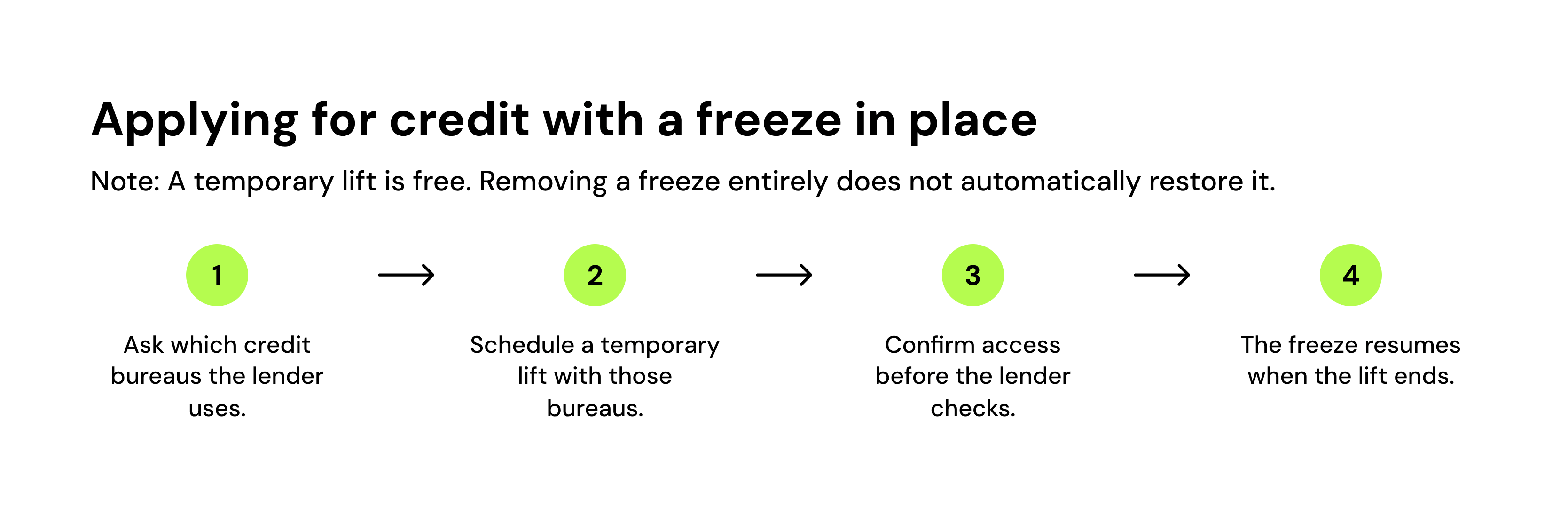
Before applying for credit, ask the lender which bureau or bureaus it needs to check. Then request a temporary lift with those bureaus for the dates needed.
A temporary lift allows access during that window, after which the freeze resumes. If you remove the freeze entirely, you’ll need to place a new one when you want it back.
Bureaus must lift a freeze within one hour of an online or phone request, or within three business days after receiving a mailed request. Give yourself time to confirm the lift before the lender runs its check.
Bottom line
Freezing your credit adds a barrier against new-account fraud without changing your credit score or stopping you from using existing accounts. Request it separately with all three bureaus, save your access details, and plan ahead when you need to apply for credit.
Keep checking your reports and statements while the freeze is in place. If you want alerts between those checks, explore Kikoff’s credit monitoring and compare the current coverage, features, and cost.
Frequently Asked Questions
Article Sources
Disclaimer: The information provided in this blog post is meant for informational purposes only and does not constitute financial advice.