


.jpg)


If you've ever checked your credit score or applied for a loan, you've likely come across the name Equifax. Still, many people aren't sure what Equifax actually is or what role it plays in their financial lives.
Equifax is a credit bureau. It does not lend money or set interest rates. Instead, it collects and organizes information about how you use credit. It shares that information with authorized parties, such as when you give a lender permission to run your credit.
Here, you'll find answers to questions like, "What is Equifax's role in credit reporting?" You'll also learn how credit scores work and what you can do to build your score.
What is Equifax?
Equifax is one of three major credit bureaus in the United States. The other two are TransUnion and Experian.
Credit bureaus are for-profit companies that gather and maintain information about consumer credit activity. They also share this information with approved parties, which may include lenders or employers.
Where does Equifax get its information? It gathers data from several sources, including lenders, credit card issuers, and collection agencies.
Let's say that you get a credit card through your bank. The credit card issuer will report the following information to Equifax and the other credit bureaus:
- When you opened the account
- How much credit you have (your credit limit)
- How much of that credit you are using (your credit card balance)
- Whether you are making payments on time
Equifax will compile this information into your credit report. However, it will not use this information to make lending decisions.
Instead, lenders use the data compiled by credit bureaus in order to determine whether to loan you money. Each bureau maintains its own database, which is why your information may vary slightly between the three.
How Equifax handles your credit score
Typically, lenders don't use the credit score calculated directly by Equifax to make decisions. Instead, they use credit scoring models like FICO, which relies on the information that Equifax and other credit bureaus provide.
Here's a step-by-step breakdown of how it works:
- Creditors report your account activity to Equifax, TransUnion, and Experian
- Each credit bureau updates your credit report with that information
- FICO analyzes all three credit reports to calculate a score
Creditors report information like your payment history, credit limits, and account status.
Not all creditors report to every bureau, which is why the information in your Equifax report may be a little different from the information in your TransUnion or Experian report.
If you have a limited credit history or are trying to rebuild your score after a rough patch, you want as much positive activity reported as possible. Adding verified, on-time payments can help improve your credit.
For example, Kikoff allows you to report rent payments to the credit bureaus so that you can build your credit history with payments you are already making.
Equifax: The backstory
Equifax was founded in 1899 as the Retail Credit Company, which collected financial and employment information to help companies evaluate risk. The company quickly grew, establishing several regional offices over the next few decades. In 1975, it started a massive rebranding effort, transitioning to Equifax.
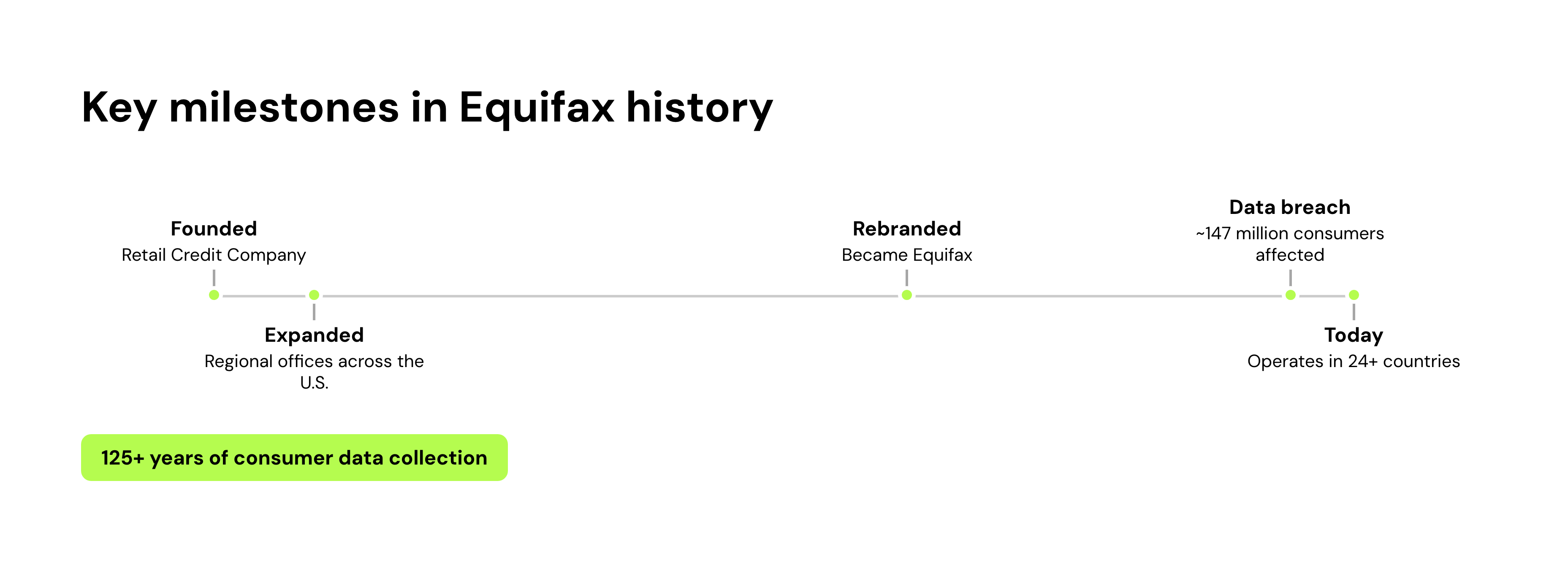
Over time, Equifax became a core part of the U.S. credit system. Today, it maintains credit data on hundreds of millions of consumers and operates in two dozen countries.
Employers, government agencies, consumers, and financial institutions use data from Equifax. The company also offers credit monitoring, dispute resolution, and identity protection tools to customers.
What does Equifax do for consumers like you?
Equifax's role in the credit system is often misunderstood. It doesn't lend money or judge creditworthiness. The bureau can best be described as a collector and distributor of information. It records credit-related activity and makes that information available to the appropriate parties.
How does Equifax benefit you as a consumer? It gathers information used to evaluate your risk and creditworthiness. Whether you're establishing credit for the first time or rebuilding, what ultimately shows up on your Equifax credit report is a reflection of your financial behavior.
Fortunately, you can actively improve your report and boost your score. Focus on making on-time payments and being responsible when borrowing. For a further boost, partner with a credit-building platform like Kikoff, which allows you to report rent payments and other positive activity to Equifax.
Looking to establish credit? Kikoff can help you get started.
Frequently Asked Questions
About the editor

Disclaimer: The information provided in this blog post is meant for informational purposes only and does not constitute financial advice.