.jpg)


Most people have heard of FICO scores, but if you're keeping tabs on your credit on a free app or your bank's dashboard, you might have seen something called a "VantageScore."
You might be asking yourself these questions: What are VantageScores? Do they matter to lenders? Should I know my score?
You should. Alongside FICO, VantageScore is one of the two main credit scoring models used in the United States. When you understand how your score works, you can take better control over your credit health. This knowledge is especially important if you're building your credit from scratch or rebuilding after a setback.
What is VantageScore?
VantageScore is a credit scoring model developed by the three major credit bureaus: Equifax, TransUnion, and Experian. The bureaus created it as an alternative to FICO in order to help consumers better understand their credit scores.
Lenders use your credit behavior and history to gauge your likelihood of repaying borrowed money on time. Your VantageScore is a numerical summary of this information.
Your VantageScore will be between 300 and 850. That's the same range as FICO. In both models, the higher your score, the better.
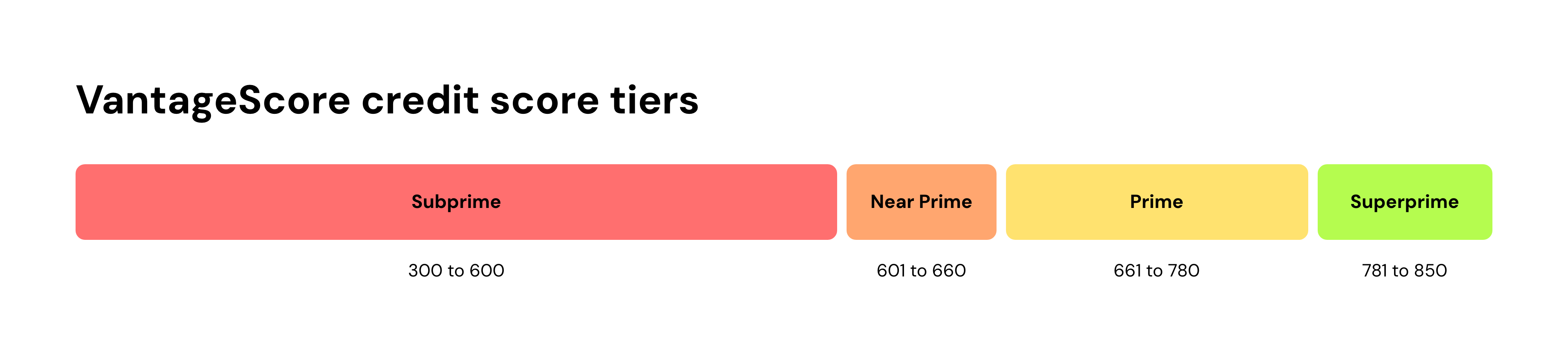
The biggest difference is that VantageScore can generate a score with less credit history than FICO. It's often used by free credit-monitoring tools and platforms focused on consumers with newer credit files.
How VantageScore is calculated
You know the answer to the question, "What are VantageScores?" Now, let's shift to how they are calculated.
Your credit behavior is grouped into six main categories, each of which is weighted differently. These categories are:
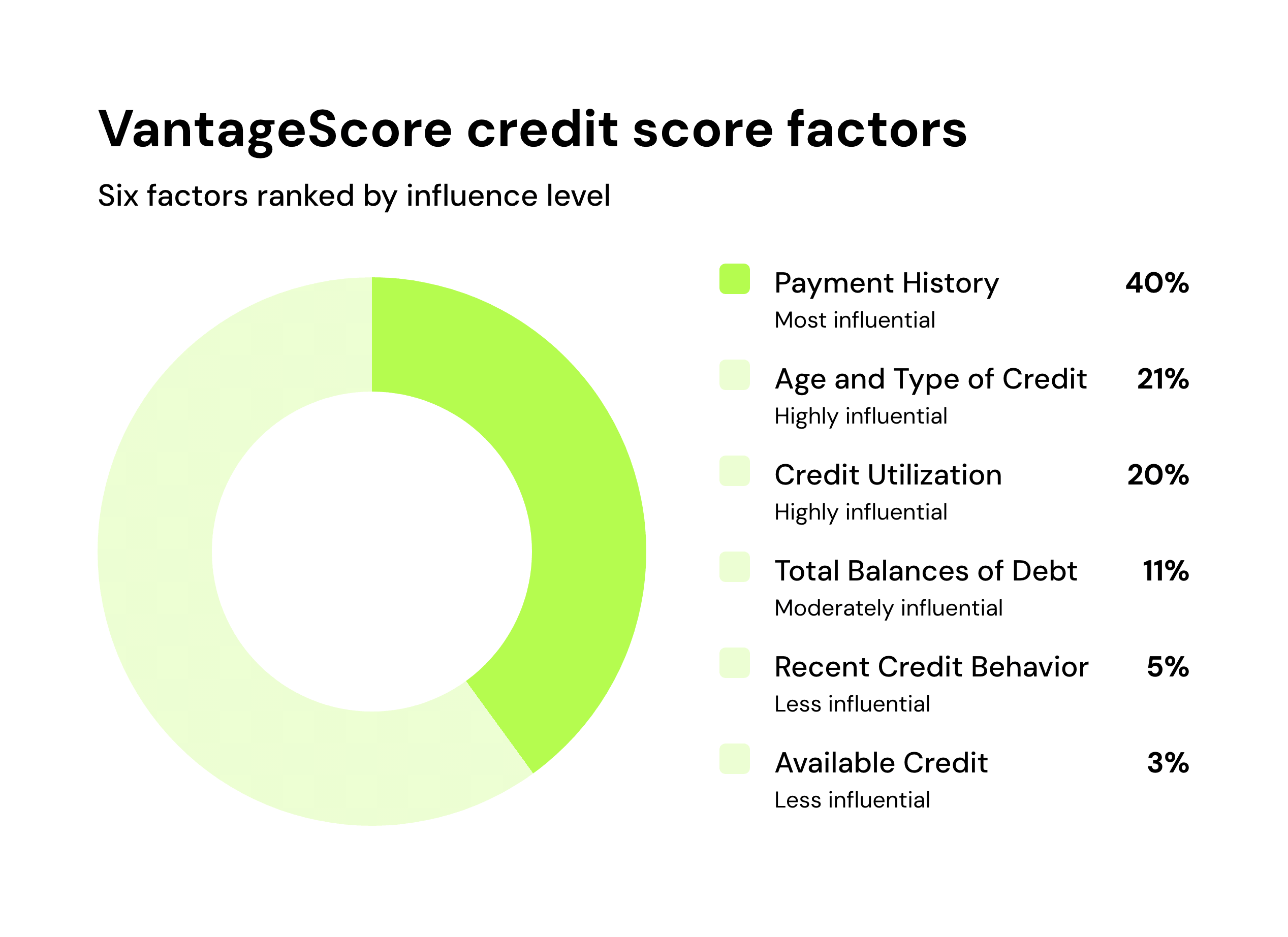
- Payment History: Whether you pay your bills on time
- Age and Type of Credit: How long you've had credit accounts and the mix of types (credit cards, auto loans, etc.)
- Credit Utilization: How much of your credit you're using
- Total Balances of Debt: The overall amount you owe
- Recent Credit Behavior: New accounts and recent inquiries
- Available Credit: How much unused credit you have access to
Lenders consider payment history to be the most important indicator for credit, which is why VantageScore treats that factor as the most influential when assigning you a score. After all, lenders want to know that you are likely to pay them back.
The VantageScore model can generate a score with just one account reported within the last 24 months.
Where to view your VantageScore
There are many different ways to view your VantageScore for free. Your credit card provider or bank might allow you to monitor your VantageScore, for example. Financial platforms focused on education and credit building are another great source of score information.
These tools typically update scores once a week or once a month. By checking in regularly, you can track which direction your score is trending over time and use it to guide future financial decisions.
If you're actively building credit, monitoring your score can help you see how habits like on-time payments and lower balances are reflected in your credit profile.
Is VantageScore the same thing as a FICO score?
No. They are separate scoring models. However, there are some similarities. Both VantageScore and FICO scores:
- Use a 300 to 850 scale
- Evaluate similar credit factors
- Aim to predict your risk as a borrower
The key differences come down to how the models are designed and how they are used by lenders. FICO scores are more commonly used in big lending decisions, such as for mortgages and auto loans. VantageScore is more frequently used by consumers for education and credit monitoring.
If you apply for a loan, the lender will likely check your FICO score. Don't be surprised if this number is a little different from your VantageScore.
However, the scores both reflect the same underlying credit behaviors. If your VantageScore is trending upward, your FICO score likely is as well. With that in mind, it's best to focus on the habits that improve your overall creditworthiness.
How to improve your VantageScore credit score
You can improve your VantageScore by focusing on the fundamentals of building credit. Here are some tips for boosting your score:
- Pay every bill on time
- Keep your credit utilization rate low
- Be consistent with your financial activity
- Avoid opening multiple accounts in a short time frame
If you have a thin credit history, you can take advantage of tools that report on-time monthly activity. For instance, Kikoff allows you to report positive payment behavior, such as rent payments, that otherwise may not be reported to the credit bureaus. Our platform helps you add more positive data to your credit report over time.
How VantageScore fits into your bigger credit picture
Now that you know what VantageScores are and how they work, you should learn how this information fits into your credit history and affects your strength as a borrower.
VantageScore matters for monitoring your credit health and positioning yourself as a safe borrower. While a lender may not rely on your VantageScore for making a final decision, you can use your score to better understand and track the impacts of your financial behavior.
Ready to boost your VantageScore by reporting on-time payments? Start building a positive credit history with Kikoff.
Frequently Asked Questions
About the editor

Disclaimer: The information provided in this blog post is meant for informational purposes only and does not constitute financial advice.