.jpg)
.jpg)


Whether you’re newly unemployed or have been without a job for quite some time, you might be concerned about maintaining your credit score. Being unemployed can be stressful, but did you know you can actually build your credit when you’re without a job?
In this article, we’ll show you how to build credit while unemployed.
How to build credit while unemployed
These strategies may help you build credit even without a job:
Become an authorized user
Do you have a trusted family member who has good credit? If so, consider asking them if they’ll add you as an authorized user on their credit card.
If the card issuer reports authorized users, the account may appear on your credit reports. A well-managed account with on-time payments and low balances may help your credit, but late payments or high balances could hurt it. Ask which credit bureaus the issuer reports authorized users to before being added.
Open a secured credit card
Being unemployed doesn’t automatically keep you from qualifying for a credit card. Card issuers look at whether you can make the required payments. If you’re 21 or older, an issuer may consider income or assets you can reasonably access, including income from a spouse or partner. Applicants under 21 generally face stricter income requirements. The Consumer Financial Protection Bureau explains how these rules work.
If you qualify for a secured credit card, you’ll provide a refundable deposit that usually helps set your credit limit. You use the card and make payments just as you would with a traditional credit card. If you don’t repay what you owe, the issuer may use your deposit to cover the balance.
Some issuers may eventually offer to move you to an unsecured card and return your deposit. Check the card’s terms to learn when and how the deposit is returned.
Try a credit-builder app
Credit-building apps can be an option if traditional credit products are out of reach. Before signing up, compare the cost, payment requirements, credit bureau reporting, and what happens if you miss a payment.
Kikoff’s Credit Account is a free revolving line of credit used for purchases in the Kikoff Store. It charges no interest and reports your on-time payments to all three credit bureaus. There’s no hard credit check to sign up.
Use tools to report your bill payments
Some services can add eligible rent or bill payments to one or more of your credit reports. Before signing up, check which payments and credit bureaus the service covers and whether it charges a fee. Reported on-time payments may add positive history, but not every credit scoring model uses the same information.
How credit works without traditional income
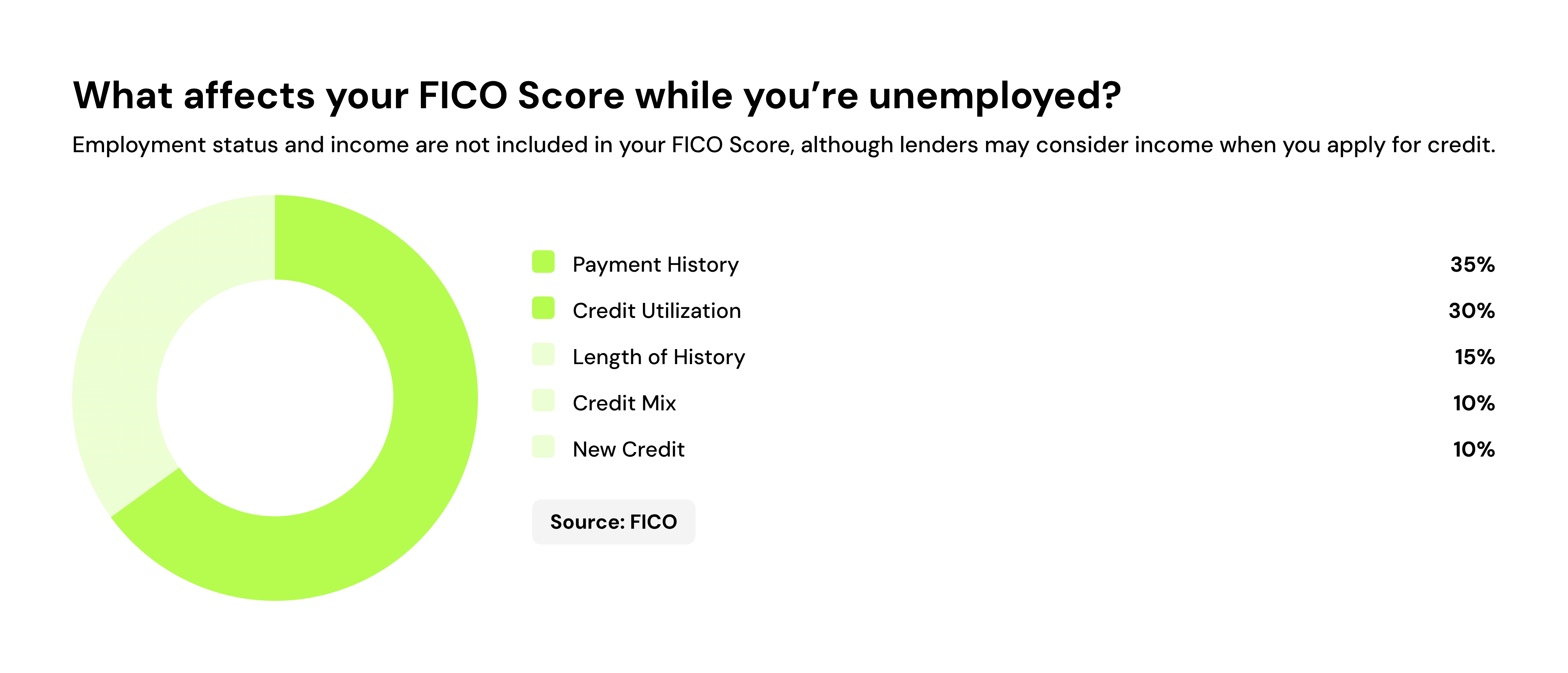
Your income and employment status are not included in your FICO Scores, according to FICO. That means losing your job does not directly change your FICO Scores. Missed payments and growing balances can, though.
Unemployment can still make it harder to qualify for new credit because lenders may consider your income, debts, and ability to pay. Depending on the lender and application, qualifying income or assets may include:
- Money in bank accounts
- Retirement or investment income
- Public assistance income
- Income from a spouse or partner that you can reasonably access
Rules are stricter for credit card applicants under 21. Only include income or assets that the application allows and that you can honestly report.
Can you build credit without a job?
Often, advice for improving your credit involves paying down debts. If you have existing debt, it may be difficult to make a significant dent in it while unemployed. However, if you’re hoping to learn how to build credit while unemployed, there are plenty of doable options.
Common mistakes to avoid
If you’re wondering how to build credit while unemployed, it’s important to have a plan. However, you should also be aware of some common mistakes:
Failing to make minimum payments
Broadly speaking, it’s best to make more than the minimum payment on your credit cards. If you’re unemployed, you may not be able to do that, but you should at least make the minimum payment. When you start working and have a steady income again, you can start paying more each month.
Maxing out your credit cards
When money is tight, it can be tempting to lean on your credit cards more than usual. Try to keep your balances as low as your budget allows, since lower utilization is generally better. There is no single 30% cutoff that makes or breaks your credit.
Not contacting creditors if you can’t pay bills
If you think you might miss a payment, contact the creditor as soon as you can. Some creditors may change your due date, waive a fee, reduce your payment, or offer a temporary hardship plan. Help is not guaranteed, and the options vary by creditor.
Ask how any arrangement will affect your interest, fees, account status, and credit reporting. Get the terms in writing before agreeing. The Consumer Financial Protection Bureau has a list of information to bring to the call.
If you need help reviewing your bills or making a payment plan, consider talking with a nonprofit credit counselor.
Bottom line
Being unemployed does not directly affect your FICO Scores, but missed payments and growing balances can. Focus on making at least the minimum payment, keeping card balances manageable, and contacting creditors before you miss a payment.
If you decide to add a new credit account, make sure the payment fits your current budget. You do not need to take on unaffordable debt just to build credit.
Kikoff’s Credit Account reports your on-time payments to all three credit bureaus, with no hard credit check to sign up. Every month you pay on time adds to the payment history in your credit profile. Get started today.
Frequently Asked Questions
Article Sources
Disclaimer: The information provided in this blog post is meant for informational purposes only and does not constitute financial advice.