


.jpg)
.jpg)



Divorce can upend your life, including the way you manage money. Divorce itself doesn’t affect your credit, but missed payments, shared debts, and changes to your available credit can.
Building credit after divorce starts with understanding which accounts you’re still responsible for. From there, focus on manageable payments and credit history in your own name.
How to build credit after divorce
You don’t have to tackle everything at once. Start with the accounts you already have, then consider whether a new credit-building account fits your budget.
Using a credit-builder app
A credit-building app is one option for establishing payment history in your own name. Kikoff’s Credit Account is a free revolving credit line used only for purchases in the Kikoff Store. Here’s how it works:
- If you’re approved, you receive a credit line.
- You use it for eligible purchases in the Kikoff Store.
- You repay those purchases without interest.
- Kikoff reports your on-time payments to all three credit bureaus.
There’s no hard credit check to sign up. The Credit Account itself is free, but purchases and paid Kikoff Credit Service plans have costs, so check what you’ll owe before committing.
Open a credit card in your own name
If you don’t already have a credit card in your own name, opening one can give you a way to establish independent payment history. If you already have one, you don’t need another just because you’re divorced.
A secured credit card may be an option if you don’t qualify for a traditional card. It requires a security deposit, but you still need to make monthly payments on any purchases.
Compare fees and reporting policies before applying. Aim to pay the full statement balance by the due date; if that isn’t possible, make at least the minimum payment on time.
Become an authorized user
A trusted friend or family member may be willing to add you to their credit card as an authorized user. If the issuer reports authorized-user accounts, that account’s history may become part of your credit report.
Choose an account with consistent on-time payments and low balances. Late payments or high balances could work against you, and not every scoring model treats authorized-user accounts the same way.
An authorized user is different from a joint account holder: authorized users generally aren’t legally responsible for repaying the account’s debt.
Read more >> What Is Credit Piggybacking and Does It Work?
How divorce affects your credit score
Divorce itself isn’t a factor in your credit score. The account changes and payment problems that sometimes come with it are what can affect your credit.
Joint debts and accounts
A divorce decree may assign a debt to your ex, but it doesn’t release you from the lender’s agreement. If you’re still a borrower, missed payments can affect your credit even when your ex was ordered to pay.
For a mortgage or car loan, separating responsibility may require refinancing, paying off the loan, or obtaining a release from the lender. Approval isn’t automatic, and removing your name from the property title does not remove it from the loan.
Work with your divorce attorney and lender to understand the available options. Get written confirmation of any release rather than assuming the divorce paperwork has settled the account.
Lowering your available credit
Losing access to a shared credit card can change your credit utilization, which is the percentage of available revolving credit you’re using. Lower utilization is generally better for your credit.
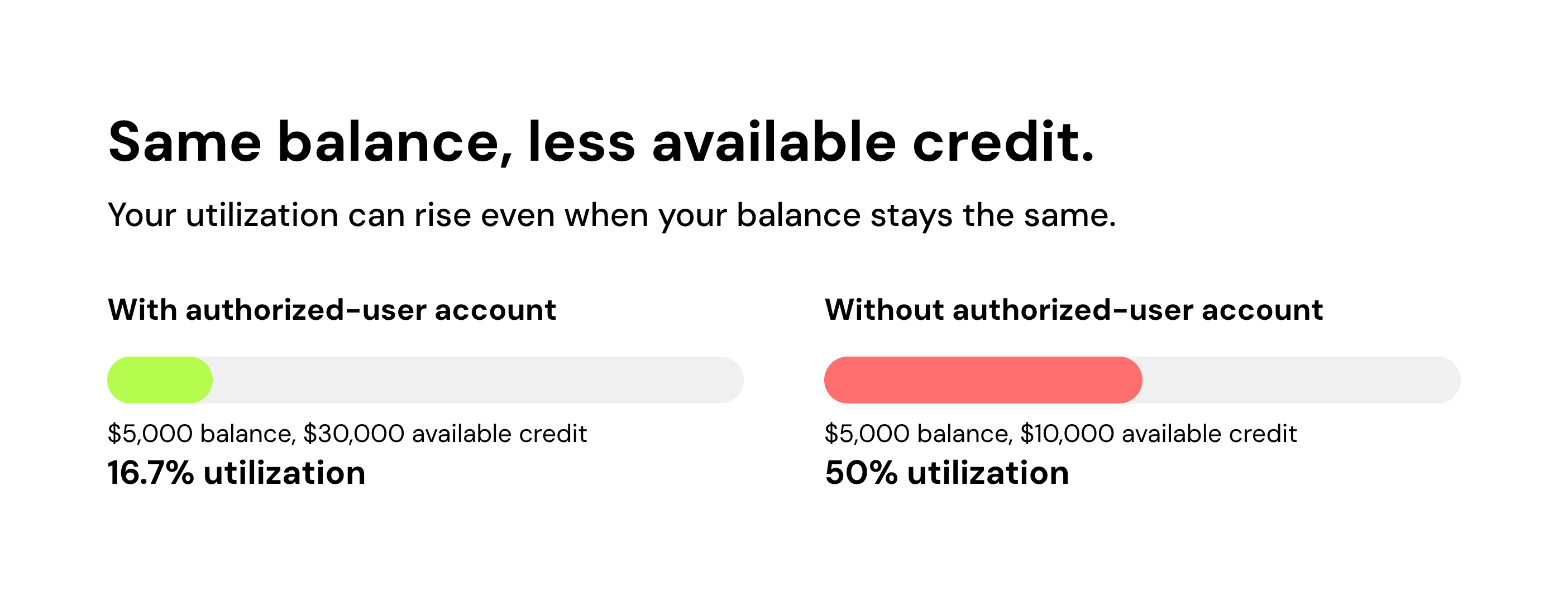
Imagine you owe $5,000 on your own card, which has a $10,000 limit. You’re also an authorized user on your ex’s paid-off card with a $20,000 limit.
If both cards count toward your utilization, you’re using about 17% of your $30,000 in available credit. If the authorized-user account is removed from your report, the same $5,000 balance uses 50% of your remaining $10,000 limit.
That change could affect your score, even though you haven’t borrowed more. The exact effect depends on the rest of your credit profile.
Still, keeping a risky financial connection with your ex isn’t worth it just to preserve available credit. Focus on separating accounts safely and reducing your own balances as your budget allows.
What to do immediately after a divorce is finalized
Review your accounts and payment arrangements so you know what still needs attention. You don’t have to wait until the divorce is final to start this conversation with your attorney.
- List shared accounts, balances, due dates, and who is responsible under the divorce order.
- Ask creditors how to handle joint accounts and prevent additional shared charges.
- Review authorized-user access on cards you or your ex own individually.
- Update contact information and payment arrangements on your own accounts.
- Check that payment reminders or autopay still use an account you control.
Closing a joint credit card does not erase the existing balance. Keep track of payments while the debt is being resolved.
Before moving shared money or closing accounts, ask your attorney whether any court orders restrict those changes. A nonprofit credit counselor can also help you work out a budget for your new household expenses.
How alimony, child support, and legal obligations affect credit
If you’re ordered to pay alimony or child support, include those payments in your budget and keep records. Don’t treat them as a substitute for establishing payment history on credit accounts.
Overdue child support can appear on your credit report through information supplied by a child support agency. It doesn’t have to go to a collection agency first.
Contact the agency handling your case promptly if you fall behind. Ask the agency handling your case about its reporting rules, and speak with your attorney about alimony obligations and enforcement in your state.
If you can’t afford the ordered payment, ask promptly about the formal process for requesting a modification. Don’t assume an informal agreement with your ex changes the court order.
What to do if your credit was damaged by your ex
Start by checking what happened to each account. An unfamiliar account, an incorrect balance, and a missed payment on a legitimate joint debt need different responses.
- Get your credit reports through AnnualCreditReport.com and check for unfamiliar accounts or errors.
- Dispute inaccurate information with the credit bureau and the company that reported it.
- If someone opened accounts using your identity without permission, report it through IdentityTheft.gov.
- Consider a free credit freeze with each of the three credit bureaus if you’re worried about new accounts being opened in your name.
- Secure your personal email and financial accounts with new passwords and two-factor authentication.
A freeze helps restrict new credit accounts; it doesn’t stop charges on existing accounts. Contact the issuer directly about unauthorized access or transactions.
Accurate late payments on a joint debt generally can’t be removed simply because your ex was supposed to pay. Your divorce attorney can explain your options if your ex hasn’t followed the court order.
Read more >> How to Read a Credit Report
Bottom line
Building credit after divorce starts with knowing what you’re still responsible for and making a payment plan that fits your life now. Check your reports, follow through on separating shared accounts, and get help with obligations you can’t resolve on your own.
If you already have accounts in your name, keeping those manageable is a useful place to start. You don’t need to open several new accounts to make progress.
If a new account fits your budget, Kikoff’s Credit Account reports your on-time payments to all three credit bureaus, with no hard credit check to sign up. Build credit with Kikoff and start establishing payment history in your own name.
Frequently Asked Questions
Article Sources
Disclaimer: The information provided in this blog post is meant for informational purposes only and does not constitute financial advice.