





Your credit score impacts loan approvals, interest rates, insurance premiums, and job prospects, so getting to a good credit score is crucial.
In this post, we'll jump into the 7 steps you can take immediately to improve your credit fast.
1. Prioritize on-time payments
Payment history, accounting for 35% of your FICO score, is the most influential factor in credit scoring. Consistently making on-time payments is essential.
- Set up automatic payments for at least the minimum due.
- Create reminders for due dates.
- Build an emergency fund to cover unexpected expenses.
Quick Tip: Pay the minimum on all cards to protect your payment history, then allocate extra funds to the highest-interest balance.
Late payments can affect your report for up to seven years, but their impact lessens over time. Focus on staying current for quick score improvement.
2. Reduce credit utilization below 30%
Credit utilization, the percentage of available credit used, is the second most significant scoring factor.
To calculate your utilization, divide total credit card balances by total credit limits and multiply by 100. Aim for below 10% for optimal score gains.
Pay down balances strategically, starting with cards closest to their limits. Make payments before the statement closing date to report lower balances.
3. Clean up credit report errors
Credit report errors are common and can negatively impact your score. Request your free annual credit report from Experian, Equifax, and TransUnion via the official government website.
Look for these common errors:
- Incorrect account balances or limits
- Duplicate accounts
- Payments marked late when on time
- Accounts that don't belong to you
- Outdated negative information
File disputes immediately for errors found. Successful disputes can boost your score by 5-20 points.
4. keep old accounts open
Length of credit history contributes up to 15% of your credit score. Your credit age includes the oldest account's age and the average age of all accounts.
Keep old credit cards open, even if rarely used, to maintain available credit and average account age. Use them occasionally for small purchases to keep them active.
The benefits of maintaining older accounts compound over time, providing more value than the risk of a temporary increase in utilization.
5. Diversify your credit mix wisely
A varied credit mix contributes up to 10% of your credit score. Lenders prefer to see responsible management of different credit types, including:
- Revolving credit (credit cards, lines of credit)
- Installment loans (auto loans, personal loans, mortgages)
- Retail accounts (store credit cards)
Consider adding a secured credit card or credit-builder loan if you have a thin credit file. Only add new credit products that fit your financial situation.
6. Limit hard inquiries
Hard inquiries, when lenders check your credit, can lower your score by up to 5 points each. Though they fall off after two years, multiple inquiries in a short period can signal financial distress.
Space out credit applications by at least six months. Don't let inquiry concerns prevent rate shopping; FICO treats multiple inquiries for mortgages, auto loans, and student loans as one if within a 45-day window.
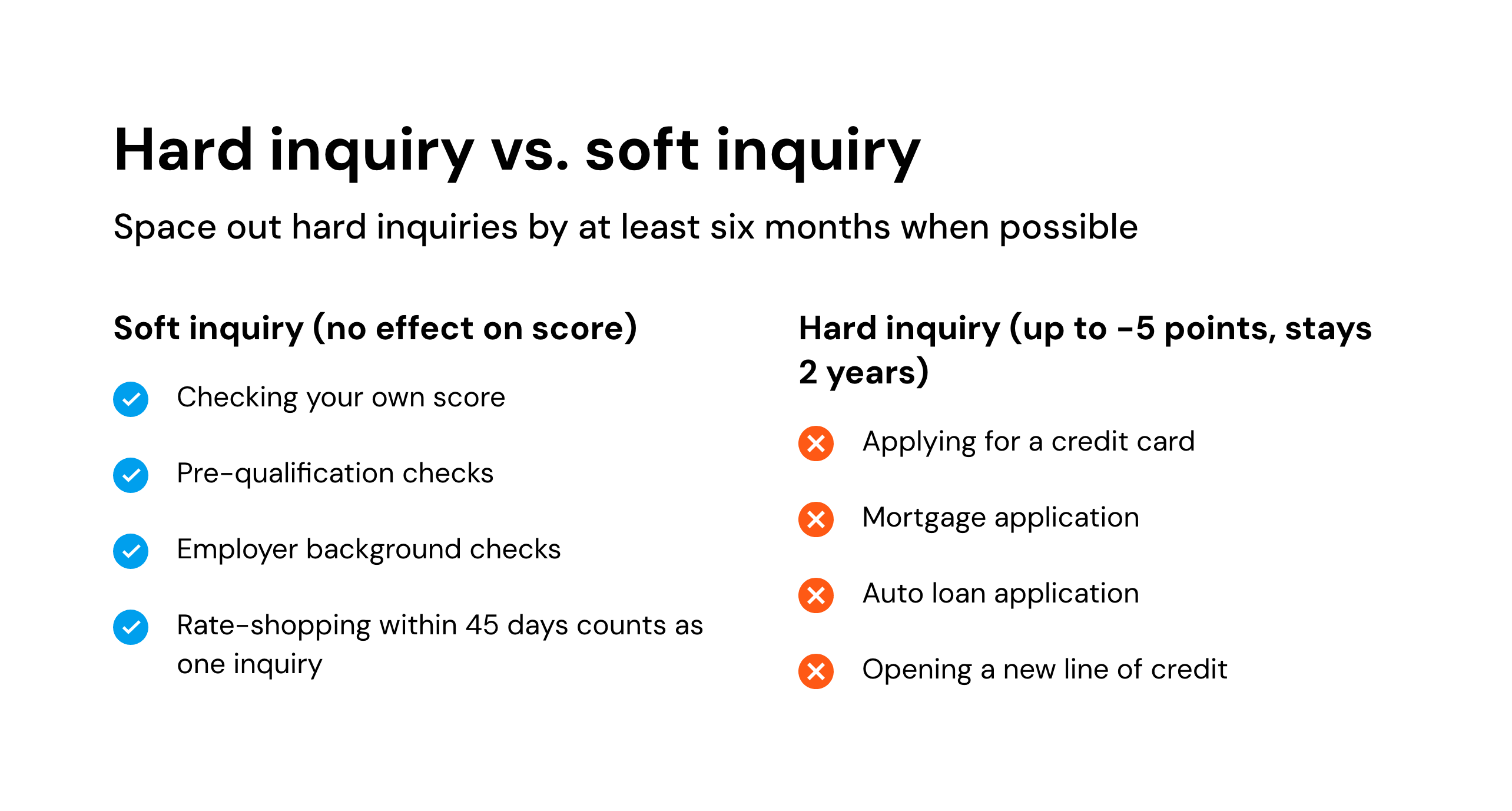
Soft inquiries, like checking your own credit, do not affect your score. Monitor your credit regularly without worry.
7. Leverage alternative scoring models
New models like VantageScore 5.0 and FICO 10T use alternative data, including rent and utility payments, aiding "credit-invisible" consumers to build scores.
Services like Experian Boost allow you to add positive payment history from utilities and rent to your credit file. Monitor both FICO and VantageScore for a complete view of your credit health.
Why Your Credit Score Matters Now
Your credit score, ranging from 300 to 850, indicates your creditworthiness to lenders and influences loan approvals, insurance premiums, rental applications, and employment opportunities.

In today's tighter lending environment, a strong credit score offers a competitive advantage. Even a modest improvement of 50-100 points can save thousands in interest over the life of a mortgage or auto loan.
Conclusion
Ready to implement these strategies? Kikoff simplifies credit building with a free credit line designed to help you establish positive payment history. Our automated system ensures you never miss a payment, while resources help you optimize your credit profile.
Sign up for Kikoff today to begin your journey toward stronger credit.
Frequently Asked Questions
About the editor

Disclaimer: The information provided in this blog post is meant for informational purposes only and does not constitute financial advice.