.jpg)



Checking your credit report can feel overwhelming, especially if you're not sure what you're looking for. But mistakes happen more than many people realize. Even small errors can hurt your score and affect your ability to qualify for loans.
Familiarizing yourself with the most common credit report errors makes it easier to spot problems early. When you find a concern, take action quickly before it causes long-term damage. Here's what to watch for.
Common credit report errors
There are some common credit report errors you need to be aware of.
Incorrect personal information
When you get your report, start by reviewing the information at the very top, such as your personal identifying information. Look for errors such as:
- Misspelled names
- Outdated addresses
- Incorrect phone numbers
While these errors may seem harmless, they can sometimes cause major headaches when you apply for credit.
Accounts that don't belong to you
Seeing an unfamiliar account on your credit report is a major red flag. This can happen due to identity theft or a data entry error by a lender. Accounts that aren't yours can hurt your score, especially if the account is delinquent or has a high balance.
Incorrect account balances
Your credit report may list balances that are higher or lower than what you actually owe. Don't panic, as lenders may not have reported your most recent payments to the credit bureaus yet. However, if you notice a huge discrepancy between what you owe and the amount listed on your report, you may need to follow up.
Wrong payment status
Another common error involves payment history. An account may be marked late even though you've always paid it on time. Pay special attention to accounts that are marked as delinquent, as they can be very damaging to your score. These are the types of errors you'll need to dispute.
Duplicate accounts
Sometimes, the same account appears more than once on your credit report. Duplicate listings can make it look like you owe more debt than you actually do. Imagine if a $30,000 vehicle loan were listed twice. That can hurt how lenders view your creditworthiness.
Closed accounts reported as open
If you've closed an account, but it's still listed as open, the discrepancy can affect your score. However, it can take the credit bureaus a month or two to update their records once you've closed an account. Typically, the responsibility falls with the lender, as they may have failed to report the change to the bureaus.
How to dispute errors
It is your right to challenge any incorrect information you discover on your credit reports. Here's what you need to do if you find an error:
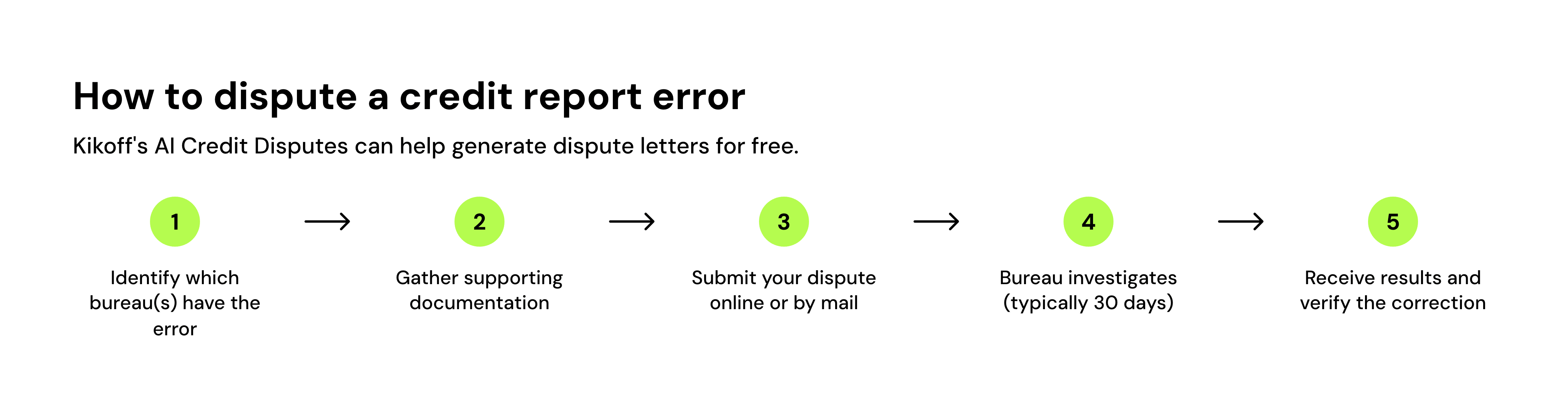
- Identify which bureaus have incorrect information listed
- Provide documentation or an explanation
- Submit the dispute online or by mail
- Wait for the bureau to investigate and respond
Kikoff's AI Credit Disputes offers free dispute tools that can help you simplify this process. You can generate dispute letters at no cost. You can submit the letter electronically to TransUnion or by mail to Experian and Equifax.
Why monitoring your credit score matters
Many people only check their credit report when they are applying for a loan or if they are the victim of identity theft. However, it's not wise to wait. Instead, review your reports periodically so you can find errors sooner. You are entitled to one free credit report from each bureau every year. Take advantage of it.
Rebuilding your score after credit reporting errors
Once you dig into your report and address the errors you uncover, you may find that your score still isn't quite as high as you would like. The good news is that you can proactively work to improve your score by reporting positive payment behavior you are already exhibiting, such as making on-time rent payments.
Take a step toward stronger credit habits with Kikoff — add positive history to your credit report with no hard credit check required.
Frequently Asked Questions
About the editor

Disclaimer: The information provided in this blog post is meant for informational purposes only and does not constitute financial advice.