.jpg)



With an 825 credit score, you can likely get approved for nearly any credit card, personal loan, auto loan, or mortgage. Your score puts you in the top pricing tiers, so what's left to decide is how much you can borrow. And that comes down to your income, debts, and down payment.
Is 825 a good credit score?
Yes. It's well within FICO's exceptional range that runs from 800 to 850. (VantageScore also tops out at 850.)
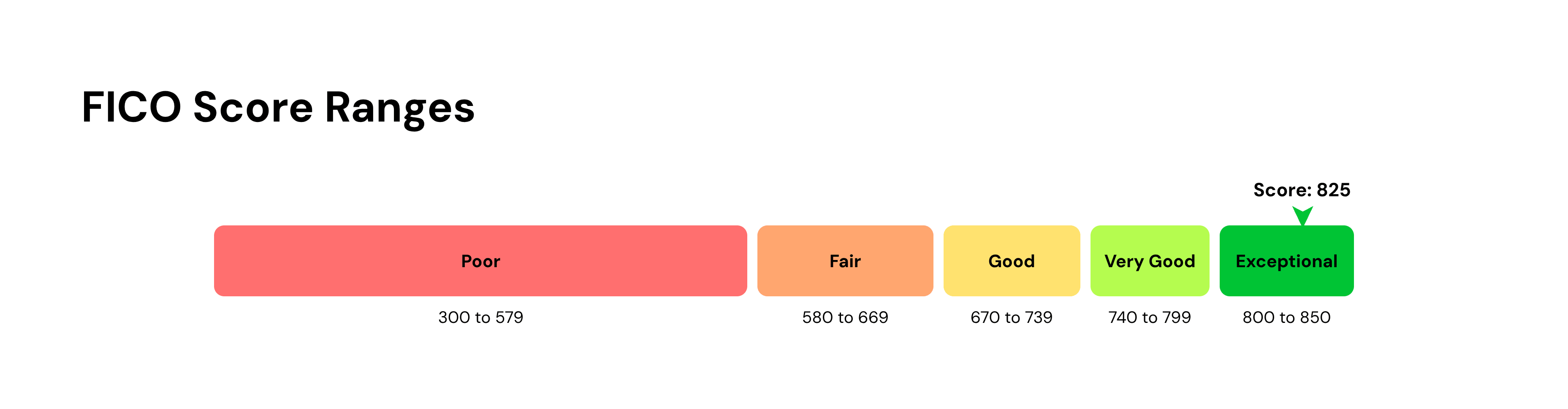
A score this high reflects years of on-time payments, low reported balances, and few recent applications. At this level, the only risk is losing ground. An error on your report or a missed payment can cost more than any further gain would earn you.
What can you get approved for with an 825 credit score?
At 825, your score is not what's limiting you. Lenders will focus on your income, your job history, and your debt-to-income ratio (DTI).
Credit cards
Premium travel cards, top-tier cash back cards, large sign-up bonuses, high credit limits, and long 0% intro APR offers — they're all realistic. And you'll likely see more prescreened offers too.
Since you can choose almost any card, pick those you'll actually use. If you travel, look for airfare and hotel rewards or lounge access. If you're planning a large purchase, a long 0% intro APR period can be worth more than points.
Each new application still has a hard inquiry, so only open a new card when it serves a financial goal.
Personal loans
Expect offers at or near a lender's lowest advertised interest rates.
The Federal Reserve's average for a 24-month bank personal loan is 11.86%, and an 825 borrower will typically see offers well below that.
How much you can borrow still depends on your income and existing debt.
Auto loans
An 825 score is in Experian's super prime tier (781+), the top tier for auto loans. Super prime borrowers average 4.41% on new cars and 6.29% on used cars. On a $20,000, 60-month new car loan, that's about $1,000 less in interest than the prime average. Experian sorts these tiers by VantageScore 4.0, so your FICO score may place you a little differently.
Manufacturer promotions like 0% financing or cash back offers are realistic at this score. Get preapproved by a bank or credit union first, then compare that rate against the dealer's financing and any promotion. A cash rebate can be worth more than a lower rate. Kikoff's auto loan calculator can help you compare offers.
Mortgages
At 825, every mainstream mortgage type is open to you, and your score already earns Fannie Mae's best pricing. Your down payment is now what matters.
- Conventional loans. Fannie Mae charges lenders an upfront fee on the loans it buys, based on your score and down payment. For scores of 780 and up, that fee is 0.375% of the loan amount with 20% down and 0% with 25% down or more. On a $200,000 loan, that's $750 versus $0. You'd see the difference in your rate or your closing costs.
- FHA loans. These loans are an option, but they carry their own mortgage insurance premium. At 825, a conventional loan is usually the one to price first. Still, an FHA quote is worth comparing if your down payment is small.
- Jumbo loans. Each lender sets its own score, income, and reserve requirements for loans above conventional limits. At 825, your score will rarely be what holds you back. Income and reserves usually decide it.
Small rate differences add up on a mortgage. For example, on a $300,000, 30-year loan, 6.0% instead of 6.5% saves about $98 a month, or about $35,000 over the life of the loan.
Run the numbers >> Use Kikoff's mortgage calculator to estimate your monthly payment and plan your homebuying budget.
What interest rates can you expect with an 825 credit score?
Expect a lender's best advertised rates. Exact offers still depend on the lender, the loan, and market conditions. The Federal Reserve's averages across all borrowers were 22.15% for card accounts charging interest and 11.86% for 24-month bank personal loans. At 825, your offers will typically come in well below both.
Pushing past 825 changes little. Both pricing cutoffs top out below your score: 780 for Fannie Mae's mortgage fee and 781 for Experian's super prime auto tier. Lenders are competing for your business, so compare at least two or three offers on any loan.
5 ways to protect an 825 credit score
- Check your reports regularly. You can get all three for free every week at AnnualCreditReport.com. If something is wrong, like an account that isn't yours, dispute it with the bureau.
- Freeze your credit when you're not applying. A credit freeze blocks new accounts from being opened in your name. It's free at Equifax, Experian, and TransUnion, and you can lift it temporarily when you apply.
- Automate every payment. Payment history makes up 35% of your FICO Score, and a missed payment stays on your report for seven years.
- Keep reported balances low. Your issuer usually reports your statement balance, so paying before the statement closes keeps your utilization low even if you pay in full.
- Rate-shop in one window. FICO counts multiple auto, mortgage, or student loan inquiries made within 14 to 45 days as one, depending on the FICO version. Card and personal loan applications each count separately.
Read more >> How to Get an 850 Credit Score
Bottom line
At 825, you can get approved for nearly anything at a lender's best pricing. What matters now is keeping it there, because one error or unfamiliar account on your report can cost you a tier before you notice.
Kikoff brings credit building, bill and rent reporting, AI-powered disputes, credit monitoring, and debt negotiation into one place. Sign up with no credit check. Plans start at $5 a month.
Frequently Asked Questions
Article Sources
Disclaimer: The information provided in this blog post is meant for informational purposes only and does not constitute financial advice.