


.jpg)



If you're trying to build credit, someone may already have recommended getting a credit card, using it to pay some of your bills, and paying it off each month. But you also might know people who juggle multiple credit cards.
At this point, you may be asking, "How many credit cards should I have?" The answer depends on your circumstances.
How many credit cards should I have?
The short answer is that for many people, having 2-3 credit cards is ideal for a few reasons:
- It increases available credit, which can boost your score
- It lets you take advantage of multiple kinds of rewards
- It ensures you have a backup if one card is lost or stolen
Some people choose to have more credit cards, but managing several cards at once can be overwhelming.
Number of credit cards and credit score: How are they related?
Your number of credit cards and credit score aren't directly related. You won't be penalized for having too few (or too many), and you don't get bonus points from having several open accounts.
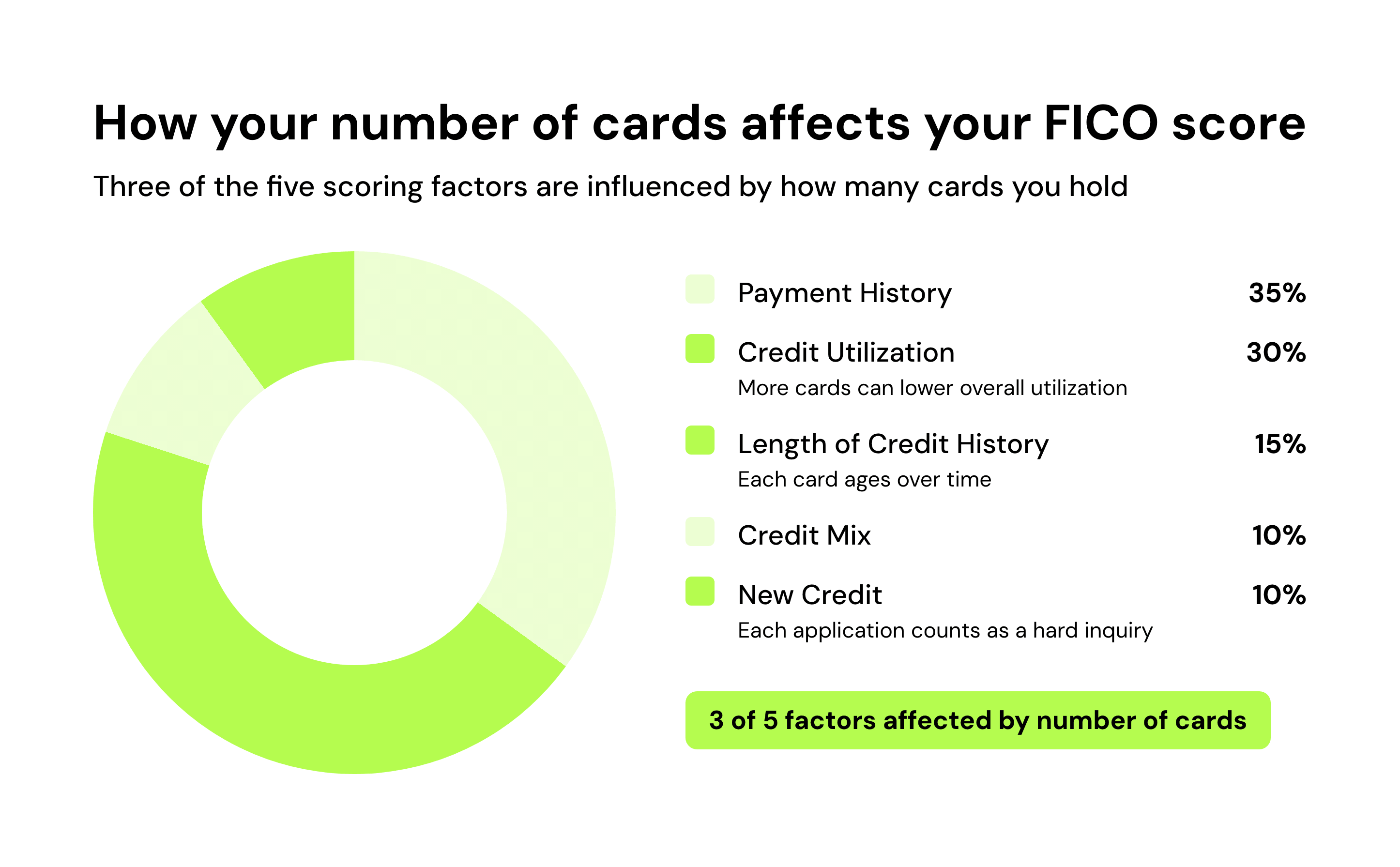
That doesn't mean your number of cards does not affect your credit, though. These are a few ways the number of cards you have can indirectly impact your score.
Credit utilization
This is the largest potential impact on your score. Your credit utilization accounts for 30% of your FICO score, and it's the second most important factor.[1]
Credit utilization is the percentage of available credit you're using. Most experts suggest keeping it under 30%, but under 10% is even better.[2] Adding another credit card increases your available credit, which decreases your utilization.
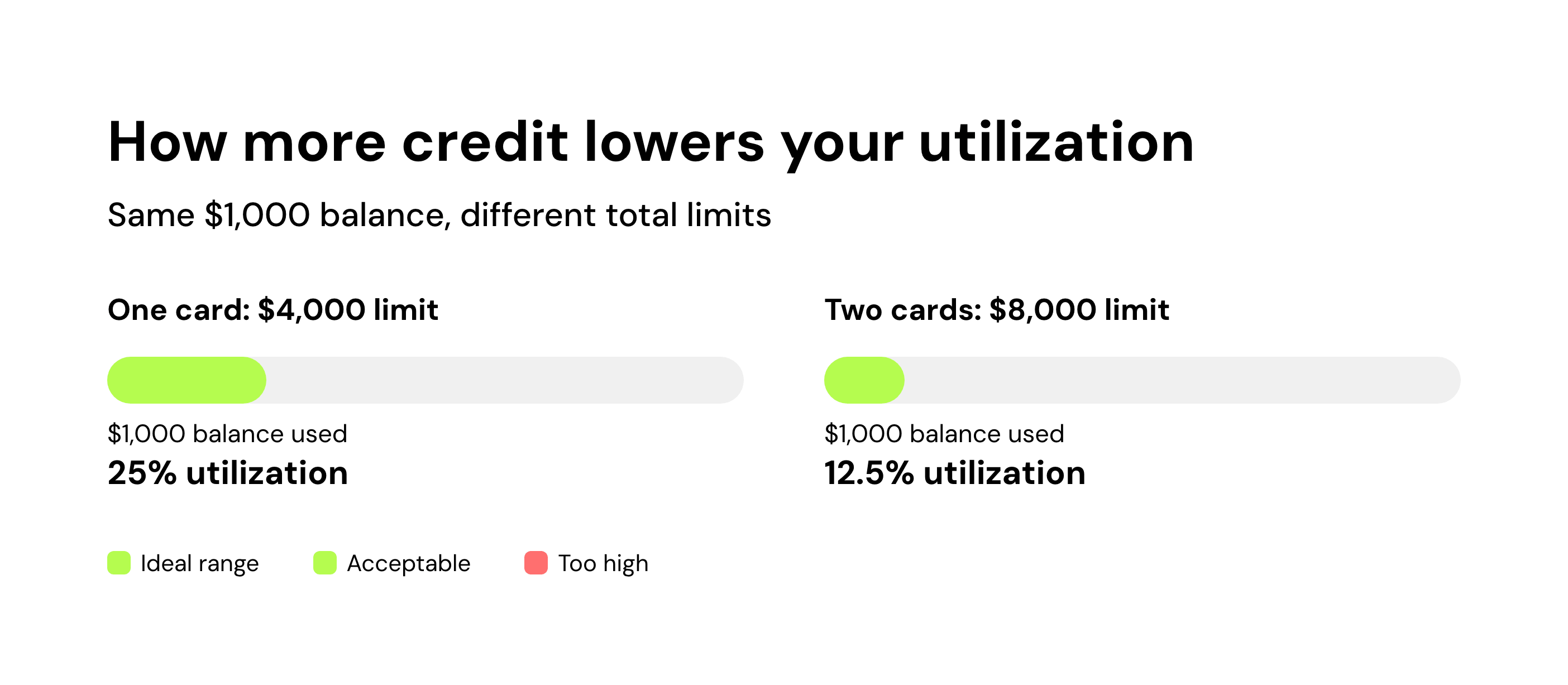
For example, imagine that you have a card with a $4,000 limit and a $1,000 balance. That means your utilization is at 25%. If you open another card with a $4,000 limit and don't use it, your utilization drops to 12.5%, and your score would likely increase.
Average age of accounts
When considering their number of credit cards and credit score, many people forget that the average age of their credit accounts matters. The amount of new credit you have accounts for 10% of your FICO score.
Too many new accounts in a short period of time suggests that you're a risk to the lender, which means if you want to open a new credit card, it's a good idea to wait at least six months after the last time you applied for credit.
Hard inquiries
A hard inquiry happens when a lender accesses your credit report to make a decision about lending money to you. Generally, a hard inquiry causes a small, temporary drop in your credit score.[3]
However, if you have too many hard inquiries in a short period of time, lenders may think you're desperate for credit. That makes you seem riskier to lend to, and your score is likely to drop.
Signs you might benefit from having more than one card
Having more than one credit card comes with benefits and drawbacks. If you're asking, "How many credit cards should I have?" and thinking about getting more than one credit card, there are some signs that it might be worthwhile.
You're trying to increase available credit
If you want to decrease your credit utilization but can't pay off your debt right now, opening another credit card might be a wise choice.
You have a thin credit file
If you have a thin credit file, it means you have a short credit history, a limited number of credit accounts, or both. Getting another card could help you build credit more quickly.
You want to maximize rewards
Some credit card rewards programs have different focuses. For instance, you might have one card that gives you cash back on groceries and another that comes with great travel rewards.
You need to separate expenses
If you need to separate personal and business expenses (or personal and household expenses), different credit cards can be a way to do that.
Signs you might be better off with fewer cards
Having more than one credit card comes with advantages, but it's not the right choice for everyone. There are several signs that you might be better off with fewer credit cards than you have now.
You're having trouble keeping track of payment dates
A missed payment can stay on your credit report (and impact your score) for seven years.[4] If you think you might miss a payment, you might want to downsize.
You're paying high annual fees
Some credit card annual fees pay for themselves, but not all of them do. If you're paying hundreds of dollars in fees for very little benefit, you might consider closing an account or two.
You're overspending or tempted to overspend
When you have a lot of available credit, it's easy to feel like overspending is no big deal. If you carry a balance from month to month, that means you're losing money to high interest rates. Once you pay off your existing cards, it might be a good idea to close an account or two.
Managing multiple accounts is causing you stress
If you find yourself getting anxious about managing your debt, closing one or more cards could improve your quality of life.
Want to learn more about building credit?
The number of credit cards you have can influence your credit score, but it's just one factor out of many. And if you want to build credit but aren't sure how to start, Kikoff might offer the support you need.
We're a credit-builder app offering credit lines, secured credit cards, rent reporting, and other resources to help you improve your credit. We also give you personalized spending insights to help you save money and better understand personal finance.
We don't check your credit when you sign up, and getting started is free. Create your account today!
Frequently Asked Questions
About the editor

Article Sources
Disclaimer: The information provided in this blog post is meant for informational purposes only and does not constitute financial advice.