



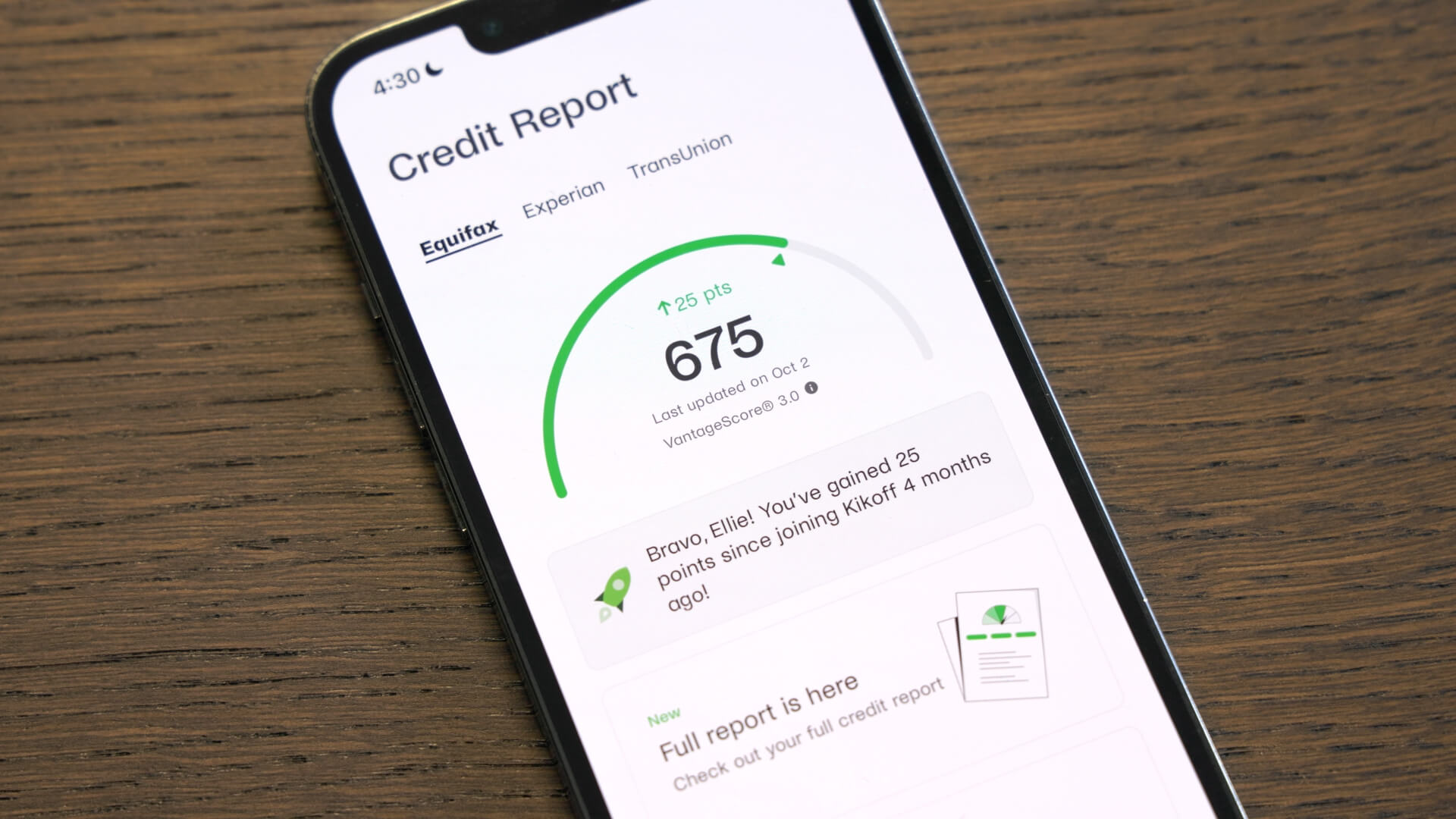
If you've ever opened two credit apps on the same day to see a 40-point difference, it's reasonable to wonder which one is lying to you. Usually, neither is.
Credit monitoring services don't calculate your score. They display data pulled from Equifax, Experian, or TransUnion run through a particular scoring model. And both of those inputs vary from service to service. So accuracy has less to do with which company you trust and more to do with whether you're seeing the right bureau and the right model for what you're trying to do.
Here's what accuracy really means in this context, which service fits which goal, and how to see the numbers a lender will pull.
Which credit monitoring service is the most accurate?
No single service is universally the most accurate, because accuracy splits into two separate questions:
- Data accuracy —meaning whether the accounts, balances, and payment records shown match what the bureaus actually have on file. Every legitimate service is generally equivalent, since they all license the same bureau data rather than generating it.
- Score accuracy — meaning whether the number you see matches what a lender will pull. This is where services actually differ.
Here's a breakdown of which service fits which goal.
| Goal | Best fit | Why |
|---|---|---|
| Tracking progress while building credit | Kikoff | Monitors the same three bureaus it reports to |
| Seeing the score a mortgage lender pulls | myFICO | Shows multiple FICO versions used in lending |
| Verifying raw report data | annualcreditreport.com | Full reports directly from the bureaus |
| Catching fraud quickly | Three bureau services with real-time alerts | New account alerts across all three files |
Best for tracking credit you're actively building: Kikoff
Kikoff is our top pick because it monitors the same bureaus it reports to.
Most monitoring services show you that your score moved without any way to tell why. With Kikoff, when your payment posts, you can see in the same app whether it landed and how your file responded. Eliminating the guesswork matters most in the early months, when you're trying to learn what's actually improving your score.
Kikoff's Premium and Ultimate plans cover Equifax, Experian, and TransUnion with alerts for score changes, new accounts, and balance updates starting at $20 a month.
That cause and effect is traceable, which matters most in the early months, when you're trying to learn what's successfully improving your credit. Kikoff also offers dispute tools that can help speed up the correction of inaccuracies on your report.
Most accurate for the score a lender will pull: myFICO
myFICO is the closest thing to understanding how an underwriter sees you as a potential borrower.
Most free apps display a VantageScore, which is a legitimate model but not the one used in the majority of lending decisions. FICO reports that its scores are used in the large majority of lending decisions, and different FICO versions apply to different products.
myFICO shows multiple FICO versions across all three bureaus on its top tier, including the older versions still used in mortgage underwriting. The tradeoff is cost, since full three bureau access generally runs around $39.95 per month. For that reason lots of people run it for a month or two ahead of a mortgage application rather than keeping it year round.
Most accurate for raw report data: The credit bureaus
If the question is what's actually on your file, go to the source. Federal law entitles you to free reports from all three bureaus at AnnualCreditReport.com, with pandemic-era weekly access extended indefinitely. These are complete reports rather than the summarized view most monitoring dashboards display, which matters when you're hunting for common reporting errors.
No monitoring service shows every line item, so this is a step worth taking before you apply for credit monitoring, no matter what else you use. Experian IdentityWorks is also worth noting here, since it comes directly from a bureau and generally reflects Experian changes without the delay of third parties. Just make sure you pull all three, because an error sitting on one report won't necessarily appear on the others'.
Read more >> What Are Credit Bureaus?
Why your score is different in every app
Three variables explain nearly every discrepancy people run into.
1. You're looking at different bureaus
Creditors aren't required to report to all three bureaus, so each file can contain a different mix of accounts. A card reporting only to TransUnion won't appear on your Equifax file, and that missing account changes your credit utilization, your account count, and your average account age.
2. You're looking at different scoring models
FICO and VantageScore weigh the same underlying data differently, and each has multiple versions in circulation. A 20 to 40 point spread between models on identical data is common rather than a sign that something is broken.
3. You're looking at different dates
Bureaus update as creditors report, which happens on each creditor's own cycle rather than on a fixed calendar. A score pulled the day before your statement posts and one pulled the day after can differ significantly, mainly because reported balances drive utilization.
Read more >> Why Are Credit Scores Different at Each Bureau?
FICO versus VantageScore
Both models run on a 300 to 850 scale, which is part of why people assume they are interchangeable.
FICO is the original model and remains the standard across most lending decisions, and it requires at least one account open for six months, with activity reported within the past six months, to generate a score. VantageScore was developed jointly by the three bureaus and can generate a score from a shorter history, which is why free apps and educational tools tend to display it.
Here's a breakdown of the practical differences.
| Factor | FICO | VantageScore |
|---|---|---|
| Created by | Fair Isaac Corporation | Equifax, Experian, and TransUnion |
| Where you see it | Lender decisions, myFICO, some card issuers | Most free credit apps |
| History needed | Roughly six months of activity | Can score thinner files |
| Versions in use | Several, varying by loan type | 3.0 and 4.0 |
Neither model is wrong, and a score from either one generally moves in the same direction when your underlying behavior changes.
The practical rule is to use VantageScore for tracking your trend and FICO when a specific application is coming up.
Read more >> What's the Difference Between FICO and VantageScore?
What lenders actually pull
Mortgage lending is where model differences carry the most weight.
Mortgage lenders pull all three bureaus, a practice known as tri-merge, and traditionally use Classic FICO versions that are older than the FICO 8 most apps display. When three scores come back, the lender generally uses the middle one rather than the average.
Written out, it works like this:
| Step | Result |
|---|---|
| Scores pulled (the "tri-merge") | Equifax 690, Experian 712, TransUnion 705 |
| Sorted low to high | 690, 705, 712 |
| Middle score used for underwriting | 705 (TransUnion) |
This is why monitoring only a single bureau can mislead you before a mortgage, since the file you're watching may not be the one that sets your rate.
Recent policy changes have added flexibility, with the Federal Housing Finance Agency approving VantageScore 4.0 as an option alongside Classic FICO for loans sold to Fannie Mae and Freddie Mac, initially through a limited lender rollout, while FICO 10T is planned for later adoption. Whether lenders will keep pulling all three files is also in flux: FHFA has floated moving to a two-bureau model alongside the new scoring models, so the exact number of reports pulled could change as this rolls out. Auto lenders and card issuers use their own preferred versions, which is another reason the number in your app is best treated as an estimate rather than a guarantee.
Read more >> Best Credit Monitoring Apps in 2026
When a monitoring service is wrong
Sometimes the data itself is the problem, and this is worth separating from normal model variation.
Errors originate with the creditor reporting the information or with the bureau processing it, not with the app displaying it. Common issues include accounts that belong to someone with a similar name, balances that were paid but never updated, duplicate collections, and closed accounts still showing as open. Studies of credit report errors have consistently found that a meaningful share of consumers have at least one inaccuracy on file, and some of those errors are significant enough to affect a lending decision.
Switching monitoring services will not fix any of this, because the next service pulls the same underlying data. The only real remedy is a dispute filed with the bureau reporting the error, and Kikoff provides free dispute tools to every user, with electronic filing for TransUnion and generated letters for Experian and Equifax. Disputes generally must be investigated within 30 days, and it is worth filing with each bureau separately if the same error appears on more than one report.
How to get a more accurate picture of your credit
Combining a few free and paid sources beats relying on any single number.
Pull your full reports from AnnualCreditReport.com first, since that is the only place you see everything line by line. Layer ongoing monitoring across all three bureaus on top so you catch changes between pulls, rather than discovering them months later. Check whether your card issuer or bank provides a free FICO score, since many do for free.
If a mortgage or auto loan is coming up in the next few months, pay for FICO access temporarily to see the versions your lender will use. Then focus on the behavior underneath the number, because payment history at roughly 35% and credit utilization at about 30% drive most of the movement. regardless of which model is doing the calculating.
Bottom line
The most accurate credit monitoring service is the one aligned with what you are trying to accomplish. For seeing the exact score behind a mortgage decision, a FICO-based service is worth the temporary cost, and for verifying what is actually on your file, nothing beats pulling the reports directly from the bureaus.
For everyday tracking, though, what matters most is coverage of all three bureaus and a clear path to act on what you find.
Kikoff covers all three on Premium and Ultimate with alerts for score changes, new accounts, and balance updates, plus free dispute tools. It also reports your on-time payments to Equifax, Experian, and TransUnion, which means the score you are watching reflects credit you are actively building rather than a number you can only observe.
Frequently Asked Questions
Article Sources
Disclaimer: The information provided in this blog post is meant for informational purposes only and does not constitute financial advice.