




Your credit score can drop even when nothing about your habits changed. A higher statement balance, a card closed for inactivity, or a mistake on your report can all affect your score. Find the cause first, because it decides whether you need to act or just wait for the next update.
Common reasons your credit score dropped
Your credit utilization changed
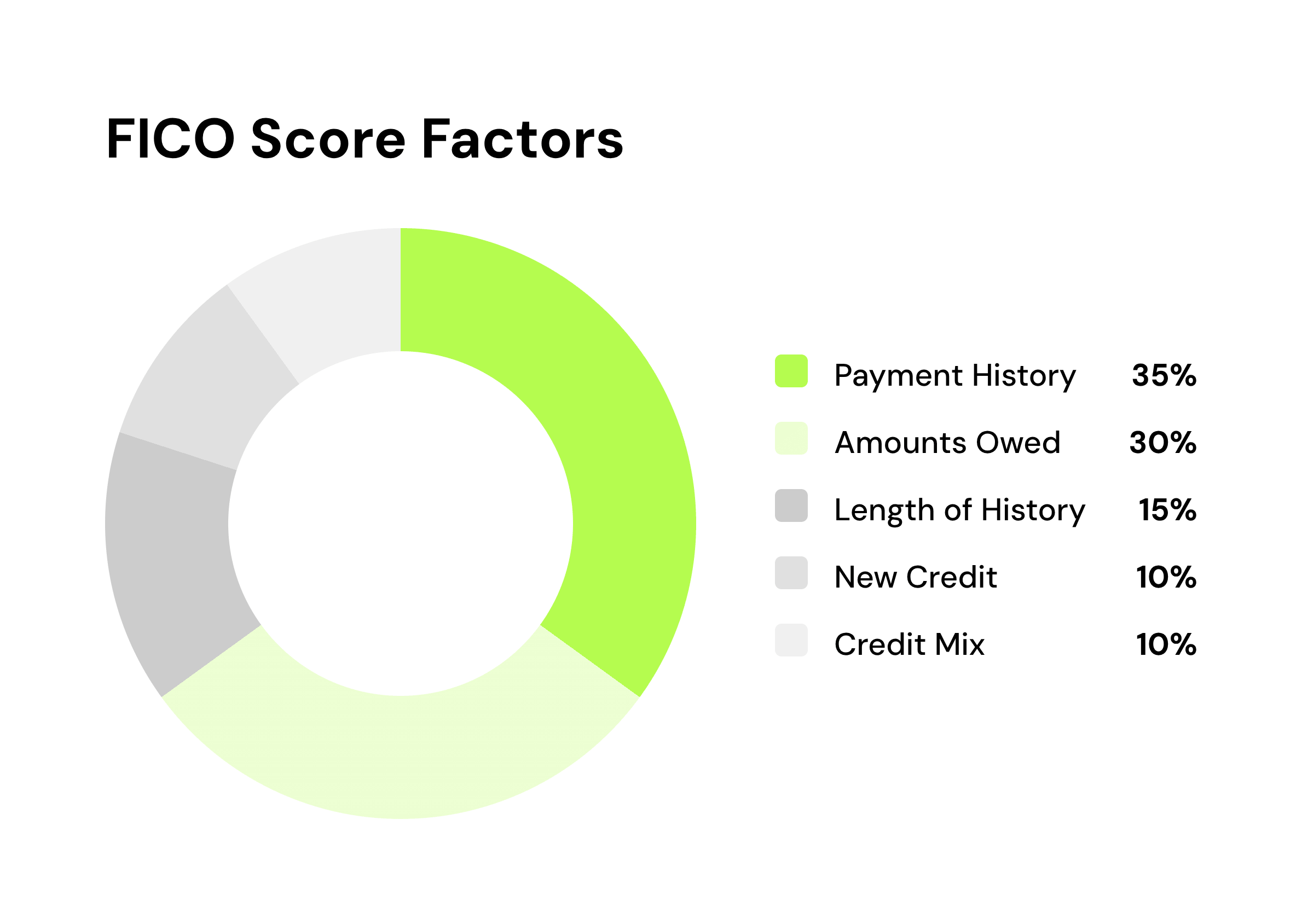
Your credit utilization rate reflects the percentage of your available credit you’re using at any given time. It’s a key part of the “amounts owed” category, which makes up 30% of your FICO Score. A common rule of thumb is to keep your credit utilization rate under 30%, but the lower, the better.
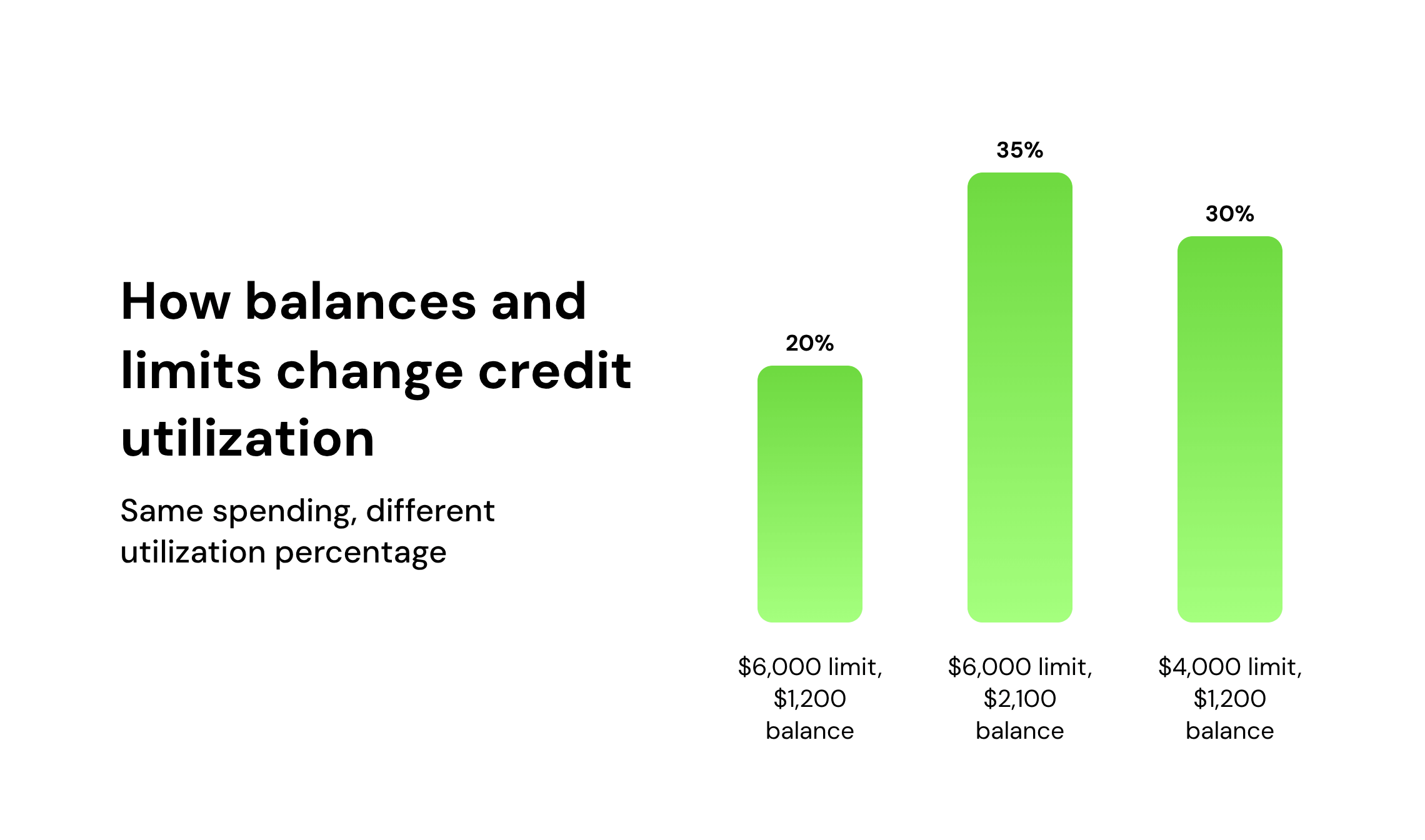
Let’s say you have three credit cards with a combined limit of $6,000, and you usually carry about $1,200 in balances. That’s 20% of your available credit. Put a $900 car repair on one card, and you’re now at $2,100, or 35% of your available credit, with no change in your habits. A lower credit limit can result in the same issue: If your total limit drops to $4,000, that same $1,200 is now 30% of your available credit.
Because issuers usually report your balance on your statement date, this can happen even if you pay in full every month. Once a lower balance is reported, your score typically recovers.
An old account was closed
Credit card issuers can close accounts due to inactivity. When a card closes, you lose its credit limit, so the same balances take up a bigger part of the available credit left. The account’s history doesn’t disappear: a closed account in good standing stays on your report for up to 10 years, counting toward your credit history. Equifax suggests using your cards every few months to keep them active, even if it’s just for small purchases.
A hard inquiry hit your report
When you apply for a new credit account, it will likely result in a hard credit inquiry. This allows the lender to view your credit file before making a lending decision. If you’ve applied for new credit recently, you may notice a short-term credit score drop. For most people, one inquiry takes less than five points off a FICO Score, and it's temporary. However, back-to-back hard inquiries can have a larger credit impact.
The exception is rate shopping. FICO counts multiple mortgage, auto, or student loan inquiries within a short window of 14 to 45 days, depending on the score version, as one.
A negative item appears on your credit report
A bill can become past due because it got lost in the mail or money was short that month. But once a bill becomes 30 days past due, the lender can report the late payment to the credit bureaus. Someone with excellent credit could see their score drop by 60 to 80 points from a single 30-day late payment, according to Experian, and it can stay on your report for seven years. If it’s your first late payment and you’ve caught up, ask the lender for a goodwill adjustment. Some will remove it.
You took out a new loan
New debt adds to the “amounts owed” part of your FICO Score.
If you’ve taken out a new loan, that balance will appear on your credit reports as a new debt. That’s true whether it’s a personal loan, student loan, mortgage, or car loan. You might notice a drop in your credit score, depending on other factors in your credit file. For example, new debt can have a greater negative impact if you have a thin credit file (only a few accounts) or have opened other new accounts recently.
You paid off a loan
Paying off a loan is good for your finances, but it can cause your score to dip. If it was your only installment loan, like a car loan or student loan with a fixed monthly payment, paying it off can reduce your credit mix, a factor that makes up 10% of your FICO Score. You also lose an active account that was adding on-time payments each month.
The paid-off loan won’t drop off from your report. It stays as a closed account in good standing, and the dip is usually temporary.
There’s an error or fraud on your report
If someone used your information to open accounts or run up charges in your name, report it at IdentityTheft.gov and dispute the fraudulent accounts with each credit bureau reporting them.
You can also dispute errors that aren’t fraud. Disputing is free, and the bureau generally has 30 days to investigate.
Common reporting errors that can drag down your score include:
- Incorrect balances
- Wrong payment statuses
- Duplicate accounts
- Closed accounts reported as open
Disputes only remove information that’s incorrect or incorrectly reported. You can’t remove accurate late payments or defaulted accounts.
Your score may not have dropped at all
You don’t have just one credit score. Before digging into your reports, make sure you’re comparing the same one.
- Bureaus keep different data. And not all lenders report to the three bureaus, so Equifax, Experian, and TransUnion can each include a slightly different version of your credit history.
- Models weight factors differently. FICO and VantageScore don’t assess information in the same way, and each has different versions. TransUnion’s free score relies on VantageScore 3.0, while Experian’s uses FICO Score 8. A lender may use an entirely different one.
- Reporting times differ. Bureaus typically get updates every 30 to 45 days, so a score from last month can reflect a different balance from today’s.
If your banking app shows a lower number than the one you saw last month somewhere else, that may not be a drop. Compare the same score from the same source over time for more accurate tracking.
Kikoff’s Credit Monitoring tracks your score, credit utilization, and payment history month over month and day over day, all from the same source, so you can tell a real drop from a different number.
Read more >> How to Monitor Your Credit Score
What to do if your credit score dropped unexpectedly
Take the following steps if you discover a surprise credit score drop.
Read more >> The Importance of On-Time Payments in Building Credit
Bottom line
Most surprise drops have a cause you can find on your credit report, and several of them, like a high statement balance or a new inquiry, fade on their own. What doesn’t fade is payment history, the biggest factor in your FICO Score, and it only grows one on-time payment at a time.
Kikoff’s Credit Account reports your on-time payments to Equifax, Experian, and TransUnion, with no credit check to sign up. Plans start at $5 a month.
Frequently Asked Questions
Article Sources
Disclaimer: The information provided in this blog post is meant for informational purposes only and does not constitute financial advice.