




A hard inquiry, or a “hard pull,” is when a lender checks your credit report when you’ve applied for new credit, like a mortgage, car loan, or credit card. It is recorded on your credit report and can lower your score by a few points.
Hard inquiries are unavoidable when you apply for new credit, but it’s important to understand the impact they have on your credit score.
What are hard inquiries on a credit report?
A hard inquiry is recorded when a lender checks your credit report after your formally apply for new credit. Many lenders will first do what’s called a “soft inquiry” or “soft pull” when pre-approving you for credit cards or other credit products. However, when you formally apply, they perform a “hard inquiry” or “hard pull.”
- What triggers one: Formally applying for a credit card, loan, or mortgage, where you’ve given permission for a credit check.
- What doesn’t: Checking your own credit, pre-approved offers, and employer or insurance background checks (these are soft inquiries).
- Score impact: Typically small, often a few points, and it fades over time. Inquiries matter less after about 12 months.
- How long it stays: Hard inquiries remain on your credit report for two years, but FICO scores generally only consider those from the past 12 months.
- Rate shopping: Multiple inquiries for the same type of loan (like a mortgage or auto loan) within a short window, often 14 to 45 days depending on the scoring model, are usually counted as a single inquiry.
Before a lender extends credit to you, they want to see how much of a risk you’ll be. A hard inquiry lets them access your credit file so they can see your payment history, how much of your available credit you’re using, and other key information.
What is a hard credit check vs. a soft credit check?
A “soft inquiry” is a credit check that doesn’t impact your credit score. Soft inquiries are usually conducted for reasons other than lending you money. Someone may run a soft inquiry in these situations:
- When you check your own credit
- When you’re preapproved for a credit offer
- When you apply for housing without a mortgage, like renting an apartment
- When you set up utilities at a new address
- When you purchase insurance
Many financial companies will also do a soft inquiry as part of the pre-approval process for loans and credit cards. If you don’t qualify, your credit score won’t be impacted. If you do pre-qualify, the lender will usually run a hard inquiry as part of the application process.
Read more >> What Are Soft Inquiries?
Why hard inquiries impact your credit score
Hard inquiries will generally cause a temporary drop in your credit report because it signals to lenders that you’re trying to take on new credit (and possibly new debt). When you take on more debt, you might be riskier to lend to.
A single hard inquiry will usually lower your score by five points or fewer and doesn’t have much impact on your credit score. However, multiple hard inquiries in a short period may signal to lenders that you’re desperate for credit.
One notable exception is rate shopping.
If you’re applying for credit and put in applications with multiple lenders to compare rates, the multiple hard inquiries will usually count as one inquiry on your credit report. However, you’ll need to make sure that you complete all applications within a set timeframe.
It’s important to note that only hard inquiries of the same type will be consolidated. For example, if you apply for five car loans in a week, your credit report will show one hard inquiry. If you apply for five car loans and a personal loan in a week, your report will show two hard inquiries.
How often to run hard inquiries
There’s no official limit for hot often to run hard inquiries, but a good rule of thumb is to apply for new credit only when you need it, and to space applications at least six months apart when you can. This timing spaces out the impact on your credit score and signals to lenders that you’re not desperate for credit.
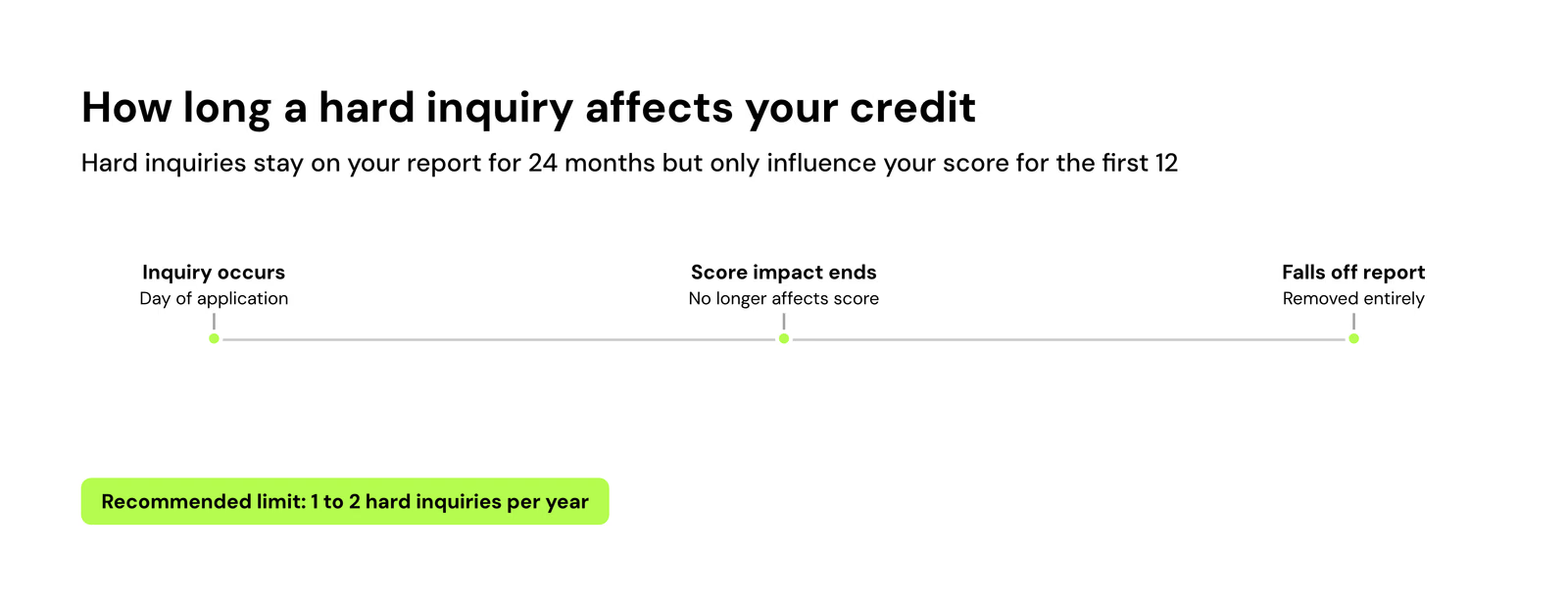
Hard inquiries will stay on your credit report for two years, however, they usually will only impact your credit score for about 12 months.
The type of credit you’re applying for also matters:
- Credit cards: Space applications out, roughly every six months or more. Some issuers also have their own rules, such as Chase declining applicants who’ve opened five or more cards in 24 months.
- Before a mortgage: Avoid new credit applications of any kind for several months beforehand, and don’t open anything new between pre-approval and closing.
- When your score is thin or low: Be more selective, since each inquiry weighs more on a short credit history.
When applying for credit, sue soft-pull prequalification tools first, which don’t affect your score, and only submit a full application when you’re ready to accept the offer.
Examples of hard inquiries
Hard inquiries are usually triggered when applying for the following types of credit:
- Credit cards, including store credit cards
- Personal loans
- Auto loans
- Mortgages and mortgage refinancing
- Student loans
- Lines of credit
- Buy now, pay later (BNPL) financing that requires a credit check
- Debt consolidation loans
Want to build credit without a hard inquiry? Kikoff is a credit-builder app that doesn’t check your credit to sign up or get started.
Bottom line
Hard inquiries happen when you apply for new credit and a lender checks your credit report to assess your risk. They can temporarily lower your credit score by a few points, but their impact is usually minor and fades over time.
If you’re looking to build your credit without applying for traditional credit products, a credit-builder app like Kikoff could be an option.
Once you’re approved (with no credit check!), you get a small credit line. You make purchases in the Kikoff store and pay them off, and we report your payments to credit bureaus. If you’re ready to start building, open an account with Kikoff today!
Frequently Asked Questions
Disclaimer: The information provided in this blog post is meant for informational purposes only and does not constitute financial advice.