



Credit card tokenization is a security step that swaps your real card number for a stand-in code, called a token, when you pay. The store, app, or phone keeps the token instead of your card number. If a hacker steals it, they usually can’t use it to shop anywhere else.
You’re probably already using it. Tokenization runs in the background every time you tap your phone at a register, and it costs you nothing. It has limits, though. A token guards your card number at checkout, but it can’t protect you from a scammer who asks for your card details, and it does nothing for your Social Security number.
How tokenization works when you pay
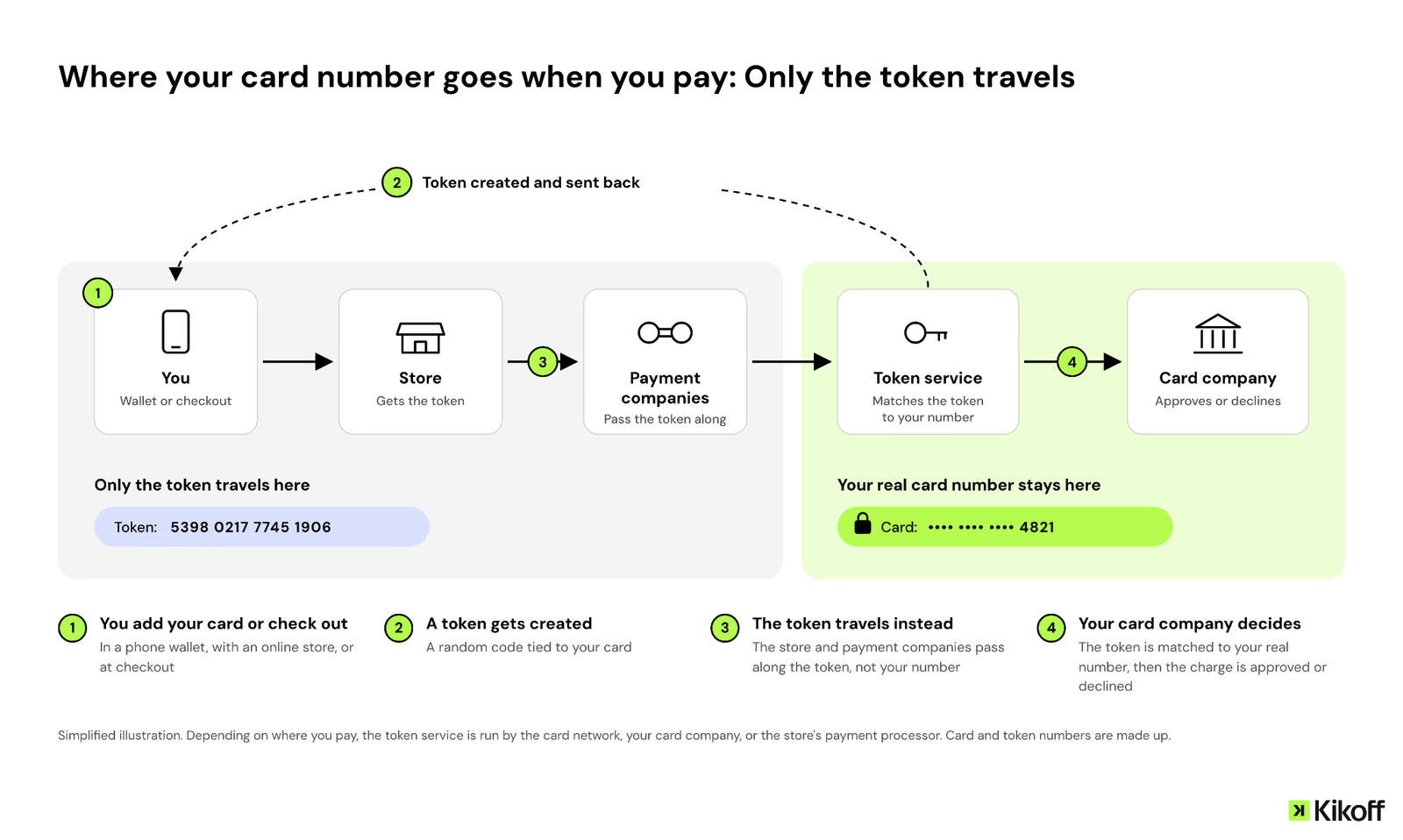
You don’t have to turn anything on. Behind the scenes, four things happen in order:
- You add your card or check out. You add a card to a phone wallet, save it with an online store, or pay with one of them.
- A token gets created. A token service creates a random code tied to your card. Depending on where you pay, that service is run by the card network, your card company, or the store’s payment processor.
- The token travels instead of your number. The store and the payment companies in the middle pass along the token, not your card number.
- Your card company approves the charge. The token service matches the token back to your real number, and your card company approves or declines the purchase.
Phone wallets show how this looks in practice. Apple says it doesn’t store the original card numbers you use with Apple Pay. Instead, your bank or card company creates a device-specific Device Account Number, and each purchase adds a security code that’s unique to that transaction.
Tokenization vs. encryption
Encryption scrambles your card number so someone with the key can unscramble it. Tokenization swaps the number for a code with no math connection to it, so only the token service can match the two. Many payment systems use both.
Read more >> Are Digital Wallets Safe to Use?
What tokenization doesn’t protect
Tokens protect your number while it’s stored and while it travels. They don’t cover these:
- Scams. If someone calls, texts, or emails and gets you to read out your card number and security code, they have your real number. Hang up and call the number on the back of your card instead.
- Logged-in accounts. A saved-card token still works at the store it was made for. If someone gets your password for that store, they can shop with your saved card. Use a different password for each store, and turn on two-step verification when it’s offered.
- Your identity. Tokens cover one card. They can’t stop someone from using your name and Social Security number to open a new account.
Read more >> 6 Common Credit Card Scams and How to Avoid Them
If your card information gets exposed
Start with your card company as soon as you notice something. Call the number on the back of your card or report it in the app. Then follow up in writing. Send a letter to the address your card company lists for billing disputes (credit cards) or errors (debit cards), which may be different from where you send payments. Include your account number, when you noticed the problem, and when you first reported it, and keep a copy. Ask whether you need a new card number and whether the cards in your phone wallet will update on their own.
Reporting fast protects your money, especially on a debit card. Federal law caps what you can owe for unauthorized charges, and the debit limits depend on when you report.
With a debit card, the money leaves your checking account right away. If your bank needs more than 10 business days to look into it, it generally has to put the money back in your account temporarily while it finishes. Ask your bank about this, called provisional credit, when you report.
Next, get your free credit reports from AnnualCreditReport.com, which you can do every week. Look for accounts or credit checks you don’t recognize.
If someone is using your identity, not just your card, report it to the FTC at IdentityTheft.gov or by phone at 877-438-4338. You’ll get an Identity Theft Report and a recovery plan based on what you report. You can also place a free fraud alert, which lasts one year and can be renewed. Contact one credit bureau, and it must tell the other two. A credit freeze is free too, but you have to contact Equifax, Experian, and TransUnion separately.
Read more >> How to Protect Yourself From Credit Card Fraud
Bottom line
Tokenization keeps your real card number away from most of the stores and apps you pay, so a breach at one of them is less likely to expose it. It does nothing about a new account opened in your name.
Free weekly reports can catch that, but only when you remember to pull all three. Kikoff Premium watches your Equifax, Experian, and TransUnion reports and alerts you to new accounts, so you hear about one without going looking. It’s $20 a month.
Frequently Asked Questions
Article Sources
Disclaimer: The information provided in this blog post is meant for informational purposes only and does not constitute financial advice.