


A FICO score is a three-digit number that reflects how you've been managing your credit, ranging from 300 to 850. This number is based on factors like your payment history, amounts owed, and credit mix. “FICO” stands for “Fair Isaac Corporation,” the name of the data analytics company that came up with the calculation.
Lenders use your credit score to evaluate your credit risk and what terms to offer, including your interest rate. Lower credit scores generally receive higher interest rates to offset the lender's risk.
What is a good FICO score?
A good FICO score is generally considered 670 or higher, and a score of 740 or higher is considered exceptional. Scores in these ranges may help you qualify for better loan terms.
Your credit score is just one factor in whether a lender approves your credit application. You income, employment history, and the type of credit you're applying for also factor in to the decision. For example, someone applying for a low-limit, secured credit card may have a better chance of being approved than applying for a high-limit, unsecured one.
Read more >> What Is a Good Credit Score ?
How FICO scores are calculated
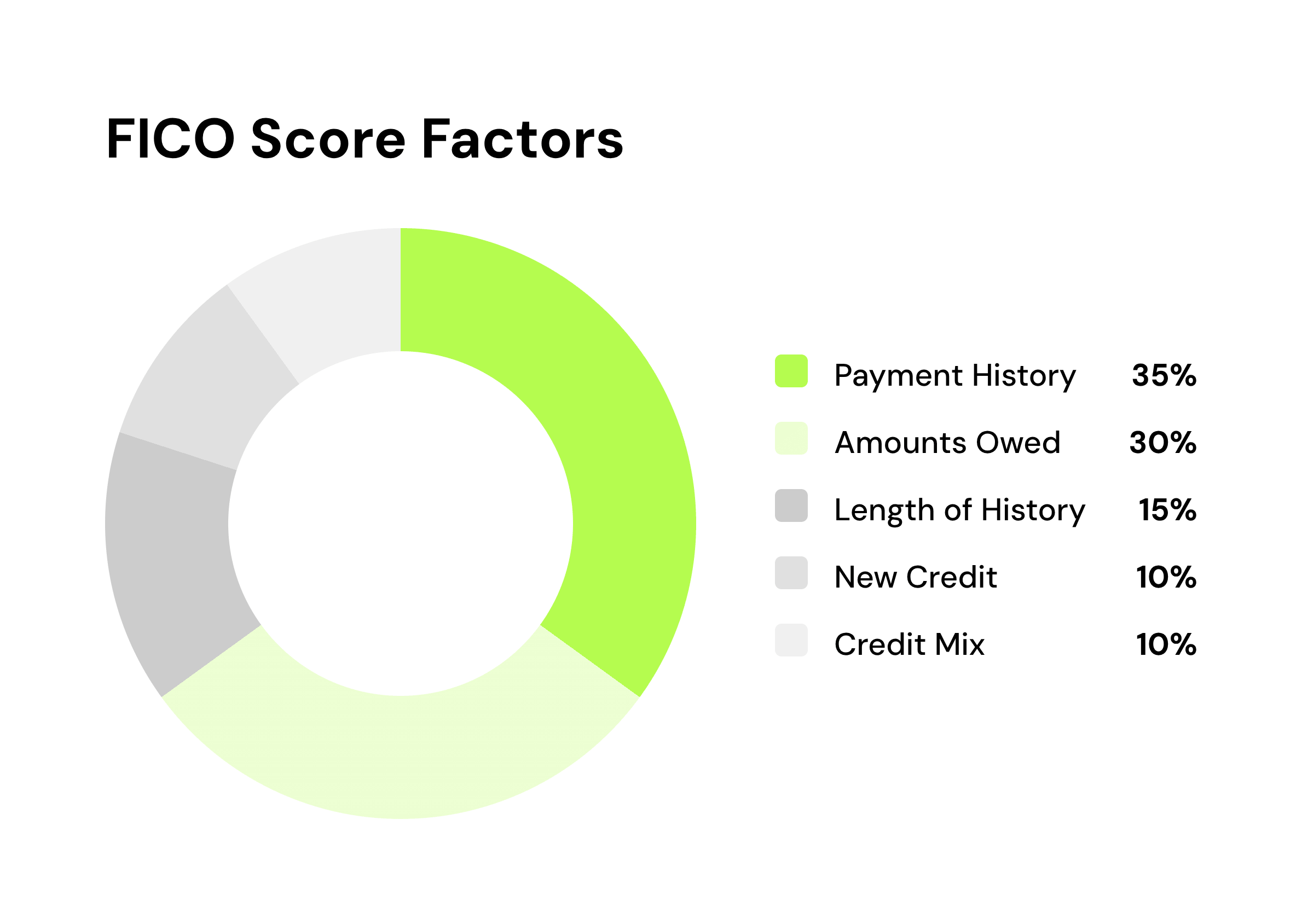
FICO scores are calculated using five weighted factors, including your payment history, amounts owed, length of history, new credit, and credit mix. Each factor has a different weight in determining your score.
Understanding these factors can help you learn which is most affecting your credit score and what you can do to improve it.
Read more >> How Long Does It Take to Build Credit
Payment history
Your payment history reflects how consistently you've made payments toward your debt, including any late or missed payments. It is the most important factor in your credit score. Even a single late payment can lower your score and remains on your credit report for seven years. However, most lenders will give you 30 days before they report a late payment to a credit bureau.
Your biggest bill may be building nothing
Rent is usually the largest and most consistent payment a renter makes, and many landlords don’t report it to the credit bureaus. Years of paying on time can leave your file exactly where it started.
Kikoff Rent Reporting adds your rent to your Equifax and TransUnion reports, and can include up to two years of past rent. That's payments you’ve already made, counting for the first time.
Amounts owed
This part of your FICO score looks at how much money you owe on your credit cards and loans. For credit cards, a good rule of thumb is to use less than 30% of your credit limit. For example, if your card limit is $1,000, try to keep your balance under $300. The lower your balance, the better it can be for your score.
Length of credit history
Length of history refers to how long you've had your accounts open, including the age of your oldest account and the average age of all your open accounts. A longer credit history gives lenders a better idea of how well you manage credit over time. If you have no credit history or a very limited credit history, a lender may not have enough information to determine whether you’re risky to lend to or not.
New credit
New credit considers how often you apply for new credit and how recently you've opened new credit accounts. When you apply for new credit, a lender does a hard inquiry into your credit and your score will likely drop a few points. If you apply for a lot of new credit in a short period of time, you might see a bigger decline in your credit score.
Credit mix
Credit mix refers to the different types of credit on your credit report. There are two main types:
- Revolving credit: Credit you can borrow, repay and reuse. Credit cards are a common form of revolving credit.
- Installment loans: Credit you receive usually in a lump sum and repay in installments over time. A mortgage or car loan are examples of installment loans.
Lenders like to see that you can handle different kinds of credit. This matters less than your payment history or how much you owe, so consider whether taking on new debt just to improve your mix will impact the other factors in your credit score.
Where to view your FICO score
What is FICO score reporting? There are several ways to keep track of your FICO score. Many banks and financial institutions offer credit monitoring to account holders. You can also access a copy of your complete credit report at AnnualCreditReport.com.
- Banking apps. Many banks and card issuers share your FICO score with you at no cost. Look in your online account or mobile app, often under “credit score” or “credit insights.”
- Experian. You can also check your FICO Score 8 through a free Experian account.
- AnnualCreditReport.com. You can get a free credit report from each of the three major bureaus every week. It won’t show your FICO score, but it shows what’s behind it. Use it to check for mistakes, like an account that isn’t yours or a payment marked late when you paid on time.
If you want to keep a close eye on your credit score, it might be worth signing up for a credit monitoring service.
Good facts to know about checking your FICO score.
Checking your own score won’t hurt it. Looking at your own FICO score counts as a “soft inquiry,” which doesn’t affect your score at all.
Your score may look different in different places. Each source may use a different credit bureau or a different version of the score. That’s normal. Look for the words “FICO Score” on the screen, because many free apps show a score that isn’t a FICO score.
A score is not a credit report. Your credit report lists your accounts, balances, and payments. Your score is a number based on that information. You can get free credit reports from all three major bureaus at AnnualCreditReport.com. Check yours for mistakes.
What is FICO score vs. VantageScore?
FICO and VantageScore are both types of credit scores, but they’re calculated slightly differently. Here are the weighted factors VantageScore uses:
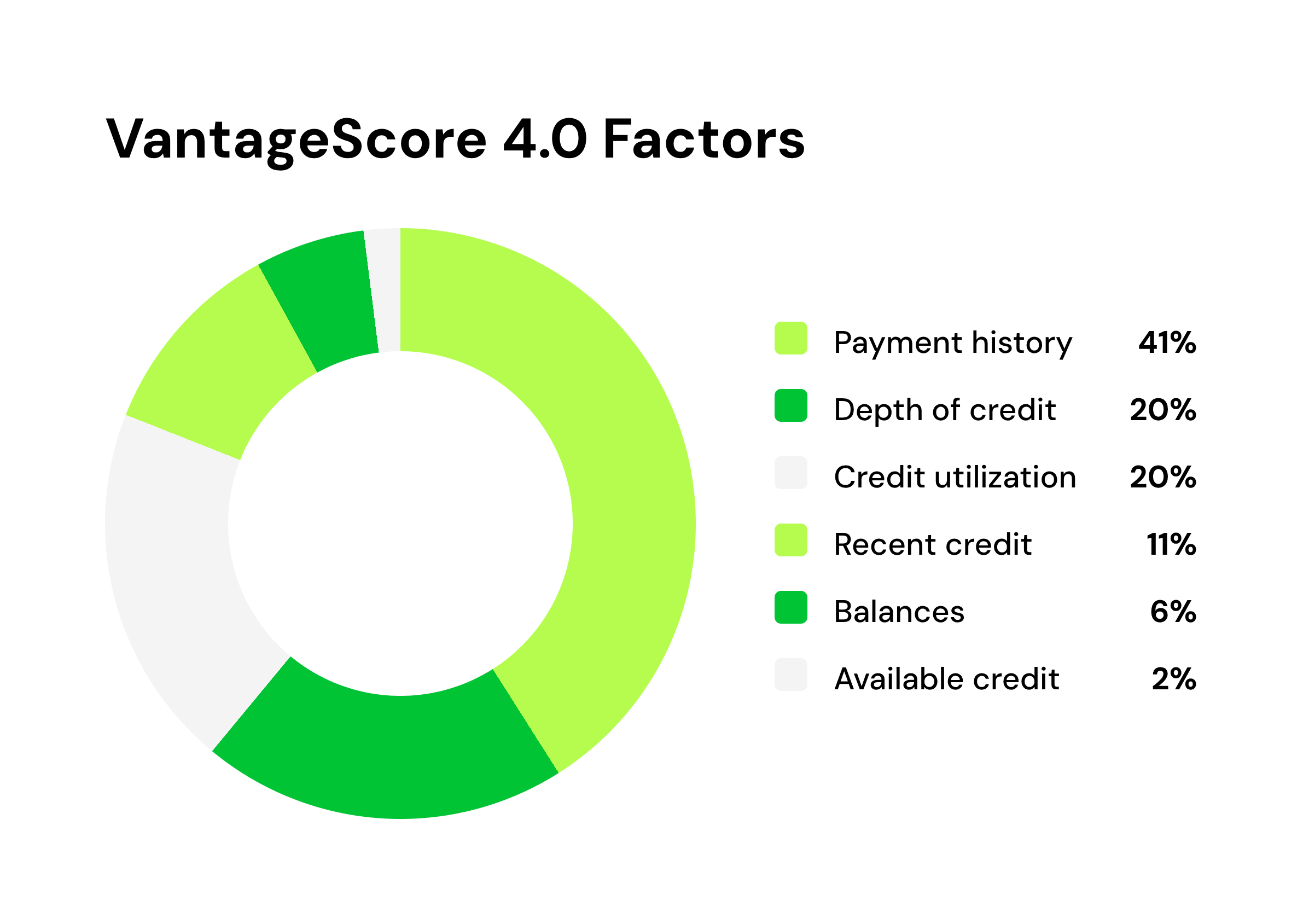
Although some lenders may use VantageScore, it’s important to note that FICO is considered the industry standard. About 90% of top lenders will use your FICO score when evaluating your creditworthiness.
Read more >> What's the Difference Between FICO and VantageScore
How to improve your FICO score
How to improve your FICO score depends on your particularly credit history. It also takes time, but small steps can add up. These strategies may help you improve it:
- Pay every bill on time. This matters most. If you’re worried about missing a due date, set up reminders or automatic payments for at least the minimum amount.
- Pay down your credit card balances. Try to use less than 30% of your credit limit. For example, on a $1,000 limit, aim to stay under $300. Even small extra payments help.
- Keep old accounts open. A longer credit history is better for your score. If an old card has no fee, keep it open and use it for a small purchase once in a while.
- Apply for new credit only when you need it. Each application can lower your score a little, and several in a short time can add up.
- Check your credit report for mistakes. An account that isn’t yours or a payment wrongly marked late can pull your score down. You can get free reports at AnnualCreditReport.com, and you can dispute errors with the credit bureau.
If you need to improve your FICO score, the Kikoff Credit Account is a credit line that reports to all three credit bureaus. There is no deposit required and no credit check to open it. When you pay on time each month, that payment is added to your credit history at Equifax, Experian, and TransUnion — the factor both FICO and VantageScore weigh most. It can also help lower your utilization, since the account also adds to your available credit.
Bottom line
Your FICO score is a three digit number generated from your credit report based on how you handle credit. It includes five weighted factors: payments history, amounts owed, length of history, new credit and credit mix.
If you don't have enough history for a score at all, the first step is simply getting one reported account open. Kikoff gives eligible users access to a Kikoff Credit Account with no interest and no hard credit check to sign up, and reports monthly payments to all three credit bureaus.
Build credit with Kikoff and start building the payment history your score is based on.
Frequently Asked Questions
Article Sources
Disclaimer: The information provided in this blog post is meant for informational purposes only and does not constitute financial advice.