




Most cash advance apps don’t check your credit or report advances to the credit bureaus, so taking one usually won’t change your score. What matters more is what it costs and when the money comes back out of your account.
Do cash advance apps check your credit?
Cash advance apps don’t typically run a hard credit inquiry when you request money. Instead, they usually review your income, bank account activity, and deposit history to determine whether you qualify.
A hard inquiry happens when a lender checks your credit as part of an application. It can lower your score by a few points for about a year. A soft inquiry doesn’t affect your score.
For example, Grant Cash Advance offers $25 to $500 to eligible customers with no credit check and no interest, though most qualify for less. Same-day delivery is available for a fee, and availability varies by state.
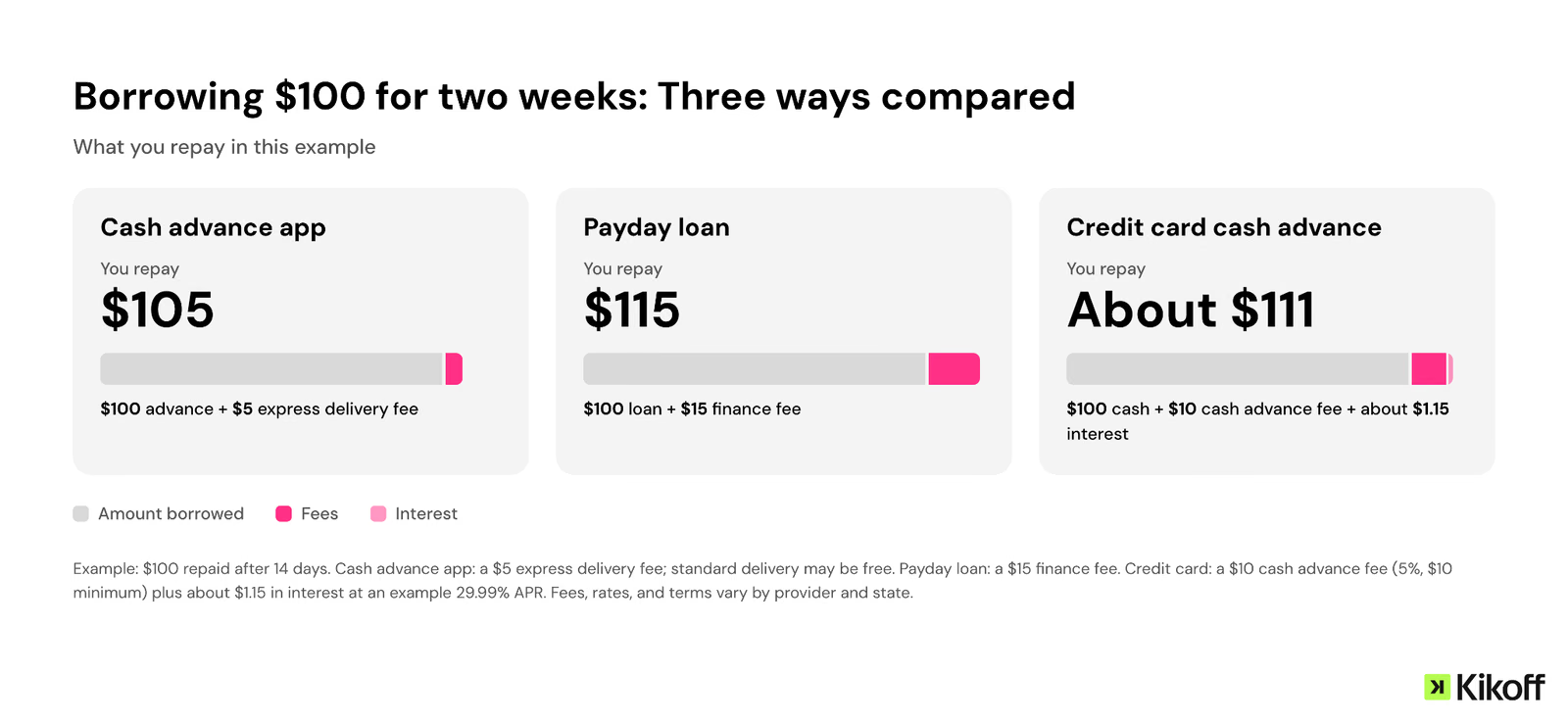
A cash advance app can cost far less than a payday loan, which commonly charges $15 for every $100 you borrow, according to the Consumer Financial Protection Bureau.
Do cash advance apps report to the credit bureaus?
Many cash advance apps don’t report your advances or repayment history to Equifax, Experian, or TransUnion.
It means a missed repayment usually won’t show up on your report, but neither will an advance you pay on time. Some apps also sell separate credit-building products that do report to the bureaus. Check which product you’re signing up for, and don’t assume an app’s credit-building features apply to its cash advances.
Does the CFPB’s 2025 ruling cover cash advance apps?
Usually not. In December 2025, the Consumer Financial Protection Bureau said certain earned wage access programs aren’t credit under federal lending law. Earned wage access lets you draw on pay you’ve already earned. The opinion covers only programs repaid through your employer’s payroll, which agree not to check credit, use debt collectors, or report to the credit bureaus. Apps that debit your bank account instead aren’t covered, so read their terms on collections and credit reporting.
What happens if you don’t repay a cash advance app?
Missing a repayment usually won’t show up on your credit report, but it can cause other problems:
- No new advances until you repay what you owe.
- Bank fees. If the app’s withdrawal fails, your bank may charge an overdraft or insufficient-funds fee. Some apps try again, which can mean another fee.
- Collections. Some apps can send an unpaid balance to a debt collector, and a collection can show up on your credit report. Check the agreement for “collections” before you accept.
The real costs of cash advance apps
Cash advance apps often charge no interest, but that doesn’t make them free.
The cost usually comes from one or more of these fees:
- Fast-delivery fees. Getting the money the same day usually costs extra. Slower delivery is often free, so if you can wait a day or two, choose it.
- Monthly subscriptions. Some apps charge a membership fee whether or not you take an advance that month. When you sign up for an app, check whether you’re also signed up for a subscription, and how to cancel it.
- Optional tips. Before you confirm an advance, check whether a tip amount is already filled in.
How costs can add up
- Small fees add up when they repeat. A $5 fast-delivery fee every two weeks comes to $130 a year. A subscription you keep but rarely use adds $120 a year by itself.
- Watch for costs outside the app. Repayment comes out of your bank account automatically on payday. If the money isn’t there, your bank may charge an overdraft or insufficient-funds fee. Using two or more apps means more than one withdrawal can hit on the same payday.
- The biggest cost can be the next paycheck. Repaying an advance means you start the next pay period with less. If that leaves you short again, it’s easy to take another advance, and the fees repeat. If repaying would leave you short on rent or groceries, first call the company you owe and ask for more time, or check whether a credit union offers a small loan.
Read more >> 5 Ways to Get $100 Before Payday
When advances become a regular expense
If you’re taking an advance most pay periods, the fees add up to a monthly bill of their own. A nonprofit credit counselor can go over your budget with you and suggest other options. The National Foundation for Credit Counseling can connect you with free or low-cost counseling at 800-388-2227.
Cash advance apps vs. payday loans vs. credit card cash advances
All three can get you a few hundred dollars fast. They differ most in what they cost and what ends up on your credit report.
Payday lenders generally don’t use your credit reports or scores, and most don’t report your loan to the major credit bureaus. The real catch is cost: At $15 per $100, a two-week $300 loan costs $345 to repay. If you roll it over, you pay another fee and still owe the full $300.
Credit card cash advances use your existing credit line, so the balance can raise your credit utilization, which is how much of your available credit you’re using. A higher reported utilization can lower your credit score. Cash advances also usually carry a higher interest rate than purchases, with no grace period.
Read more >> What Is a Cash Advance and How Does It Work?
If you want to build credit
Credit is built by on-time payments on accounts that report to credit bureaus. Cash advance apps usually don’t report, so they can’t help.
- Check your credit reports first. They’re free every week at AnnualCreditReport.com. If you find a mistake, disputing it with the credit bureau is free.
- If you have credit cards or loans, keep paying on time. A payment usually isn’t reported as late until it’s 30 days past due.
- If you have credit cards, keep the balances low compared with your limits.
Most phone and utility companies don’t report on-time payments on their own. If you don’t have accounts that report yet, a reporting service can add the bills you already pay. Kikoff’s Bill Reporting sends on-time phone and utility payments to TransUnion. It comes with Kikoff Premium and Kikoff Ultimate starting at $20 a month.
Bottom line
Cash advance apps usually don’t hurt or help your credit directly. The biggest risk is cost: a fee on each fast advance, and a repayment that can leave you short the next pay period.
Repaying an advance on time doesn’t add anything to your credit history, because nothing reports it. A Kikoff Credit Account reports your on-time payments to Equifax, Experian, and TransUnion, with no credit check to sign up. Plans start at $5 a month.
Frequently Asked Questions
Article Sources
Disclaimer: The information provided in this blog post is meant for informational purposes only and does not constitute financial advice.