




A chargeback is when your card company takes back a charge you dispute. It’s your backup when a store won’t fix a problem or when you didn’t make the charge at all. You have 60 days from the statement showing the charge to act, and your rights depend on whether you used a credit card or a debit card.
What is a chargeback?
A chargeback isn’t the same as a refund. With a refund, the store agrees to give your money back. With a chargeback, your card company, usually your bank, reviews the dispute and decides what happens.
How does a chargeback work?
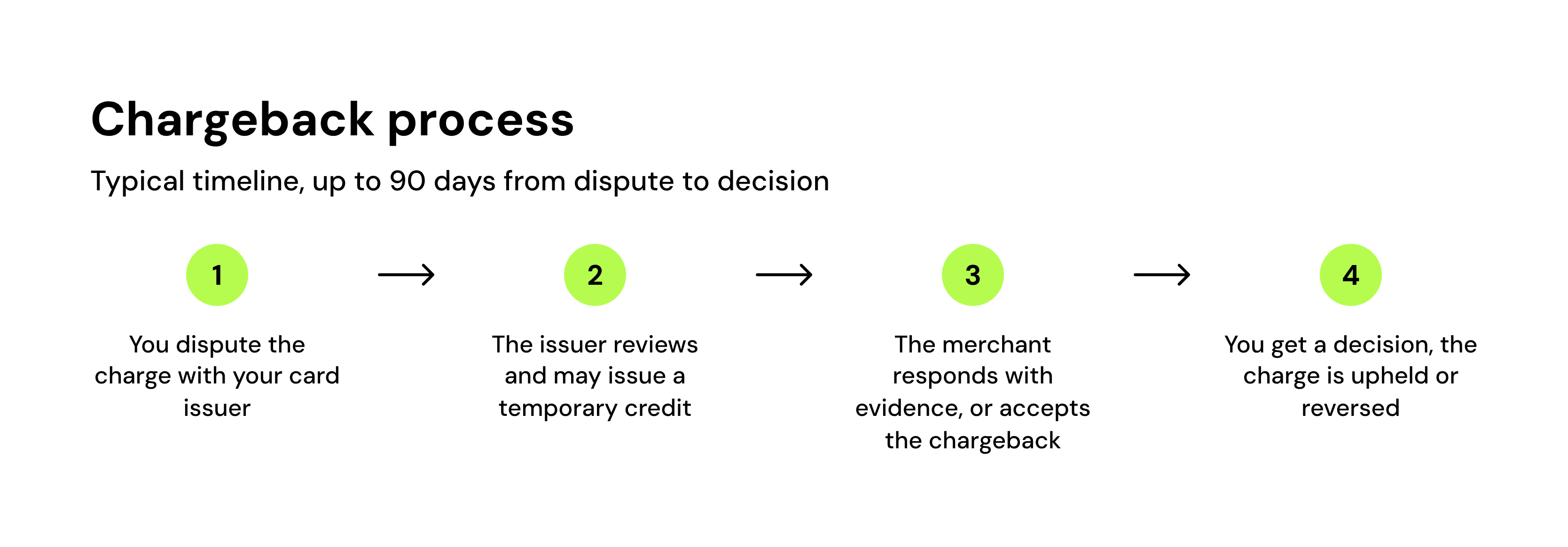
Step 1: You dispute the charge
Contact your card company by phone, online, or in its app. You have to report the problem within 60 days of when the first statement with that charge was sent to you. After you call or file online, follow up right away with a letter disputing the charge. On a credit card, the written notice is what triggers your full legal protections, so don’t skip it, even if you already filed online.
Before you send it
- Mail it so it arrives in time. It has to reach your card company within 60 days of when the first statement showing the charge was sent. Certified mail with a return receipt gives you proof of when it arrived.
- Send copies, not originals. Keep your originals and a copy of the letter.
- Keep it to the facts. Dates, amounts, and what happened are enough. You don’t need to explain your finances or apologize.
- Write down your confirmation number from the call or online dispute, and keep it with your copy of the letter.
Step 2: Your card company looks into it
Your card company confirms that it received your dispute and investigates. For a credit card, it must acknowledge your dispute in writing within 30 days.
Step 3: The store responds
Your card company contacts the store for its side. The store can accept the chargeback or send proof, such as delivery tracking or a signed agreement.
Step 4: You get a decision
If your card company agrees with you, the charge comes off for good, along with any interest or fees connected to it. If it agrees with the store, the charge stays. You’ll get a written explanation, and you’ll owe that amount.
Read more >> How to Handle Fraudulent Charges on Your Account
Common reasons for chargebacks
Most chargebacks happen because a charge is wrong or a purchase didn’t go as promised:
- A charge you didn’t make, such as someone using your card number
- Something you ordered that never arrived
- A return that wasn’t credited to your account
- The wrong amount or a duplicate charge
- An item or service that wasn’t what was promised
- A subscription that kept charging you after you canceled
On a debit card, federal law covers charges you didn’t make and errors like a wrong amount. It doesn’t cover a dispute over what you bought, such as an item that never arrived or wasn’t as described. For those, you’re relying on your bank's policy.
Read more >> How to Protect Yourself From Credit Card Fraud
Don’t recognize a charge? The store’s billing name might not match the name you know. Search the name on your statement first.
If you still don’t recognize it, treat it as fraud: report it to your card company and ask for a new card. Someone with your card number may have other personal information too, so consider a credit freeze. It’s free at Equifax, Experian, and TransUnion, and it stops anyone from opening new credit in your name until you lift it.
At a glance: Chargeback vs. refund
Even if you expect the store to fix things, it's worth contacting your card company first for most problems so you don’t run out of time to dispute. You can contact the store at the same time. If the store fixes the problem, check your account to make sure the credit shows up, then let your card company know.
How long does a chargeback take?
It depends on whether you used a credit card or a debit card.
Legal protections for credit cards are stronger than for debit cards, though some banks offer more debit protection than the law requires. On a debit card, how fast you report fraud also changes how much you can lose: up to $50 if you report within two business days of learning your card was lost or stolen, up to $500 after that, and potentially everything taken if you wait more than 60 days after your statement. If you have a credit card, using it for online purchases gives you more protection if something goes wrong.
What if you paid with Zelle, Cash App, or Venmo?
Payment apps and bank transfers don’t typically have chargebacks. Your protection depends on who sent the money.
If someone else sent it, it counts as an unauthorized transfer. That includes someone who tricked you into sharing your login or a verification code and then moved the money themselves. The same federal rules that cover debit cards apply: any payment app transfer that counts as an electronic fund transfer is covered, according to the CFPB, and that includes transfers made after you were fraudulently induced into sharing account access information. Report it to your bank and the app within 60 days of the statement showing the transfer.
If you sent the money yourself, even to a scammer, federal law treats it as authorized. You don’t have a legal right to get it back. Report it to your bank and the app anyway, because some will still help. Then report the scam to the FTC at ReportFraud.ftc.gov.
When you’re paying someone you don’t know, a credit card gives you the strongest dispute rights.
Read more >> Are Credit Cards Safer Than Debit Cards?
Can a chargeback be denied?
Yes. A chargeback can be denied if the store shows you approved the charge or received what you paid for. It can also be denied if you file after the deadline.
If a credit card dispute is denied, you’ll owe the charge plus any interest that built up while it was disputed. Your card company has to tell you in writing how much you owe and when. It can’t report you as late until your normal grace period or 10 days has passed, whichever is longer. If you disagree, you can appeal within 10 days of getting the explanation, or within the time your card company gives you, whichever is later.
If your dispute is denied, ask your card company for the documents it used to decide. If you have new proof, send it. If you think the card company didn’t follow the rules, you can file a free complaint with the CFPB.
How chargebacks can affect your credit
A chargeback isn’t a negative mark on your credit report, and filing one won’t hurt your score.
While a credit card dispute is open, keep paying the rest of your bill on time. Your card company can’t report the disputed amount as late, but it can note on your report that you’re disputing it. It also can’t close or restrict your account just because you filed a dispute in good faith, though it can count the disputed amount against your credit limit.
If the disputed amount was reported late while the dispute was open, that’s an error. You can dispute it for free directly with Equifax, Experian, or TransUnion. Kikoff’s AI Credit Disputes can help you spot the error and write a personalized dispute letter in a few taps.
Read more >> How to Place a Fraud Alert With the Bureaus
Bottom line
A chargeback gets your money back when a store won’t, or when the charge was never yours. File with your card company within 60 days of the statement, follow up in writing, and keep paying the rest of your bill.
If the charge was fraud, the chargeback fixes that one charge. It won’t tell you if someone uses your information to open an account in your name. Kikoff’s Credit Monitoring checks your credit report every week, so a new account you didn’t open doesn’t go unnoticed. Plans start at $5 a month.
Frequently Asked Questions
Article Sources
Disclaimer: The information provided in this blog post is meant for informational purposes only and does not constitute financial advice.