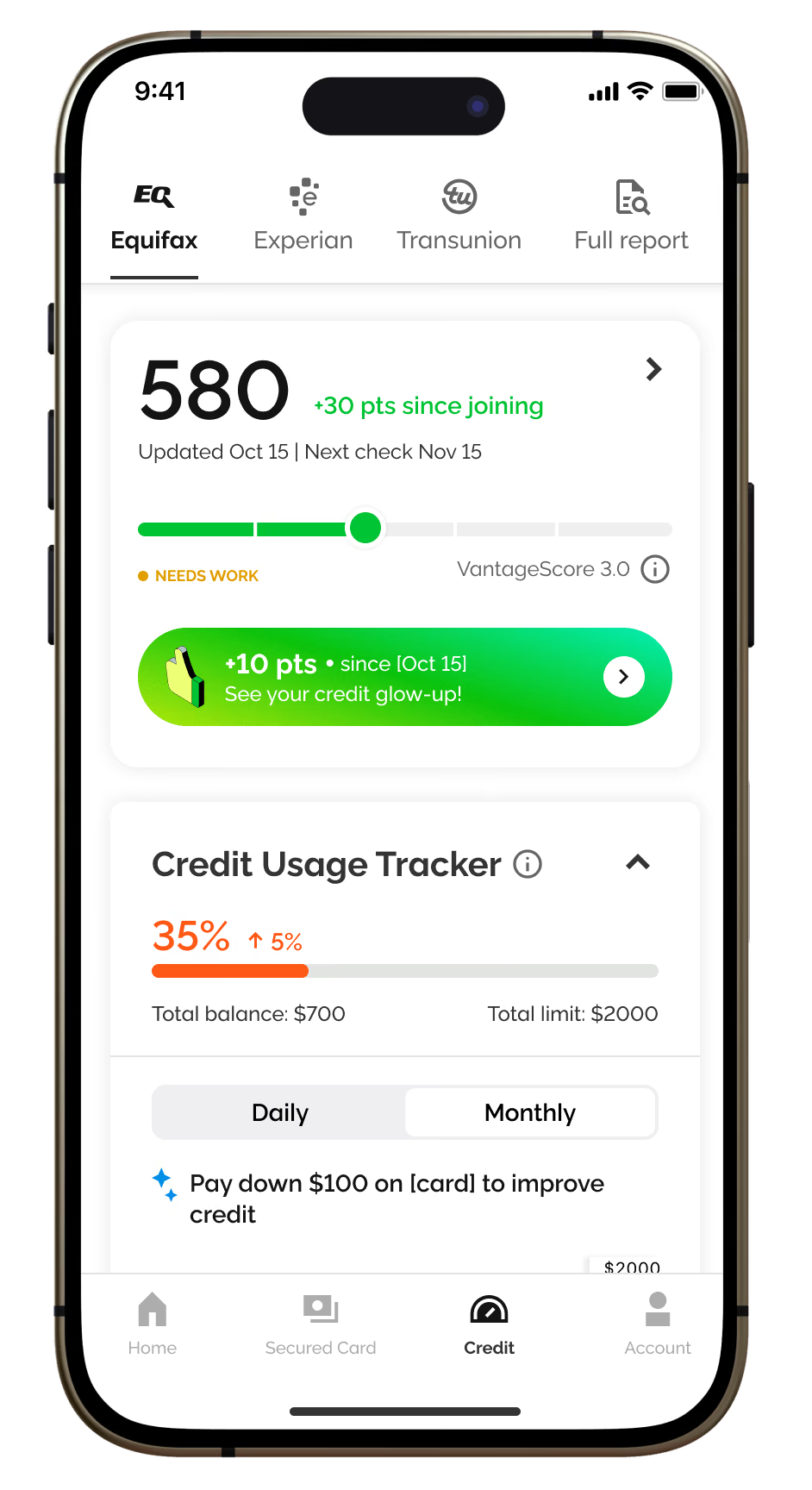



A credit-based insurance score is a rating built from information in your credit report. Car and home insurance companies use it to predict how likely you are to file a claim. In most states, that prediction can be one factor in what you pay, so a thin credit file or a few rough patches can cost you on insurance even if you’ve never filed a claim.
How it differs from a credit score
While both scores read the same credit reports, they answer different questions. A credit score, whether it’s from FICO or VantageScore, estimates how likely you are to repay what you borrow. An insurance score estimates how many claims you’re likely to file and what they’ll cost.
Several companies build insurance scoring models, and each insurer picks its own. That’s why your insurance score can differ from one company to the next. Insurers also may not share your actual score, telling you only the pricing tier you’re in.
Read more >> Do Car Insurance Companies Check Your Credit Score?
What goes into your credit-based insurance score?
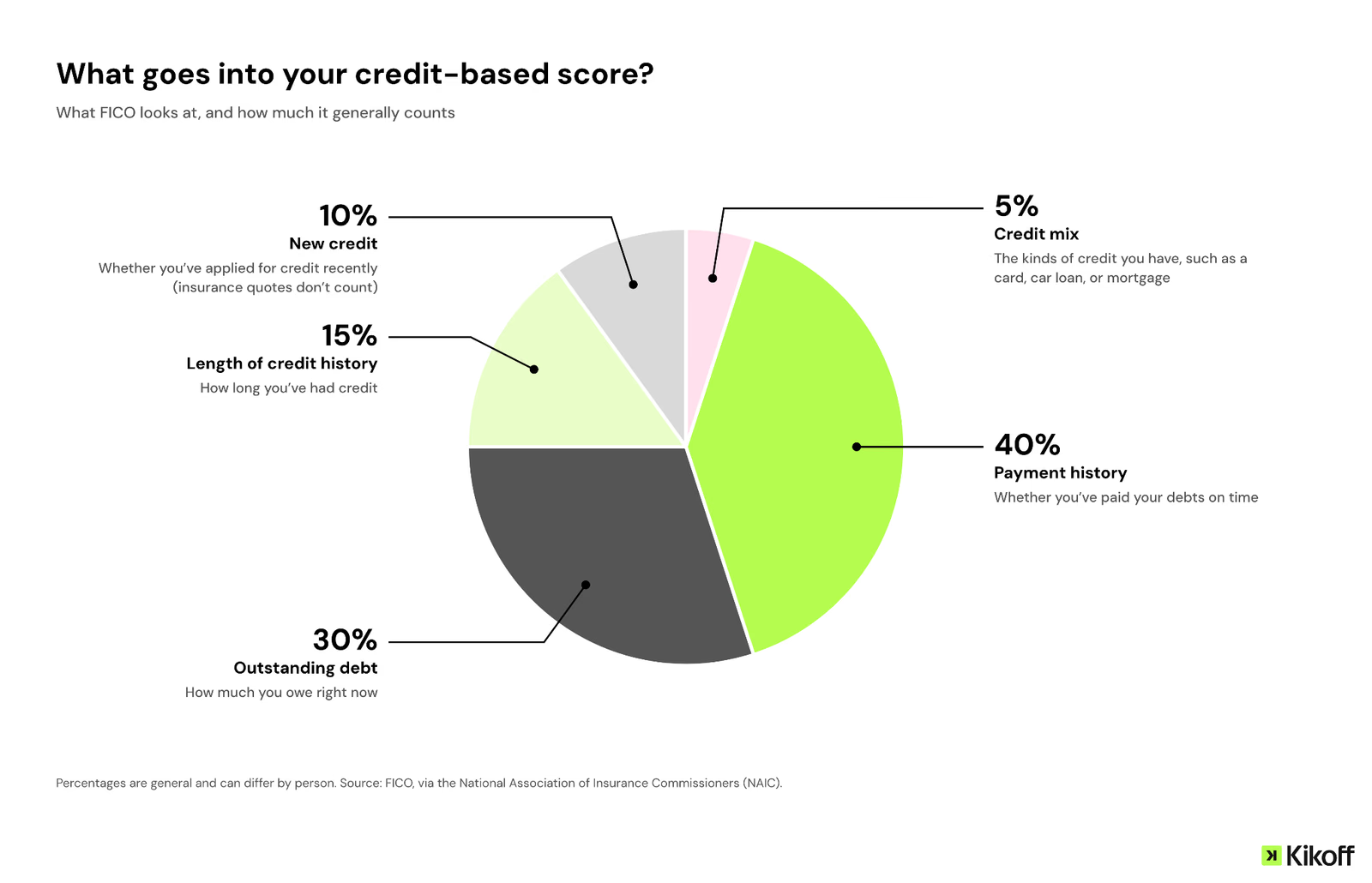
Insurance scores draw on the same kinds of details as other credit scores, but the scoring company decides how much each one counts. FICO, which introduced these scores in the early 1990s, looks at five areas. Here’s how much each generally weighs in its insurance score, according to the NAIC:
- Payment history (40%) — whether you’ve paid your debts on time
- Outstanding debt (30%) — how much you owe right now
- Length of credit history (15%) — how long you’ve had credit
- New credit (10%) — whether you’ve applied for credit recently. Insurance quotes don’t count here, since they’re soft inquiries.
- Credit mix (5%) — the kinds of credit you have, such as a credit card, car loan, or mortgage
Those are FICO’s weights, and other scoring companies may weigh things differently. Insurers and the companies that build these models say they don’t use your income, gender, marital status, religion, nationality, age, or the location of your home.
If you have little or no credit
A thin credit report can count against you too. If an insurer can’t find enough credit history to score you, a result insurers call “no hits” or “no score,” you might pay a higher rate. That can happen if you’re young, pay for most things in cash, or recently became widowed or single and most of your credit was in your spouse’s name.
Some states set rules for how insurers handle this. In Rhode Island, for example, insurers have to use an approved method for rating someone with little or no credit history, such as treating them as if they had an average score or leaving credit out entirely.
Read more >> How to Build Credit From Scratch
Which states limit how insurers use your credit?
Most states let insurers use credit, with limits. According to the NAIC, states typically don’t allow an insurance score to be the only reason for raising your rate or for denying, canceling, or not renewing your policy.
Some states go further:
- Hawaii and Massachusetts — car insurers can’t use your credit at all.
- Maryland — car insurers can use credit, but they can’t raise your renewal premium based on it.
- Oregon and Washington — an insurer can’t cancel or refuse to renew your policy because of your credit, and it can’t turn you down on credit alone. In Oregon, you can ask for a credit-based rerate once a year, and it won’t raise your premium.
Rules change often. Nevada’s temporary limit on credit-based rate increases ended May 20, 2024. Your state insurance department can tell you what’s allowed where you live, and it takes complaints for free if you think an insurer broke the rules. You can find yours on the NAIC’s map.
Your rights if credit raises your rate
The Fair Credit Reporting Act (FCRA) protects you here. If an insurer denies you, raises your rate, or ends your policy based partly or completely on your credit report, it has to tell you. Here’s what to do with that notice:
- Find the credit bureau’s name. The notice has to include the name, address, and phone number of the company that supplied your report.
- Request your free report within 60 days. The notice tells you about your right to a free copy from that company if you ask within 60 days. You can also get your reports from all three bureaus free every week at AnnualCreditReport.com.
- Dispute anything that’s wrong. Disputing errors is free. File your dispute with the bureau that lists the error, and keep a copy of what you sent. If you’d rather have help, Kikoff’s AI Credit Disputes can help you dispute inaccurate items, also for free.
- Ask the insurer to wait. Tell your agent or insurer about the error right away, and ask them to hold off using your credit information until it’s corrected. Once it’s fixed, ask them to rerate you.
Read more >> Do Insurance Quotes Affect Your Credit Score?
Red flags before you pay anyone. Be wary of anyone who promises a better insurance score or a lower premium for a fee. No one can promise how an insurer will score you. You can check your reports and dispute errors yourself for free.
If a hard stretch hit your credit
Some states require insurers to make exceptions for life events that damage your credit. Rhode Island’s rule covers events like serious illness or injury, the death of a spouse, child, or parent, divorce, identity theft, involuntary job loss lasting three months or more, and overseas military deployment. There, you make the request in writing. The insurer may ask for documentation, and it may require the request within 60 days of your application or renewal.
If something like this happened to you, ask your insurer in writing whether it offers an “extraordinary life circumstances” exception in your state. Ask soon after you apply or renew, and keep a copy of your request.
Bottom line
A credit-based insurance score is your credit report read through an insurer’s eyes, and in most states it’s one factor in what you pay for car or home insurance. You can check the reports behind it for free, dispute errors, and ask for exceptions where your state allows them. None of that adds history to a thin report. Kikoff’s Credit Account reports your on-time payments to Equifax, Experian, and TransUnion, with no credit check to sign up, so the reports insurers read start to show a payment record in your name. Plans start at $5 a month.
Frequently Asked Questions
Article Sources
Disclaimer: The information provided in this blog post is meant for informational purposes only and does not constitute financial advice.