.jpg)
.jpg)


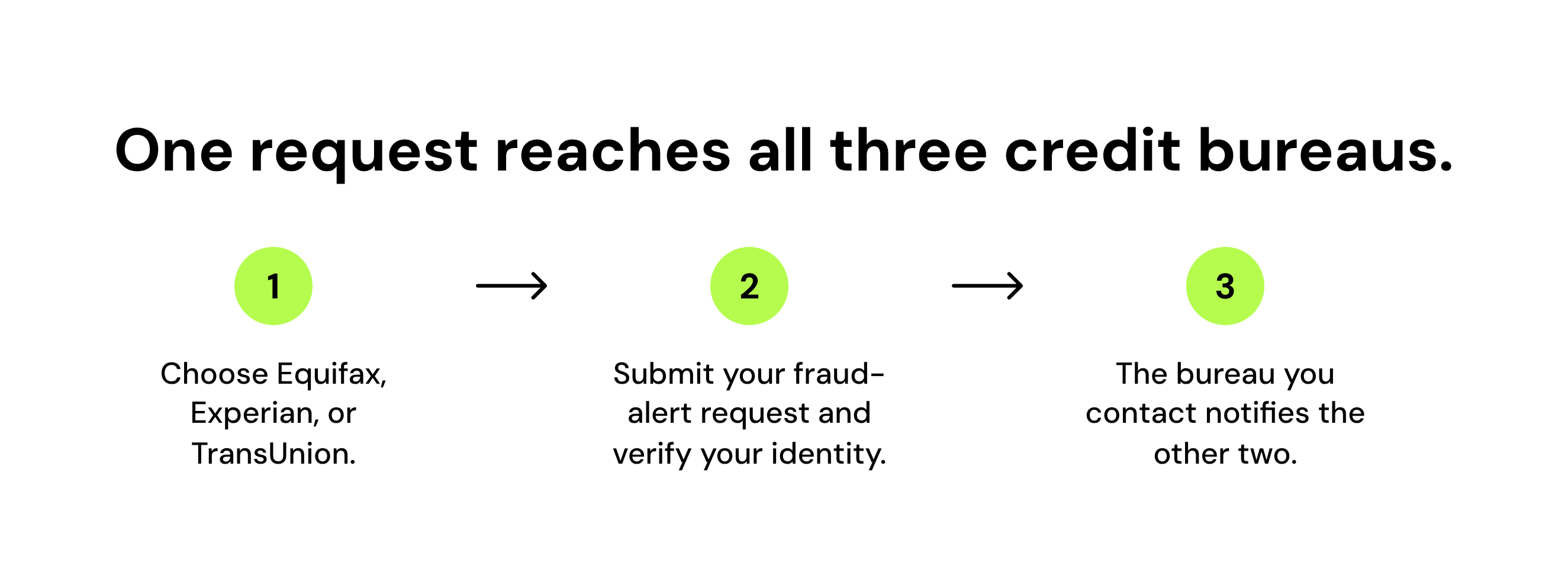
If you think someone has used or may use your personal information to commit fraud, you can place a free fraud alert on your credit reports. Contact just one of the three major credit bureaus, and it must notify the other two.
A fraud alert tells lenders to verify your identity before granting certain credit requests. It adds protection without blocking access to your credit reports, but it doesn’t stop every type of fraud.
How to place a fraud alert
You can request a fraud alert directly through a credit bureau without buying a monitoring service. The alert itself doesn’t affect your credit score.
Step 1: Contact one of the three credit bureaus
Start with the official fraud-alert page for any one of these bureaus:
- Equifax
- Experian
- TransUnion
Follow that bureau’s instructions for the type of alert you need. Online, phone, and mail options are available, but the process and required documents can differ.
You only need to submit the request to one bureau. It must notify the other two so they can place the alert on their reports as well.
Step 2: Verify your identity
The bureau will need to confirm that you’re the person requesting the alert. Be ready to provide information such as:
- Full legal name
- Social Security number
- Date of birth
- Current address and, if requested, previous addresses
You may also need identification or proof of address. Submit sensitive information only through the bureau’s verified website or other official submission channels.
Step 3: Choose the type of fraud alert
An initial alert is available if you believe you have been or may become a victim of identity theft. An extended alert requires an identity theft report, while an active duty alert is designed for eligible military personnel.
You don’t need to wait for confirmed fraud to request an initial alert. For an extended alert, have your FTC Identity Theft Report or police report ready and follow the bureau’s documentation instructions.
The differences between the three types are explained below.
Step 4: Confirm placement and monitor your credit
Save the confirmation and note when the alert expires. Make sure the contact information associated with the alert is current so lenders can reach you.
Check your credit reports for unfamiliar accounts, inquiries, or incorrect information. You can get free reports through AnnualCreditReport.com.
If you find unauthorized activity on an existing bank account or card, contact that company promptly. A fraud alert on your credit report doesn’t secure those accounts for you.
Read more >> How to Read a Credit Report
Types of fraud alerts
The right alert depends on your situation. All three are free, but their duration and requirements differ.
Initial fraud alert
An initial fraud alert lasts for one year and can be renewed. You can request one if you believe you have been or may become a victim of identity theft, without providing an identity theft report.
Lenders must take reasonable steps to verify your identity before opening new credit, issuing an additional card, or increasing a credit limit in response to a request.
An unexpected password-reset message alone doesn’t prove someone stole your identity. Check the account through its official website, secure your login, and consider an alert if you suspect your information is being misused.
Extended fraud alert
An extended fraud alert lasts for seven years. It is available to identity-theft victims who provide an FTC Identity Theft Report or a police report.
For covered credit requests, lenders must contact you through the method specified in the alert to verify your identity. The alert also removes you from prescreened credit and insurance offer lists for five years, unless you ask to remain on those lists.
If you’ve experienced identity theft, visit IdentityTheft.gov to report it and get a recovery plan. An extended alert helps protect against further misuse, but it does not remove fraudulent accounts already reported.
Active duty alert
An active duty alert is intended for eligible servicemembers assigned away from their usual duty station. It lasts for one year and can be renewed if you remain eligible.
It requires lenders to take reasonable steps to verify your identity for covered credit requests and removes you from prescreened credit and insurance offer lists for two years. You can also designate a personal representative to help manage the alert if you’re difficult to reach during deployment. Review the active duty alert guidance for details.
Read more >> How to Report Identity Theft
What happens after you’ve placed a fraud alert?
Your credit reports remain accessible to lenders with a permitted reason to review them. You can still apply for credit, but identity verification may add time to the application process.
Fraud alert or credit freeze? A fraud alert requires lenders to verify your identity for certain credit requests, while a freeze restricts new creditors’ access to your report. You can use both for free. For an alert, contact one bureau; for a freeze, contact Equifax, Experian, and TransUnion separately.
Neither protection stops unauthorized transactions on existing accounts or corrects fraudulent information already on your reports. Keep reviewing statements, secure compromised passwords, and report suspicious activity directly to the affected company.
If you find a credit-report error, Kikoff’s credit dispute tool can help you prepare a dispute letter. If the information resulted from identity theft, follow IdentityTheft.gov’s instructions for requesting an identity-theft block rather than relying only on a standard dispute letter.
If fraudulent debts remain unresolved or you receive court papers about an account you didn’t open, consider contacting a consumer-law attorney or legal aid organization.
Bottom line
Placing a fraud alert starts with one request to a credit bureau. Choose the alert that fits your situation, keep your contact information current, and set a reminder before it expires.
You don’t need to buy a product or open a new credit account to place an alert or report identity theft. Protecting your accounts and addressing fraudulent information come first.
If you need help preparing a letter about an error on your credit report, explore Kikoff’s credit dispute tool. You can also dispute errors directly with the credit bureaus for free.
Frequently Asked Questions
Article Sources
Disclaimer: The information provided in this blog post is meant for informational purposes only and does not constitute financial advice.