



Electronic transactions are effectively any payment or financial activity completed digitally, whether that's a credit card swipe, an online bill payment, a bank transfer, or a buy now pay later purchase.
Most people assume that because they're spending or paying money, it's all going somewhere on their credit report. The reality is more nuanced. Some electronic transactions have a direct impact on your credit score, some have no impact at all, and a few can actually hurt you if you're not paying attention. In this post, we'll break down exactly how different types of electronic transactions interact with your credit.
Let's jump in.
How electronic transactions impact your credit score
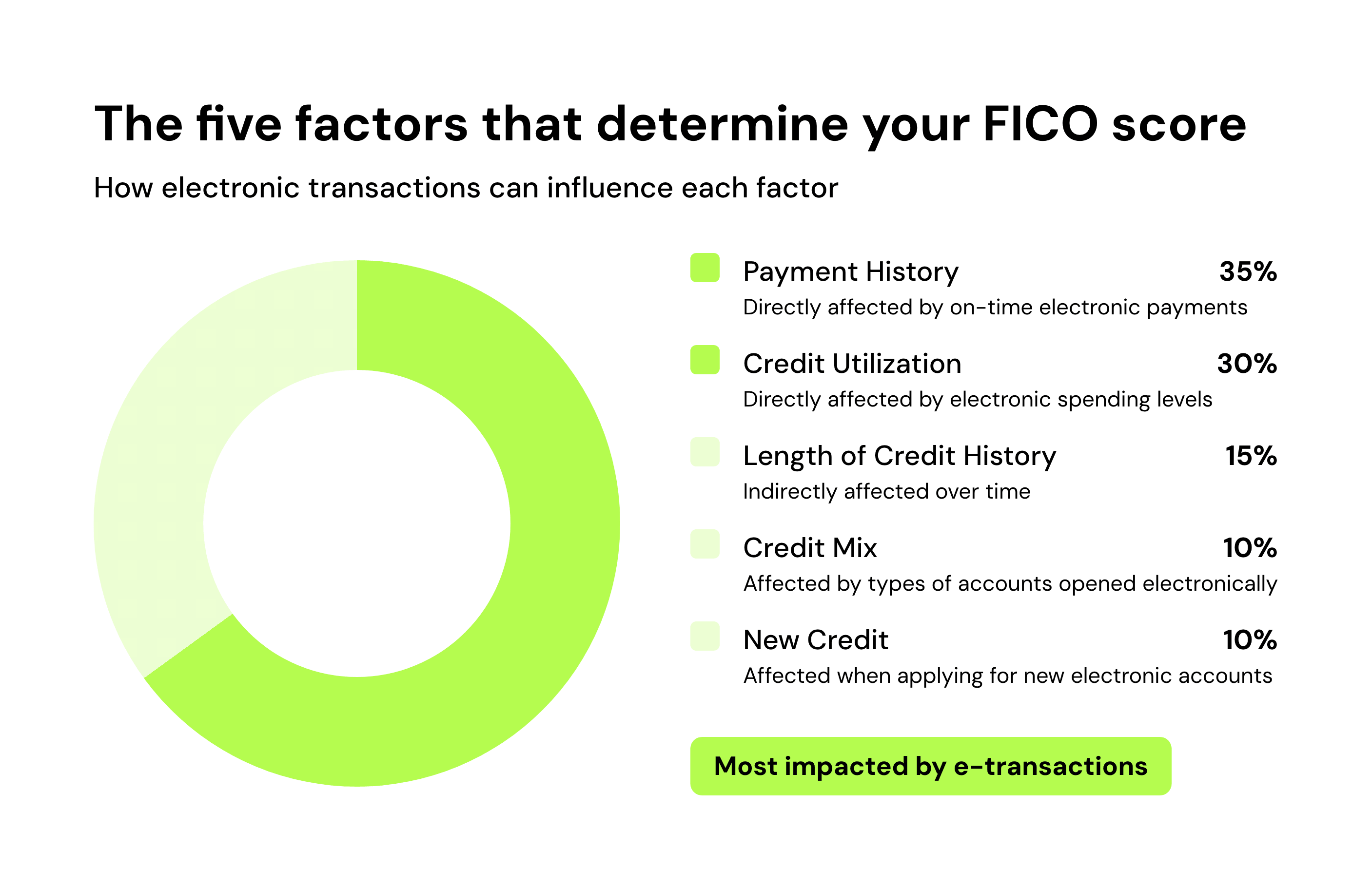
Your credit score is generally determined by five factors: payment history (35%), credit utilization (30%), length of credit history (15%), credit mix (10%), and new credit inquiries (10%). Electronic transactions don't all touch the same factors, and many don't touch any of them at all.
Credit card transactions
Credit card transactions are the electronic payments most directly tied to your credit score.
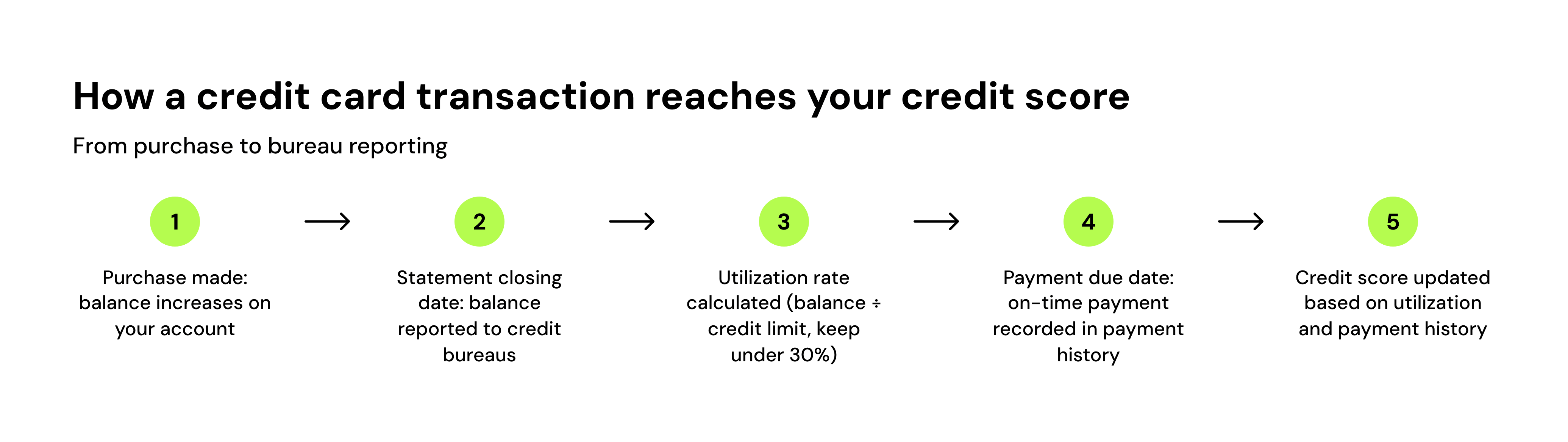
Every time you make a purchase on a credit card, that charge increases your balance on that account. Your credit card issuer reports your balance to the credit bureaus, usually once per billing cycle, and that balance is used to calculate your credit utilization rate. Utilization is calculated as your total revolving balance divided by your total revolving credit limit, and keeping it below 30% is generally considered the threshold for healthy utilization.
This means that lots of credit card spending, even if you pay it off in full every month, can temporarily inflate your reported utilization depending on when your statement closes and when your issuer reports to the bureaus. If you're planning to apply for new credit soon, keeping your balances especially low in the weeks leading up to your application is a smart move.
The payment itself matters just as much as the spending. On-time credit card payments build positive payment history, which is the single most important factor in your credit score. A late payment, even by a day or two past the grace period, can trigger a negative mark that stays on your report for up to seven years.
Debit card transactions
Debit card transactions, whether in-store or online, have no direct impact on your credit score.
Debit cards pull funds directly from your bank account, and bank account activity is not reported to the credit bureaus. This means every individual who exclusively uses a debit card for their day-to-day spending is essentially invisible to the credit scoring system, which can make it difficult to build or maintain a credit profile over time. Using a credit card for regular purchases and paying it off in full each month is generally a more credit-building approach than defaulting to debit for everything.
Bank transfers and ACH payments
Standard bank transfers, direct deposits, and ACH payments are also not reported to the credit bureaus and have no direct impact on your credit score.
Paying your rent, utilities, or other bills via bank transfer won't build credit on its own. This said, some services specifically designed for credit building, like rent reporting tools, can take those payment records and report them to one or more bureaus on your behalf. Kikoff offers rent reporting that sends your verified rent payments to Equifax each month, turning a payment you're already making into an active credit-building tool.
Buy now, pay later (BNPL) transactions
Buy now, pay later services have a more complicated and evolving relationship with credit scoring.
Historically, most BNPL transactions weren't reported to the credit bureaus at all, meaning they neither helped nor hurt your credit. That's been changing. Some BNPL providers now report to one or more bureaus, and the reporting behavior varies significantly by provider and by the type of plan you choose. A short-term, interest-free installment plan may be treated differently than a longer financing arrangement.
The risk with BNPL is that missed or late payments on plans that do report can create negative marks on your credit report, while on-time payments on plans that don't report earn you no credit benefit. It's worth checking the specific reporting policy of any BNPL service before using it if your credit profile is a consideration.
Digital wallet payments
Paying with a digital wallet like Apple Pay, Google Pay, or Samsung Pay doesn't change how the underlying transaction affects your credit.
A digital wallet is basically just a delivery method for your payment. If the card stored in your wallet is a credit card, the transaction affects your credit the same way any credit card purchase would. If it's a debit card, it has no credit impact. The wallet itself is not reported to the credit bureaus and introduces no additional credit factor.
Online loan payments
Loan payments made electronically, be it for a personal loan, auto loan, student loan, or mortgage, are reported to the credit bureaus and affect your credit directly.
On-time electronic loan payments build positive payment history across multiple account types, which also benefits your credit mix. Missing or making late loan payments has the same negative impact regardless of whether the payment was made electronically or by check. Setting up autopay for loan payments is a no-brainer for this reason, since it eliminates the risk of forgetting a due date.
Subscription and utility auto-payments
Standard subscription charges and utility bills paid automatically are not reported to the credit bureaus by default.
Your Netflix subscription, electric bill, and phone plan won't appear on your credit report unless you're using a specific service designed to report them. Several services, including some features within Kikoff plans, are built to help users add these types of recurring payments to their credit history, which can be super helpful for anyone with a thin credit profile.
What actually gets reported to the credit bureaus
Understanding what does and doesn't show up on your credit report helps you make smarter decisions about where to direct your financial activity.
What is reported
Lenders and credit issuers generally report the following to one or more of the three major credit bureaus (Equifax, Experian, and TransUnion):
- Credit card balances and payment history
- Installment loan balances and payment history (auto, personal, student, mortgage)
- Credit-builder account payment history
- Collections accounts (when unpaid debts are sold to a collector)
- Hard inquiries from new credit applications
- Public records like bankruptcies
What is not reported by default
The following types of financial activity are generally not reported to the credit bureaus unless a specific reporting service is involved:
- Debit card transactions
- Bank account balances and transfers
- Cash payments
- Rent payments (without a rent reporting service)
- Utility and subscription bills (without a reporting service)
- Buy now, pay later transactions (varies by provider)
- Peer-to-peer payments like Venmo or Zelle
The gap between what people think is on their credit report and what actually is tends to be significant. Lots of everyday financial activity, including responsible bill-paying behavior, goes completely unrecognized by the credit scoring system unless you actively route it through a reporting mechanism.
How to use electronic transactions to build credit
Knowing which transactions affect your credit gives you a clear map for how to direct your financial habits.
Use a credit card for everyday purchases
Replacing debit card spending with a credit card for regular purchases is one of the most effective ways to build credit history through normal daily activity.
Every on-time payment adds to your payment history, and keeping your balance low relative to your limit builds a strong utilization picture. The key is treating the credit card like a debit card: only spend what you have in your bank account, and pay the full statement balance each month. This approach gives you all the credit-building benefits with none of the interest cost.
Set up autopay for all credit accounts
Autopay is the most reliable way to ensure your electronic payments are always on time.
Setting it up for at least the minimum payment on every credit account eliminates the risk of a late payment from a missed due date. If your cash flow allows, setting autopay for the full statement balance is even better, since it keeps your utilization low and avoids interest charges entirely. Just make sure your linked bank account has enough funds to cover the autopay amount on the scheduled date.
Add rent and bills to your credit report
If you're already paying rent on time every month, routing that payment through a reporting service is basically a free credit-building opportunity.
Rent is usually the single largest monthly expense for most people, so having it reported as positive payment history can paint a meaningful picture for the credit bureaus. Kikoff offers rent reporting starting at $5 a month, making it an accessible option for anyone looking to get credit for the payments they're already making.
Monitor your utilization timing
Because credit card balances are typically reported on your statement closing date rather than your payment due date, your utilization snapshot can look higher than expected even if you pay in full every month.
If you're planning to apply for a loan or credit card in the near future, consider making an extra payment before your statement closes to reduce the balance that gets reported. This is a simple timing move that can meaningfully lower your reported utilization without requiring you to spend less overall.
Conclusion
Electronic transactions touch your credit score very differently depending on what type of payment they are and which accounts they run through.
Credit card purchases and payments have the most direct day-to-day impact, while debit transactions, bank transfers, and most auto-payments go completely unreported unless you're using a service that routes them to the bureaus. Understanding that distinction lets you make deliberate choices about where to direct your financial activity.
If you're looking to build credit through the payments you're already making, Kikoff is designed to help, with rent reporting, a credit account that reports to all three bureaus, and dispute tools, all available with no hard credit check required to sign up.
Frequently Asked Questions
About the editor

Disclaimer: The information provided in this blog post is meant for informational purposes only and does not constitute financial advice.