


.jpg)



Your credit score isn’t just a number. Good credit can help you secure low interest rates on mortgages, car loans, and personal loans. It might even help you save money on insurance premiums and make it easier to find housing.
Poor credit makes these things harder. When your credit is bad, you may have trouble getting approved for loans and other types of credit. If you do manage to get approved, you’ll end up paying hundreds or thousands more in interest than you need to.
Having poor credit can feel demoralizing, but it’s not a life sentence. You can learn how to fix credit.
How to fix credit step by step
If you want to improve your credit score, you need a game plan. These steps can help you get started.
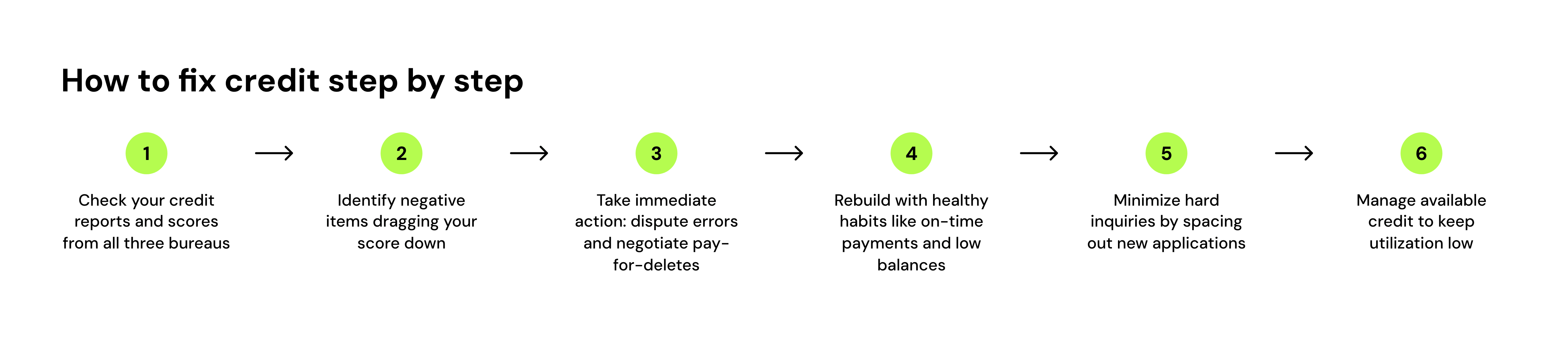
Step 1: Check your credit reports and scores
Do you know what’s on your credit report? Even if you think you do, it’s important to get a copy and look carefully at each item. You can get free copies of your report at AnnualCreditReport.com.
It’s not unusual for your credit reports from each of the three credit bureaus (Experian, Equifax, and TransUnion) to vary slightly. You should get a copy from each bureau and scrutinize them for accuracy.
Step 2: Identify negative items affecting your credit
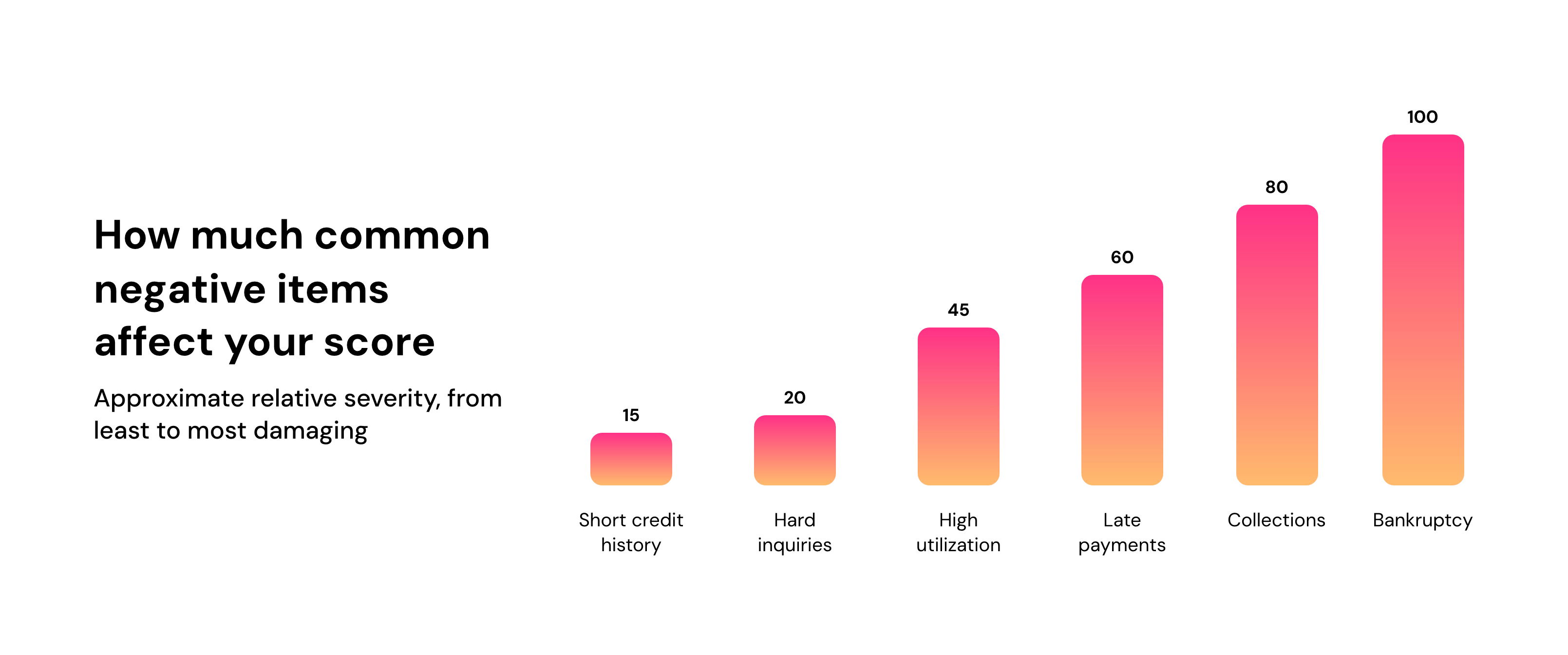
Look closely for anything that may have a negative impact on your credit. These are some common examples:
- High utilization of revolving credit lines (like credit cards)
- Multiple hard inquiries in a short period of time
- Late payments
- Accounts in collections
- Bankruptcies
- A short credit history
If you see any negative items that are not accurate (like past-due accounts you don’t recognize), you should dispute them as soon as possible.
Step 3: Determine which immediate actions to take
Some credit fixes work more quickly than others. These actions may be able to help you kickstart your journey to better credit:
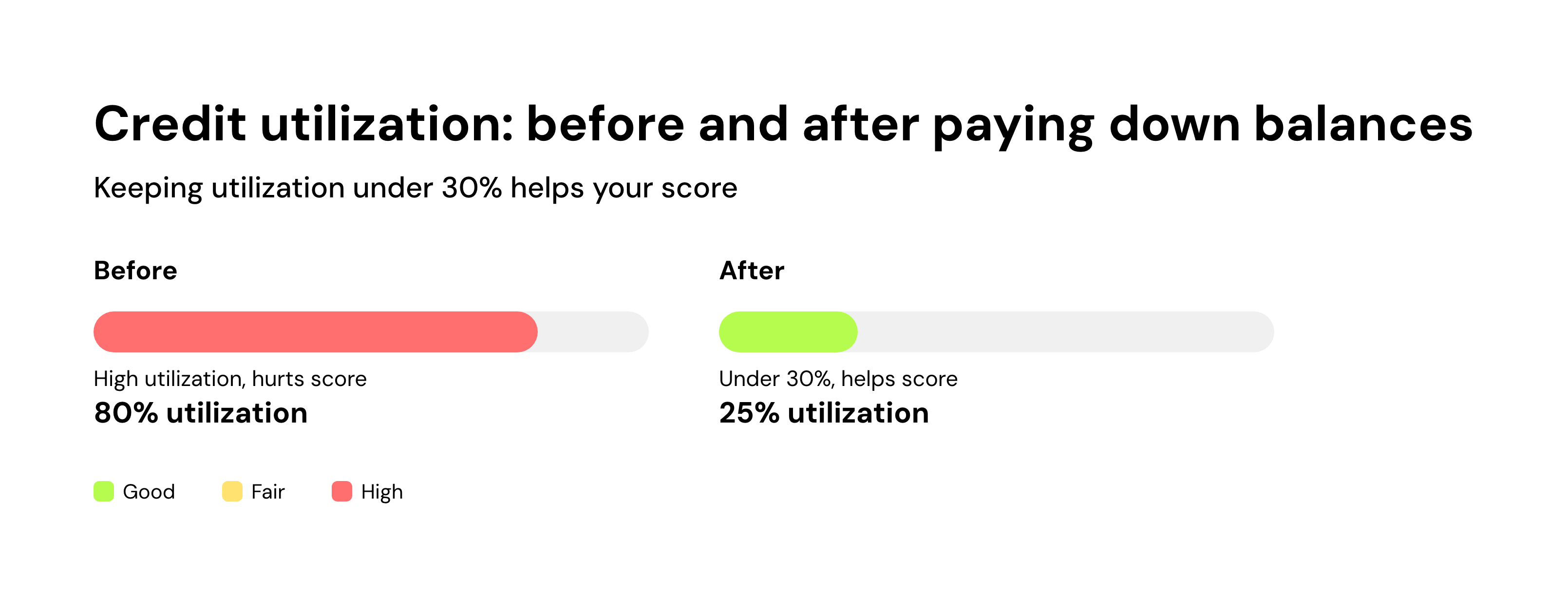
- Paying down credit cards so you’re using no more than 30% of each one
- Paying past-due accounts as soon as possible
- Paying accounts in collections (or trying to settle them if you can’t pay in full)
Paying down high-interest debts like credit cards can take a long time because so much of each payment goes toward interest. If you can qualify for a consolidation loan, that may help speed up the payoff process. Additionally, you’ll likely see a boost in your credit score right after you consolidate.
Paying past-due accounts is especially critical. If you don’t pay a delinquent account, the lender might send it to a debt collector. Having any debt go to collections can dramatically lower your credit score. And unfortunately, even if you pay off a debt in collections, it still stays on your account for seven years.
However, if you already have one or more debts in collections, paying them off may help limit the damage. Settling debts and paying them off for less than face value is worse for your credit than paying them in full, but it’s better than not paying at all.
If you want to settle a debt, get in touch with the creditor directly to see if they would be open to settlement. Kikoff has debt negotiation tools that can help you do this.
Step 4: Rebuild with healthy credit habits
Your payment history is the most important factor in determining your credit score. If you continue to make all payments on time and in full, that alone should improve your credit over time.
But what if you don’t currently have open lines of credit or don’t qualify for a traditional credit card? Secured credit cards and credit builder loans are two tools that can make a difference. Here’s how secured credit cards work:
- You pay the lender a refundable cash deposit
- That deposit becomes your credit line
- You make purchases and pay them off as agreed
- The lender reports your on-time payments to credit bureaus
- Eventually, your deposit is refunded
Many lenders will also upgrade your secured card to a regular credit card over time.
Credit-builder loans work similarly. If you apply and are approved, you don’t get the loan funds right away. Instead, they’re kept in a secure savings account. You make loan payments to the lender, and they report your payment history to credit bureaus.
Once you’ve paid the loan amount in full, the funds in the savings account are released to you.
Step 5: Keep hard inquiries to a minimum
When you apply for new credit, a lender will usually perform what’s called a “hard inquiry” to access your credit report. A single hard inquiry will usually cause a small (but temporary) drop in your score.
However, if you have too many hard inquiries over a short period of time, your score may be substantially lowered. That’s because multiple credit applications in a short period of time suggest to lenders that you may be desperate for credit.
Step 6: Manage available credit
As you work to rebuild your credit, you should avoid racking up more debt. If you do this while simultaneously increasing your available credit, you can lower your credit utilization and increase your score.
If you have existing lines of credit, you might consider asking your lender for a credit line increase. Alternatively, if you have a family member or a close friend with good credit, try asking to be added as an authorized user. When you do this, their positive credit history will appear on your report, too.
Even though avoiding new debt is important, you shouldn’t close old accounts when they’re paid off. If you do this, your available credit decreases, so your total credit utilization may increase.
How do credit scores work?
When you have a solid understanding of how credit scores work, figuring out how to fix credit gets easier. Your FICO score (the credit score used by most top lenders) is made up of five main factors.
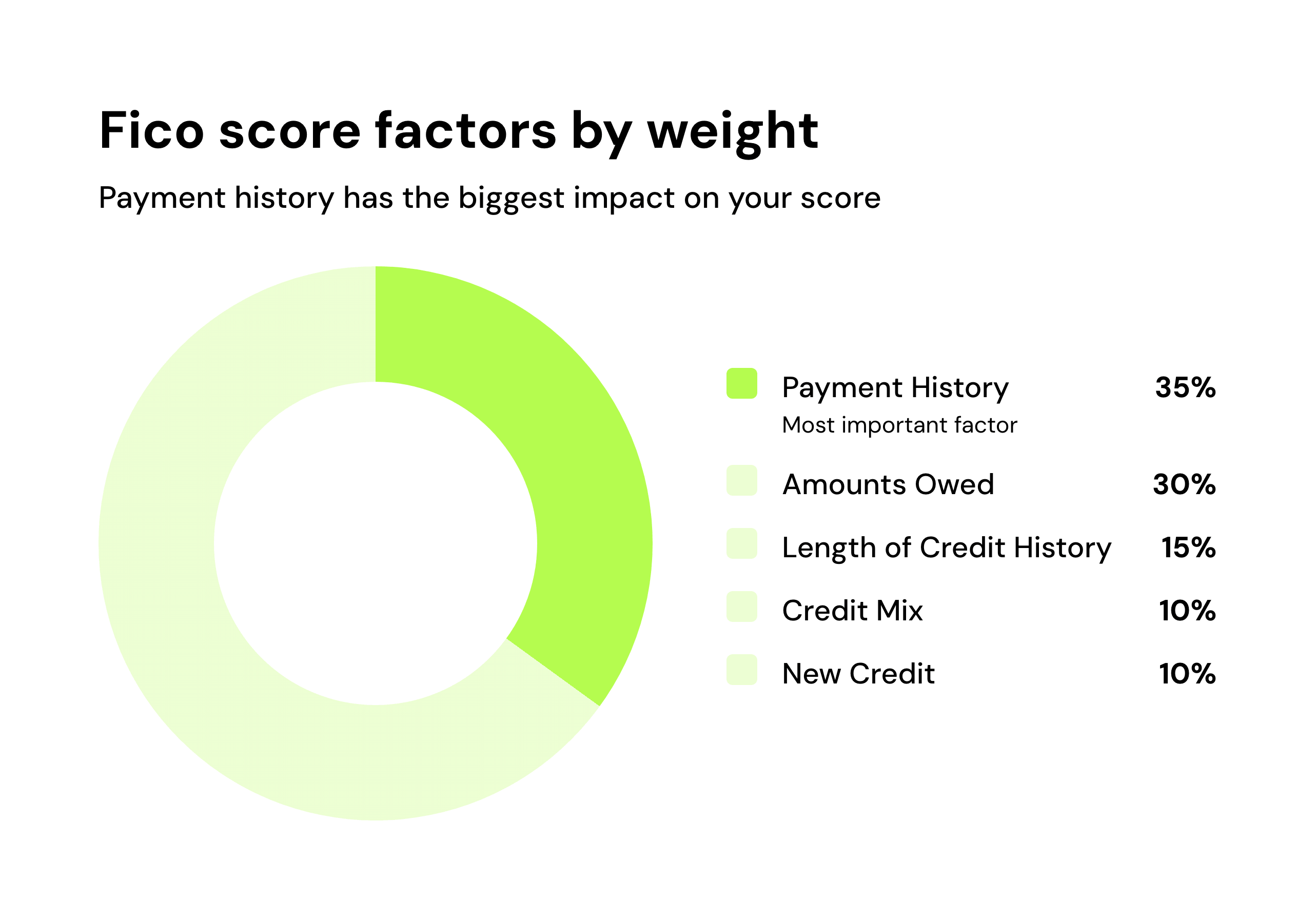
1. Payment history (35%)
Even one late or missed payment can cause serious, long-term credit damage. Most lenders report late payments to credit bureaus once 30 days have passed. The longer you wait to make your payment, the more serious the damage can become.
2. Credit utilization (30%)
This is the amount of credit you’re using relative to your available credit. You should aim for utilization of less than 30%. Under 10% is even better!
3. Length of credit history (15%)
When determining the length of your credit history, lenders look at the ages of your youngest and oldest accounts. They also consider the average age of all accounts.
4. Credit mix (10%)
Lenders like to see a mixture of types of credit accounts (like lines of credit and installment loans). This shows that you can successfully manage multiple types of credit.
5. Amount of new credit (10%)
Having too many recently opened accounts can hurt your score.
How to remove errors from your credit report
If you’ve already been searching for guidance on how to fix credit, you might have seen several articles suggesting that you remove errors from your credit report. Accurate negative items on your credit report will usually remain there for seven years (although bankruptcy typically stays for 10).
However, if there are any negative items on your credit report that are not accurate, you should be able to have them removed and not just wait for them to drop off years from now. Here are the steps to follow.
Gather evidence to support your case
Before you start filing disputes, gather evidence to help prove that the item is incorrect. Depending on your circumstances, you might need one or more of the following:
- A copy of an identity theft report made with the Federal Trade Commission (FTC)
- A copy of your ID or a utility bill showing your name and address
- Court records show that a debt was discharged in bankruptcy
- Account records or bank statements showing the account was paid on time
The more relevant evidence you can gather, the easier it should be to get the error removed from your credit report.
Contact the data furnisher
Data furnishers are businesses — usually banks, lenders, and other financial services companies — that provide credit-related information to the three credit bureaus. In some cases, the furnisher that provided the incorrect information will realize the error and remove it.
Get in touch with the data furnisher to directly dispute the issue. Furnishers may or may not have dedicated dispute portals like credit bureaus do, but you should still have your evidence ready to send. If you can show the furnisher why the information is incorrect, your dispute is more likely to be successful.
Contact the credit bureau(s)
Some credit report errors appear on your reports from all three bureaus. Others may just appear on one or two. You should file a dispute with every bureau whose credit report reflects the error.
The easiest way to do this is to file a dispute online. Equifax, Experian, and TransUnion all try to make this easy by offering online dispute centers. To file your dispute, you’ll need to enter key information and attach your supporting documents.
Alternatively, you may be able to file your dispute by mail. To do this, you should write a letter explaining the issue and attach a copy of each supporting document. It’s a good idea to use certified mail to verify that your letter reached its destination.
Usually, credit bureaus will complete their investigations within 30 days and notify you shortly after.
Take further action if needed
If the data furnisher or credit bureau accepts your evidence, the inaccurate item should come off your credit report shortly afterward, and you should see your score go up.
What happens if both the data furnisher and the credit bureaus believe that the item on your credit report is actually correct? If you are sure the item is an error, you should file a complaint with the Consumer Financial Protection Bureau (CFPB).
Best apps for building credit
Learning how to fix credit and putting what you’ve learned into action can be a challenge. However, the right credit builder app can help you create a plan, stay on track, and remain motivated even when things get difficult.
Here are three apps that might make your journey toward better credit a little easier.
Kikoff
Kikoff helps you approach the problem of bad credit from multiple angles. Users can benefit from several different tools and features, including:
- Interest-free credit lines for building credit
- Rent reporting
- Debt dispute tools and bill negotiation
- Identity theft protection
The app is free to join. If you want to unlock premium credit-building features, you can choose from several affordable subscription levels.
Dovly
If you want to see how AI can help with building credit, Dovly is worth considering. It uses AI to look for inaccurate items on your credit report and dispute them when they come up. Dovly users can access credit-building tradelines and get actionable financial advice, too.
Experian Boost
Experian Boost offers a quick, simple way to boost credit. It looks for on-time utility, phone, and streaming service bill payments and reports them to Experian, helping you build positive credit history.
How long negative marks stay on your credit report
Fixing credit often takes longer than many people realize. Even if you’re taking all the steps you need to, negative marks could still be bringing your score down.
If high credit utilization is the main thing harming your score, you’ll probably start to see major improvements as you start to pay it down. But if you have late payments, bankruptcies, or other negative marks on your report, it could take longer.
Most negative marks will stay on your report for seven to ten years. These are some common examples:
- Chapter 13 Bankruptcy: Seven years from filing date
- Chapter 7 Bankruptcy: Ten years from filing date
- Late Payments (Usually 30+ Days Late): Seven years
- Accounts in Collections: Seven years from the original delinquency
- Foreclosures: Seven years from the original delinquency
- Defaults: Seven years from the original delinquency
Although negative marks like these can continue to harm your credit for years, their impact lessens over time. For instance, if you make a late payment, you might see your score drop precipitously for a year or so. If you make every payment after that on time, you’ll likely see your score start to come back up even before seven years have passed.
Conclusion
Building credit back up takes time, but the sequence is straightforward once you know what to prioritize.
Pull all three reports, dispute anything inaccurate, and pay down revolving balances since utilization responds faster than almost anything else. Handle past-due and collection accounts next, then keep hard inquiries minimal and leave paid-off accounts open.
Accurate negative items generally stay for seven to ten years, but their weight fades well before they fall off.
Kikoff gives eligible users free dispute tools, free debt negotiation, and access to a Kikoff Credit Account with no interest and no hard credit check to sign up, with monthly payments reported to all three credit bureaus.
Build credit with Kikoff and start adding positive payment history alongside the cleanup.
Frequently Asked Questions
About the editor

Disclaimer: The information provided in this blog post is meant for informational purposes only and does not constitute financial advice.