.jpg)
.jpg)



Seeing a collection account on your credit report can feel urgent and stressful, especially if you’re trying to qualify for a loan. You can dispute inaccurate information, but paying a legitimate collection doesn’t automatically remove it.
The right next step depends on whether the debt is yours, whether it’s reported correctly, and how old it is. Check those details before agreeing to pay.
How to remove collections from your credit report
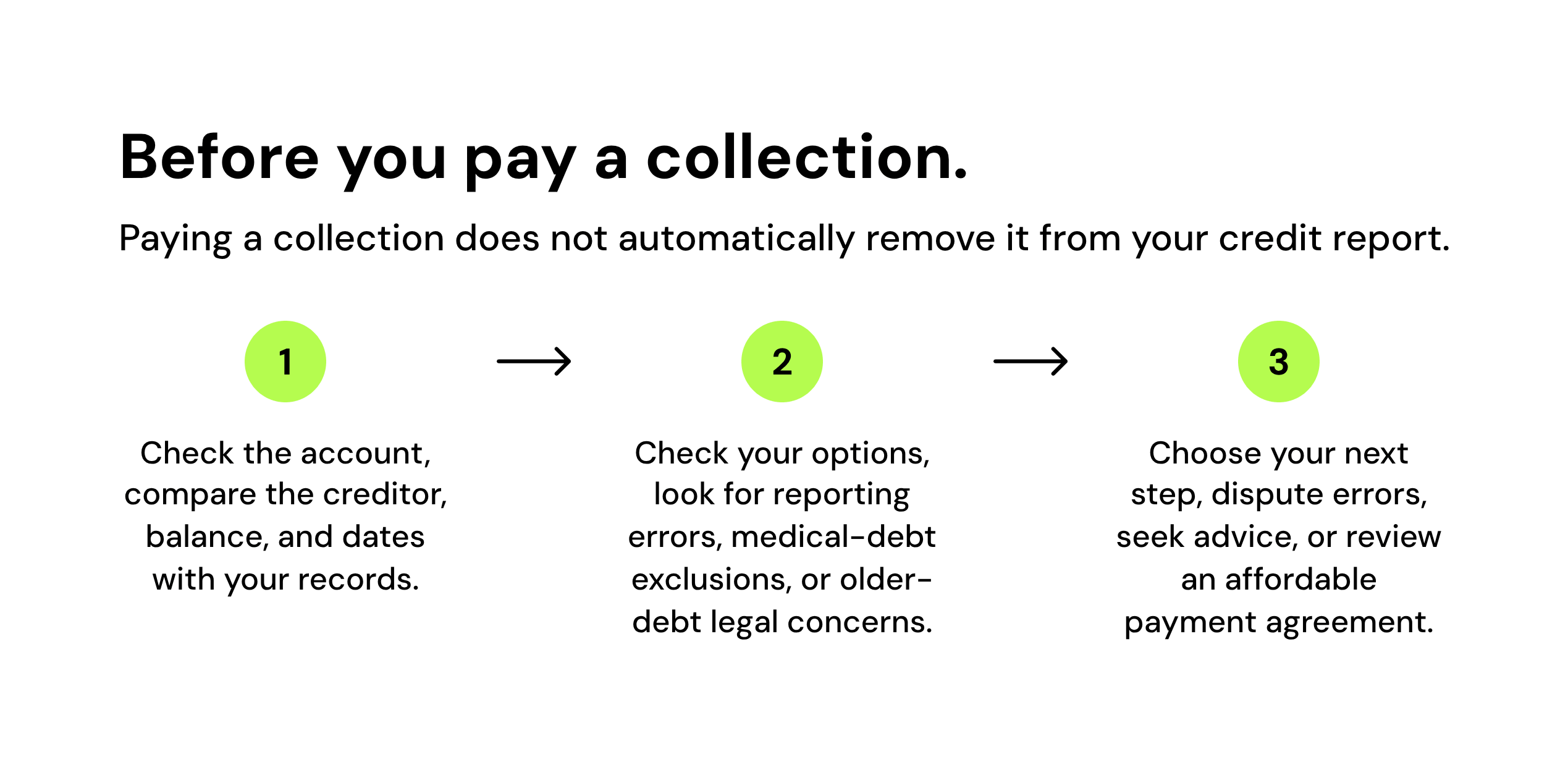
Start by checking your reports through AnnualCreditReport.com. Compare the collection’s balance, original creditor, and dates with your own records.
A collection agency’s name may be unfamiliar even when the underlying debt is yours. If you don’t recognize the account, request information before making a payment or sharing sensitive information.
Dispute inaccurate information
If a collection has the wrong balance, belongs to someone else, or contains another reporting error, you can dispute the information with each bureau showing it and the company that reported it.
Explain what’s wrong and include copies of supporting documents, such as payment confirmations or account statements. Information found to be inaccurate, incomplete, or unverifiable must be corrected or removed, depending on the issue.
A wrong balance may lead to a balance correction rather than deletion of the whole account. If the debt resulted from identity theft, visit IdentityTheft.gov for reporting steps and help requesting an identity-theft block.
Kikoff’s credit dispute tool can help you prepare a letter about a credit-report error. Review the letter before sending it, and follow the bureau’s current submission instructions.
Understand what payment or settlement can change
Paying a collection in full resolves the outstanding balance. Settling means the collector agrees to accept less than the full amount to resolve the debt.
Neither automatically removes a nonmedical collection from your reports. After you complete the agreement, the account should reflect a zero balance and the appropriate paid or settled status.
Before agreeing, get the terms in writing, including the amount, payment deadline, and confirmation that completing the agreement resolves the remaining balance. Choose a payment you can afford without falling behind on essentials.
For an older debt, get legal guidance before paying or acknowledging that you owe it. In some states, those actions can restart the time limit for a lawsuit, even though they don’t restart the credit-reporting period.
Be cautious about pay-for-delete promises
A pay-for-delete request asks a collector to remove its reporting in exchange for payment. It is different from negotiating a lower settlement amount, and collectors aren’t required to agree.
Some collectors have their own deletion policies. For example, Midland Credit Management’s policy says it requests deletion of its collection entry after an account is paid or settled in full.
That is a company-specific policy, not a right that applies to every collection. Removing the collector’s entry also doesn’t automatically remove accurate late payments or other negative information reported by the original creditor.
Check whether it’s a medical collection
Medical collections follow different reporting policies at Equifax, Experian, and TransUnion. Under their medical-debt policies:
- Paid-in-full medical collections do not appear on credit reports.
- Medical collections with an initial reported balance under $500 do not appear.
- Unpaid medical collections generally have a one-year waiting period before appearing.
The under-$500 policy refers to the initial reported balance, not a larger debt you’ve paid down below $500. These policies concern medical collections, not ordinary credit-card debt used to pay medical expenses.
If an account appears to fall under one of these exclusions, contact the bureau and provide supporting records.
Read more >> How to Read a Credit Report
How collections affect your credit score
A collection generally means a creditor has referred or sold an unpaid debt for collection. When reported, it can hurt your credit and affect how lenders evaluate your application.
The effect depends on your credit history, the collection’s age and type, and the scoring model used. There isn’t one point change you can expect from paying or removing a collection.
For example, FICO Score 9 and FICO Score 10 disregard paid third-party collections, including settled collections reported with a zero balance. Older models may still consider them.
That means a collection can remain visible on your report without affecting every score calculated from it. Payment, deletion, and a score change are separate outcomes.
What are the limits to removing collections from your credit report?
You generally can’t require removal of an accurate collection simply because it’s hurting your credit. Credit reporting must be accurate, but that doesn’t mean every creditor is required to report every account.
Closing the original account or repeatedly disputing information you know is correct won’t create a right to deletion. Be cautious of companies promising guaranteed removals.
If the debt is accurate, weigh your repayment options against your budget and any legal considerations. A nonprofit credit counselor can help you review affordability; a consumer-law attorney can advise on an older debt or a collection lawsuit.
If you want help requesting an offer, Kikoff’s debt negotiation tool contacts collectors about eligible debts with your permission. It is currently listed as available on Kikoff Premium and Ultimate, and you decide whether to accept an offer.
Read more >> How to Negotiate Credit Card Debt With Your Creditor
How long collections stay on your credit report
Most collections remain on your reports for about seven years from the original missed payment after which the account was never brought current.
Selling the debt to another collector or making a payment does not restart that reporting period. Check the original delinquency date, not just the date the collection agency opened its account.
Once an account reaches the end of its reporting period, it should fall off automatically. If it remains past that point, dispute the outdated information.
The reporting period is separate from the legal deadline for suing over a debt. Falling off your credit report does not, by itself, cancel the debt, and you should never ignore court papers.
Bottom line
Start by checking whether the collection is yours and whether the details are accurate. Dispute errors, check for medical-debt exclusions, and understand what payment or settlement would actually change before committing.
You can also keep building positive payment history while addressing collections. Focus first on keeping your existing obligations manageable rather than opening an account just to offset a negative item.
If a new account fits your budget, Kikoff’s Credit Account is a free revolving credit line used only for purchases in the Kikoff Store. It charges no interest and reports your on-time payments to all three credit bureaus, with no hard credit check to sign up.
Purchases still need to be repaid, and paid Kikoff Credit Service plans have separate costs. Build credit with Kikoff when you’re ready to add an account you can comfortably manage.
Frequently Asked Questions
Article Sources
Disclaimer: The information provided in this blog post is meant for informational purposes only and does not constitute financial advice.