




Identity protection is a catch-all term for services that watch for misuse of your personal information and help you recover if it happens. Some of the strongest protections, like a credit freeze or a fraud alert, are free, while paid services add alerts, recovery help, and insurance for the costs of cleaning up. Here’s what each piece does, what it misses, and when paying makes sense.
What identity protection services include
Many identity theft protection plans offer one or more services. Here’s a look at what each one does.
Credit monitoring
Credit monitoring lets you view one or more of your credit reports, along with a FICO or VantageScore credit score based on each report. It also alerts you to changes in your credit reports, such as a new account, a late payment, or a hard inquiry.
Many banks, credit unions, and credit card companies offer basic credit monitoring for free. You can also see all three of your credit reports for free each week at AnnualCreditReport.com. What you usually pay for is ongoing alerts across all three bureaus.
Kikoff Credit Monitoring, for example, covers all three bureaus starting with Kikoff Premium at $20 a month.
Identity monitoring
Identity monitoring scans databases for new or inaccurate information tied to you, like a change-of-address request, court records, or payday loan applications. It can also scan dark web sites where stolen information, such as your Social Security number (SSN), is bought and sold.
Some plans go a step further and request that data broker sites remove your personal information, then keep checking for new listings.
Kikoff Privacy Protection works to remove your personal info from more than 50 data broker sites and continually monitors for new exposures. It’s included in Kikoff Ultimate at $35 a month.
Identity theft recovery services
If someone steals your identity, a recovery service connects you with counselors who can help you contact creditors and debt collectors, freeze your credit, and sort through paperwork.
Some plans include recovery help, and others sell it as an add-on.
Before you pay, know that much of this work is free to do yourself, starting with a recovery plan from IdentityTheft.gov.
Identity theft insurance
Identity theft insurance covers some of the costs of recovering from identity theft, like copying, postage, notary fees, legal fees, and lost wages. That said, most policies don’t reimburse the money a thief took. Some add a separate benefit for stolen funds, so check the terms.
Kikoff Ultimate, for example, includes up to $1 million in identity theft insurance through Assurant, with zero deductible. It covers recovery costs like document replacement, lost income, and legal fees as long as you report the theft within 90 days of discovery.
What identity protection can’t do
While identity protection services offer a lot of help, they can’t:
- Alert you if someone steals money from your bank account.
- Tell if someone uses your SSN to file a fraudulent tax return or claim government benefits, like Social Security or unemployment.
- Get back money a scammer took.
- Reimburse losses your homeowners or renters insurance already covers.
They also can’t stop a theft before it happens, but you can take additional steps to protect your identity.
Read more >> How to Place a Fraud Alert
Free ways to protect your identity first
Take these steps to protect your identity and finances:
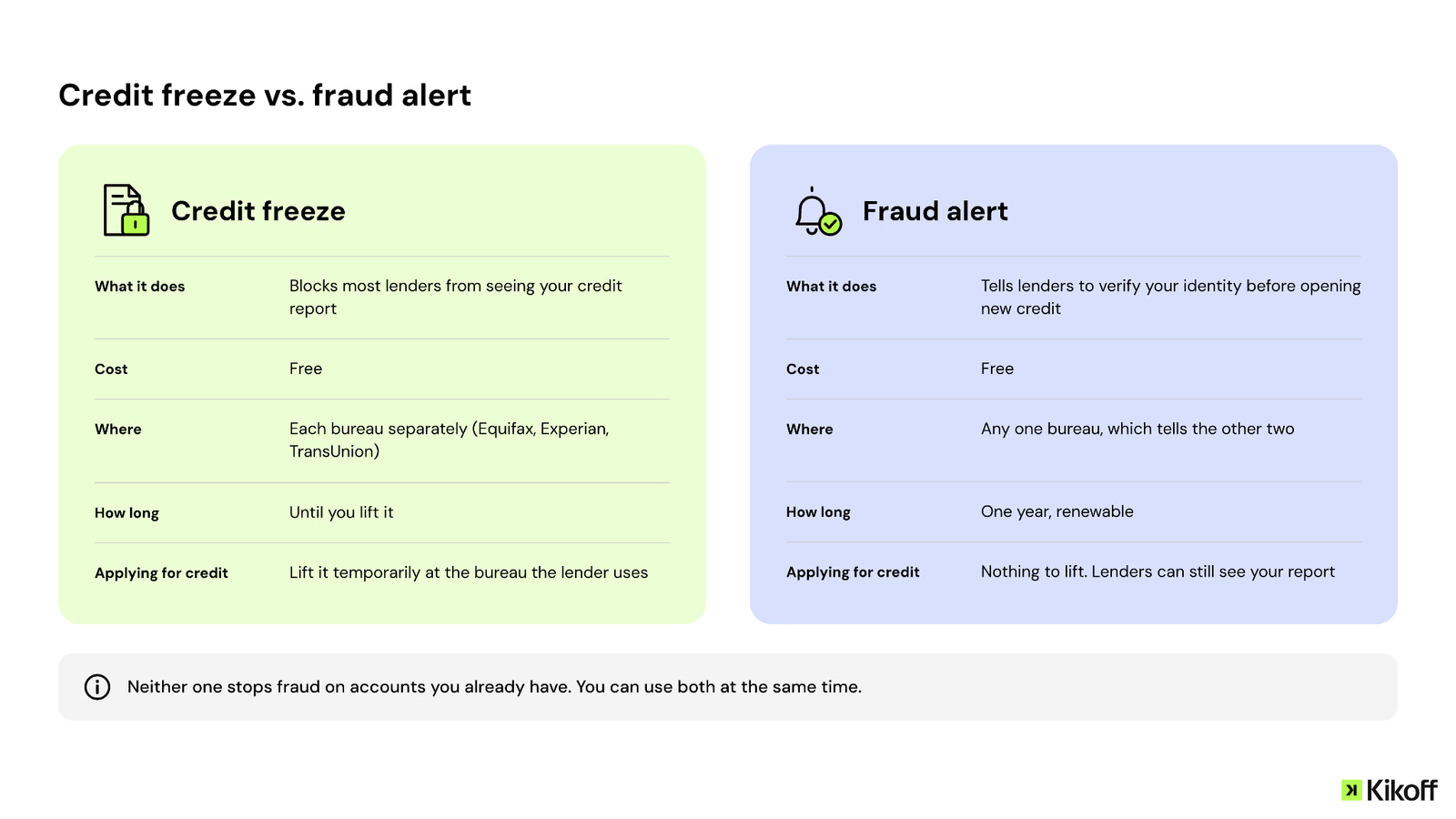
- Freeze your credit. A credit freeze blocks most lenders from seeing your credit report, making it harder for a scammer to open new credit in your name. It’s free, but you have to request it separately at Equifax, Experian, and TransUnion. It won’t stop fraud on accounts you already have, and you’ll need to lift it temporarily when you apply for credit.
- Place a fraud alert. A fraud alert adds a note on your credit reports asking lenders to verify your identity before they open new credit in your name. It lasts a year, and you can renew it. Request it from any one bureau, and that bureau tells the other two.
- Check your credit reports. All three credit reports are free every week at AnnualCreditReport.com. Checking regularly helps you catch issues before they do damage.
- Get an IRS Identity Protection PIN. This six-digit number keeps anyone else from filing a tax return with your SSN. You can get one from the IRS, and the IRS issues a new one each year.
- Lock down your logins. A password manager can create a strong, different password for each of your accounts. Turn on two-factor authentication too, so anyone logging in needs a code sent to your phone or email.
Read more >> How to Protect Your Online Banking Information
Signs to look out for
Depending on what was stolen, identity theft can show up as:
- Charges you didn’t make on your credit or debit cards.
- Withdrawals you didn’t make from your bank account.
- Accounts on your credit reports you don’t recognize.
- Bills that stop arriving in your mailbox.
- Calls from debt collectors about debts that aren’t yours.
- An IRS notice that a tax return was already filed with your SSN.
- Medical bills for services or care you didn’t get.
- A credit score drop you can’t explain.
If you spot fraud, take these steps in order:
- Call your bank or card issuer first if you see a charge or withdrawal you didn’t make. Federal law limits how much you can lose to debit card and bank transfer fraud, but that protection weakens the longer you wait to report it.
- Report it at IdentityTheft.gov. You’ll get a free recovery plan that walks you through contacting the credit bureaus, creditors, and other businesses.
- Dispute accounts you didn’t open directly with each credit bureau. It’s free, or Kikoff’s AI Credit Disputes can prepare and send them for you.
Read more >> How to Report Identity Theft
Is paid identity protection worth it?
A paid plan can make sense if:
- Your information was exposed in a data breach, and you want ongoing alerts.
- You want regular help removing information from data broker sites.
- You need recovery help and insurance in place in case your identity is stolen.
If you decide to pay for identity protection, compare:
- What’s monitored — which credit bureaus and what databases and sites it tracks.
- Recovery support — whether you get a dedicated case manager, and which steps they handle for you.
- Insurance terms — what’s covered, the deductible, whether stolen funds are included, and how long you have to report a theft.
Read more >> How to Protect Your Privacy Online From Data Brokers
Bottom line
Identity protection helps you spot theft faster, but it’s not a magic bullet for preventing identity theft. Free steps can help safeguard your information, a freeze, a fraud alert, and weekly reports among them.
Free tools can’t keep your information off data broker sites, though. Removing it yourself means filing opt-out requests site by site, and listings often come back. Kikoff Privacy Protection works to remove your personal info from more than 50 data broker sites and keeps checking for new listings. It’s included in Kikoff Ultimate for $35 a month.
Frequently Asked Questions
Article Sources
Disclaimer: The information provided in this blog post is meant for informational purposes only and does not constitute financial advice.