



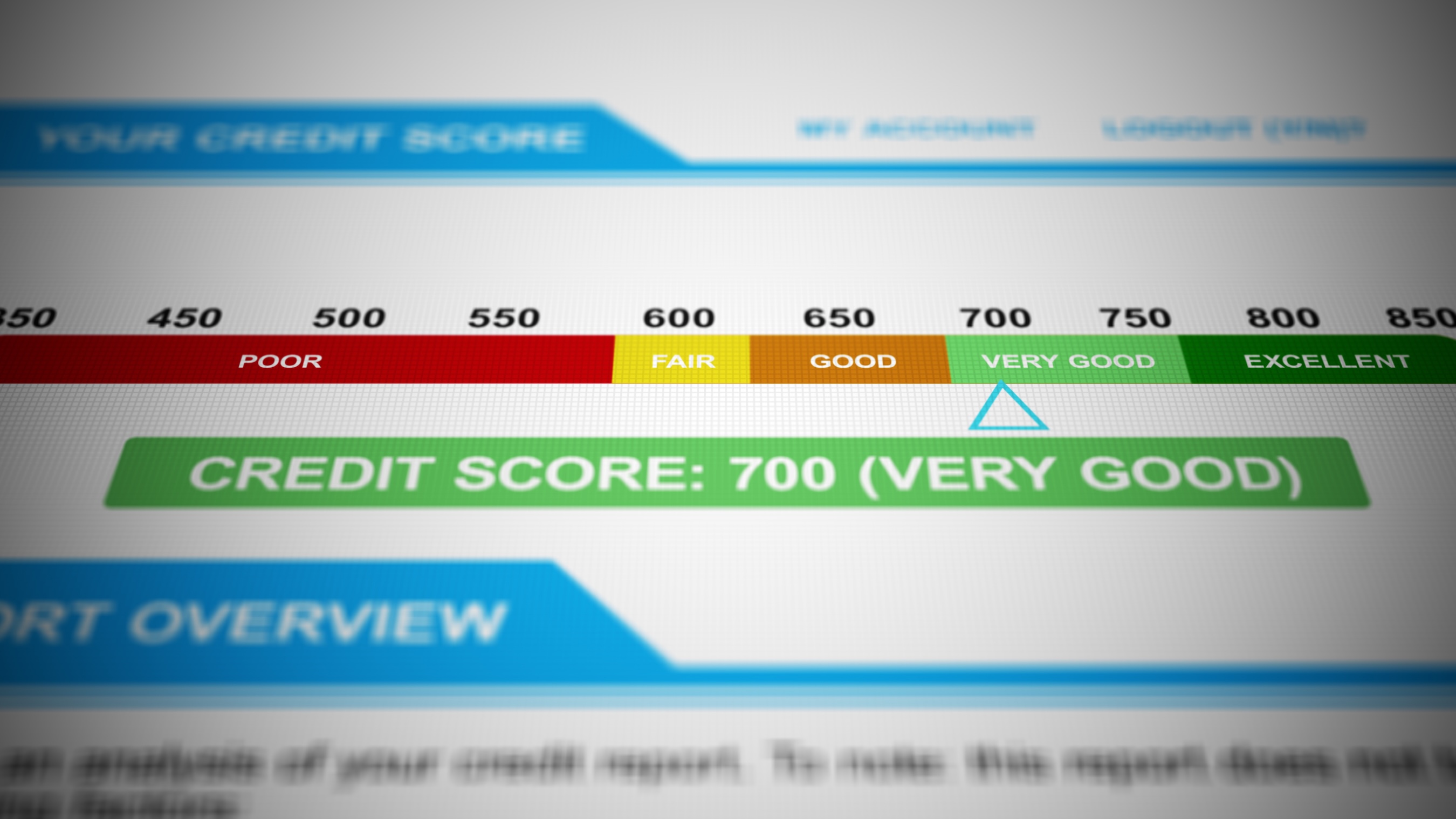
Most credit scores fall between 300 and 850. Where your number lands in that span gets a label, such as fair, good, or exceptional. If you just saw your score for the first time, or saw two different numbers in two different apps, you may wonder whether something’s off. Usually it isn’t.
You don’t have just one credit score, and each scoring company sorts the same number scale into its own ranges.
Read more >> How Many Americans Have an 800 Credit Score in 2026?
FICO score ranges
FICO makes the scores many lenders use. Its base scores run from 300 to 850 and fall into five categories.
These are FICO’s labels, not a lender’s rules. Each lender sets its own bar for a card, a loan, or a rate.
Read more >> What Is a FICO Score?
VantageScore ranges
VantageScore is the other big scoring model. If your app shows a VantageScore, here’s how that model sorts the scale.
VantageScore says it’s up to each lender to decide the minimum score it accepts.
Read more >> What Is a VantageScore Credit Score?
Same score, different label
Because the two models draw their lines in different places, one number can land in a different range on each. Here’s how a few example scores line up.
Look at the 665 row: It’s fair on FICO’s scale and prime on VantageScore’s. Neither label is wrong. They’re two companies describing the same number in their own terms.
It can get more confusing from there, because some credit bureaus use their own labels for VantageScore’s tiers. TransUnion, for example, calls a 661 to 780 VantageScore 3.0 good and 781 to 850 excellent. So the same 665 could read fair in an app that shows a FICO score, prime on VantageScore’s own scale, and good on TransUnion’s.
Before you compare two scores, find the model name near the number, such as "FICO Score 8" or "VantageScore 3.0." If you can’t spot it, check the app’s help page or ask its support team which score it shows.
Read more >> What is a Good Credit Score?
Why your scores don’t match
A score can differ depending on the scoring model, the data behind it, and the day it’s calculated. A gap between two apps doesn’t mean one of them is broken.
In practice, the difference comes down to three things:
- The model. FICO and VantageScore weigh your report differently, and each has several versions.
- The bureau. Equifax, Experian, and TransUnion may not have the same accounts on file. A lender that reports to only one bureau shows up only on that bureau’s report.
- The day. Scores update as new balances and payments get reported. A score from last month may not match today’s.
Read more >> Why Did My Credit Score Drop for No Reason?
The score a lender sees may use a different scale
FICO also makes industry-specific scores, such as FICO Auto Scores and FICO Bankcard Scores. These range from 250 to 900, compared with 300 to 850 for base FICO scores. On either scale, a higher score means lower risk.
Mortgages are their own case. For decades, loans sold to Fannie Mae and Freddie Mac required older “Classic FICO” scores:
- FICO Score 2 from Experian
- FICO Score 4 from TransUnion
- FICO Score 5 from Equifax
Starting in September 2026, lenders can choose Classic FICO or VantageScore 4.0 for those loans, according to the Federal Housing Finance Agency.
Read more >> How Are Credit Scores Used?
What if you don’t have a score yet?
If an app says it can’t find a score, your report may not have enough on it yet. To get a FICO score, your report needs at least one account open for six months or more and at least one account reported to a bureau in the past six months, according to myFICO. One account can meet both.
Having no score isn’t the same as having a low one. There just isn’t enough history for the model to work with yet.
Read more >> What Is the Lowest Credit Score Possible?
What to do with your range
- Check your reports for free. You can get your credit reports from all three bureaus free once a week at AnnualCreditReport.com. Checking your own report doesn’t lower your score.
- Look for anything that’s wrong. An account you never opened, or a late payment on a bill you paid on time, is worth disputing. You can dispute it for free with the bureau that lists it or the company that reported it. Keep a note of when you filed.
- Ask before you apply. Ranges are a starting point, so get specific with the lender. Ask which score it uses and what range it’s looking for.
Red flags before you pay anyone. Be wary of anyone who promises a specific score or a jump to a new range for a fee. Scores change as your credit report changes, and no one can promise where yours will land. You can check your reports and dispute errors yourself for free.
Bottom line
Credit score ranges are labels on the same number scale from 300 to 850, and FICO and VantageScore draw them in different places.
Your range describes your report as it looks today. It moves only as that report changes, and if there isn’t much on it yet, there may not be enough to score at all. Kikoff’s Credit Account gives you an account in your name that reports your on-time payments to all three credit bureaus, with no credit check to sign up. Plans start at $5 a month.
Frequently Asked Questions
Article Sources
Disclaimer: The information provided in this blog post is meant for informational purposes only and does not constitute financial advice.