
Paying off a loan early can lower your credit scores a little, but the dip is usually small and fades within a few months. It happens because a closed loan stops adding new on-time payments, and your mix of credit types can get thinner. The loan doesn’t vanish, though. If you paid on time, it stays on your report as positive history for up to 10 years. So whether to pay early depends less on your credit than on your interest rate and your savings.
Why your credit can dip after an early payoff
Paying off debt is good for your budget, so a drop can feel backward. It comes down to how scores are calculated.
Reduced credit mix
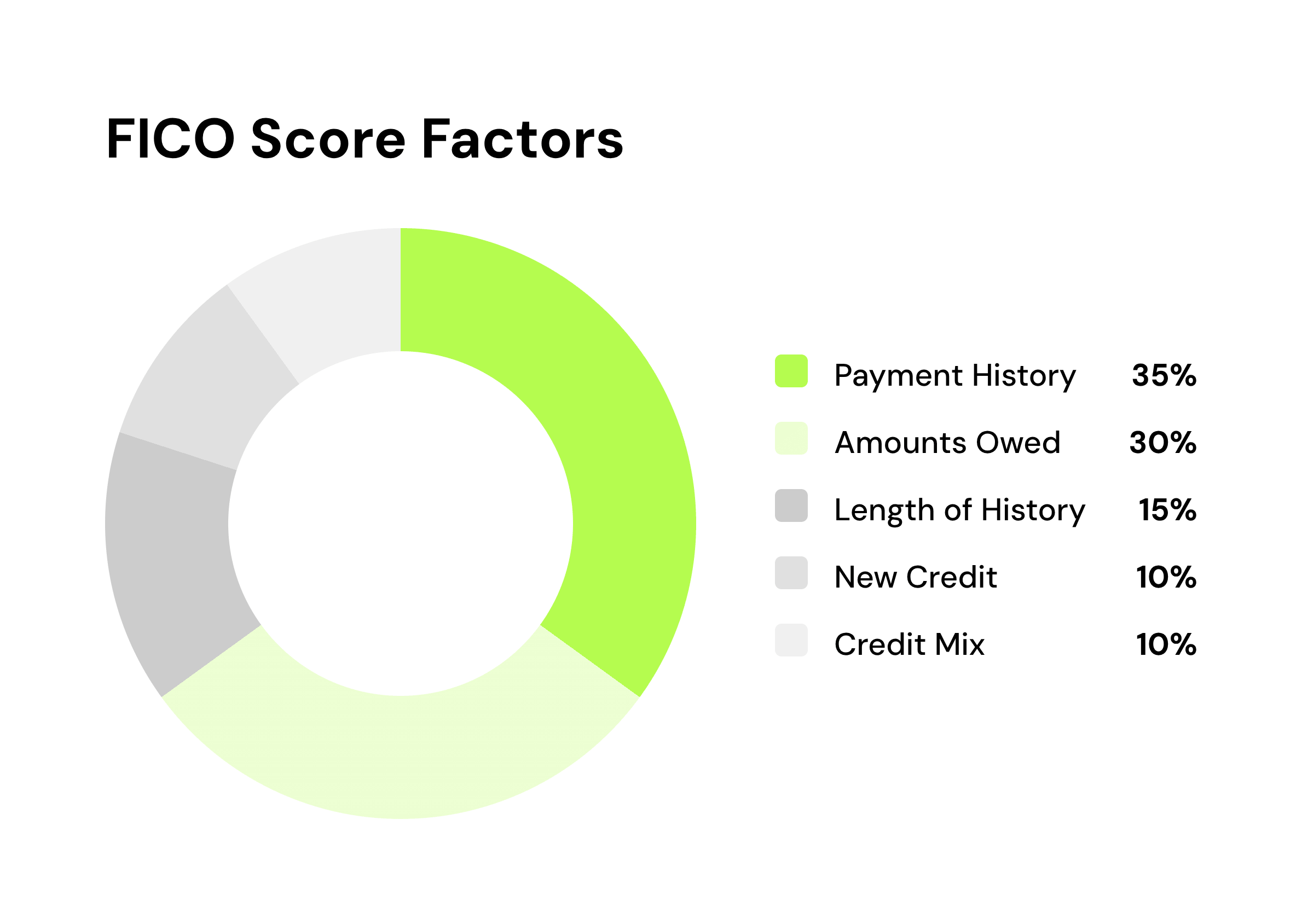
Credit mix, meaning the types of credit on your report, makes up 10% of your FICO Scores. A report with a car loan, a credit card, and a mortgage generally has a stronger mix than one with credit cards alone. Paying off your only installment loan, a loan you repay in fixed monthly payments, can thin that mix out.
Shorter average account age
If you pay off a credit card, your account will usually stay open unless you close it or go many months without using it. Loans work differently. Once you’ve paid off an installment loan, the account is closed.
The length of your credit history makes up 15% of your FICO Scores. That includes the ages of your oldest and newest accounts and the average age of all of them.
Closing a loan doesn’t lower your average account age right away. A loan you paid on time stays on your report for up to 10 years, and it keeps counting until it drops off.
Fewer new on-time payments
Payment history is the most important factor in your FICO Score, making up 35%. Over the course of your loan, you strengthen your credit with each on-time payment.
Once the loan is paid off, its on-time history still counts, but it stops adding new months. Open accounts in good standing also tend to carry more weight than closed ones. If the loan was your only active account, there’s a bigger catch: FICO needs at least one account reported in the past six months to calculate a score.
Read more >> The Importance of On-Time Payments in Building Credit
Should you pay off your loan early?
Your credit is only one part of the decision. Here’s how the main factors stack up.
Say you have $6,000 left on a car loan at 9% APR with 24 months to go. Your payment is about $274 a month, and you’d pay roughly $580 more in interest if you kept paying on schedule. Paying it off now would save most of that, assuming there’s no prepayment penalty and your lender charges interest on the remaining balance.
Read more >> Pros and Cons of Paying Off a Car Loan Early
Paying down your loan or investing? Putting extra money toward a loan and investing it are two different bets, and the right mix depends on your rate, your timeline, and how much risk you can take. A financial advisor can help you compare them for your situation. Before you pay for one, check whether your workplace retirement plan includes access to an advisor at no extra cost.
Bottom line
Paying off a loan early can cause a small dip that usually fades within a few months, and the interest you save can be worth far more. The catch is what comes after. Once the loan closes, it stops adding on-time payments, and if it was your only active account, your credit has nothing new reporting.
Kikoff’s Credit Account gives you an open account that reports your on-time payments to Equifax, Experian, and TransUnion. There’s no deposit, so the cash you just freed up stays yours. Plans start at $5 a month.
Frequently Asked Questions
Article Sources
Disclaimer: The information provided in this blog post is meant for informational purposes only and does not constitute financial advice.