






You probably already know your credit card’s due date. That’s because it's the one printed in bold on your monthly credit card statement. Marking that date on your calendar is crucial to ensure you pay your bill on time and avoid a late fee.
Your card's closing date — also called the statement date — might not be as important, but it can also affect your credit profile.
Here's how the two are related, how they differ, and why they both matter.
What’s the difference between a closing date and a due date?
Both your closing date and due date come from the same billing cycle, but they have two different functions.
- The closing date marks the end of your credit card’s monthly billing cycle. That's when your card issuer calculates your monthly balance, along with any applicable interest charges and fees.
- The due date is when your issuer expects you to pay your balance, or at least the minimum amount due, based on your most recent statement balance.
Read more >> How to read your credit card statement
What is a credit card closing date?
Your credit card's closing date is the last day of your billing cycle. It usually falls on the same calendar day every month, though there can be minor variations. On that day, your card issuer calculates your statement balance — including purchases, applicable interest, and fees, as well as payments and other credits — from the previous 28 to 31 days. It then reports that balance to the credit bureaus.
Anything you charge to your card after the statement date will be included in the next billing cycle.
How your closing date affects your credit utilization
Your credit utilization ratio, which is a crucial component of your credit score, is calculated by dividing your credit card balances by their corresponding credit limits.
Credit card issuers typically report your account activity to the credit bureaus at the end of each billing cycle. So, the balance that shows up on your report every month, and is used to determine your utilization rate, is usually from your most recent statement, not what you currently owe.
This means that even if you pay your balance in full on your due date every month, your credit reports show a positive balance for the account.
How to find your closing date
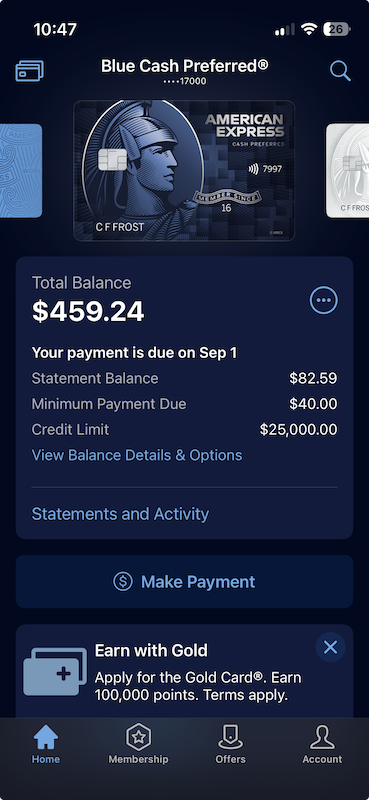
Your statement date is listed near the top of the monthly statement you receive from your credit card company. In some cases, you may also be able to see when your current billing cycle ends in your online account or mobile app. If you can't find it, you can always call the number listed on the back of your card.
Read more >> How credit utilization affects your credit
What is a credit card due date?
As its name suggests, your credit card due date is the deadline for paying your bill from the previous billing cycle. By law, your due date must be the same date every month, and it must be at least 21 days after your statement date.
Your card issuer will calculate a minimum amount due based on your statement balance, and paying that is enough to stay current. However, paying your balance in full helps you avoid costly interest charges.
What happens if you miss your due date
If you don't pay at least the minimum amount due by your due date, your card issuer will assess a late payment fee, and you'll lose your grace period. A late card payment generally won’t appear on your credit report if you pay within 30 days of the due date. After that, your issuer will report the missed payment to the credit bureaus, which can damage your credit history.
One thing to note is that if your due date falls on a Sunday or a holiday, you typically have until the following business day to make your payment.
How to find your due date
Your due date shows up on every monthly statement you receive, usually at the very top of the first page. Your card issuer may also disclose it in your online account or mobile app.
Read more >> How to read a credit card statement
How the closing date and due date work together
That gap between your closing date and your due date is called a grace period. During that time, your purchases from the previous billing period won't accrue interest, as long as you pay the balance in full by the due date.
But if you only pay the minimum amount, or any partial balance for that matter, you'll incur interest on the unpaid amount. What's more, all new purchases will start accruing interest immediately until you pay the balance in full.
How to use both dates to manage your credit
When comparing a closing date vs. due date on a credit card, your due date is far more important. But knowing both can help you strategize your credit card habits to maintain good credit.
Pay at least the minimum by the due date
Payment history is the most important factor in your credit score, which is why making at least the minimum payment matters. Even a single 30-day missed payment can wreak havoc on your score and make it harder to get approved for credit in the future.
At the very least, make it a priority to pay at least the minimum amount due every month. But the best way to safeguard your credit and minimize your costs is to pay your balance in full. Either way, consider setting up autopay instead of relying on memory or alerts that you can miss.
Pay before the closing date to lower reported utilization
Your credit utilization rate is another major factor in your credit score, so it's important to keep it as low as possible. If you pay your balance in full each month but still have high utilization, consider paying before your statement date to lower that rate. You could even make multiple payments per month to keep it low.
Read more >> Why paying only the minimum on a card hurts your credit
Bottom line
Your credit card closing date and due date serve separate purposes, but knowing both is key to building and maintaining good credit habits.
If you're starting from a thin file, the first move is simply getting positive history on there. The Kikoff Credit Account reports your on-time payments to all three major credit bureaus — no credit check required.
Frequently Asked Questions
Article Sources
Disclaimer: The information provided in this blog post is meant for informational purposes only and does not constitute financial advice.