



In the U.S., 26 million consumers fall into the "credit invisible" category. So what does it mean?
What is credit invisibility?
Being credit invisible means that you have no credit history with one of the 3 nationwide credit reporting companies: Experian, Equifax, and TransUnion.
If someone who is credit invisible applies for credit, such as a credit card, loan, etc, the lender will either see no credit report at all or a file so thin or inactive that it doesn't generate a credit score.
This makes it highly difficult to apply for credit.
How to know if you're credit invisible
The standard way to check your credit report for free is through annualcreditreport.com.
The 3 credit bureaus (Experian, Equifax, TransUnion) are required by law to generate each individual a free credit report per year, and annualcreditreport.com was the designated website to request them all at once.
For a smoother and slightly faster experience, you can sign up for Kikoff to see if you're credit invisible. If you see a credit score and credit history on the app, you can be sure you're not credit invisible. If you are credit invisible, Kikoff has several low-cost features to help you build your credit quickly.
Monitoring your credit score helps you know if you're credit invisible sooner rather than later.
Impact of having no credit history
Having no credit history is quite bad if you're looking to do the following:
- Rent an apartment
- Get a cell phone without a deposit
- Get approved for a loan
- Get a job (many people don't realize employers run credit checks before hiring)
This said, if you find out that you are credit invisible, be sure to take immediate action to start building your credit quickly.
What can I do if I'm credit invisible?
To become credit "visible", you're going to need to establish credit history that the bureaus can track.
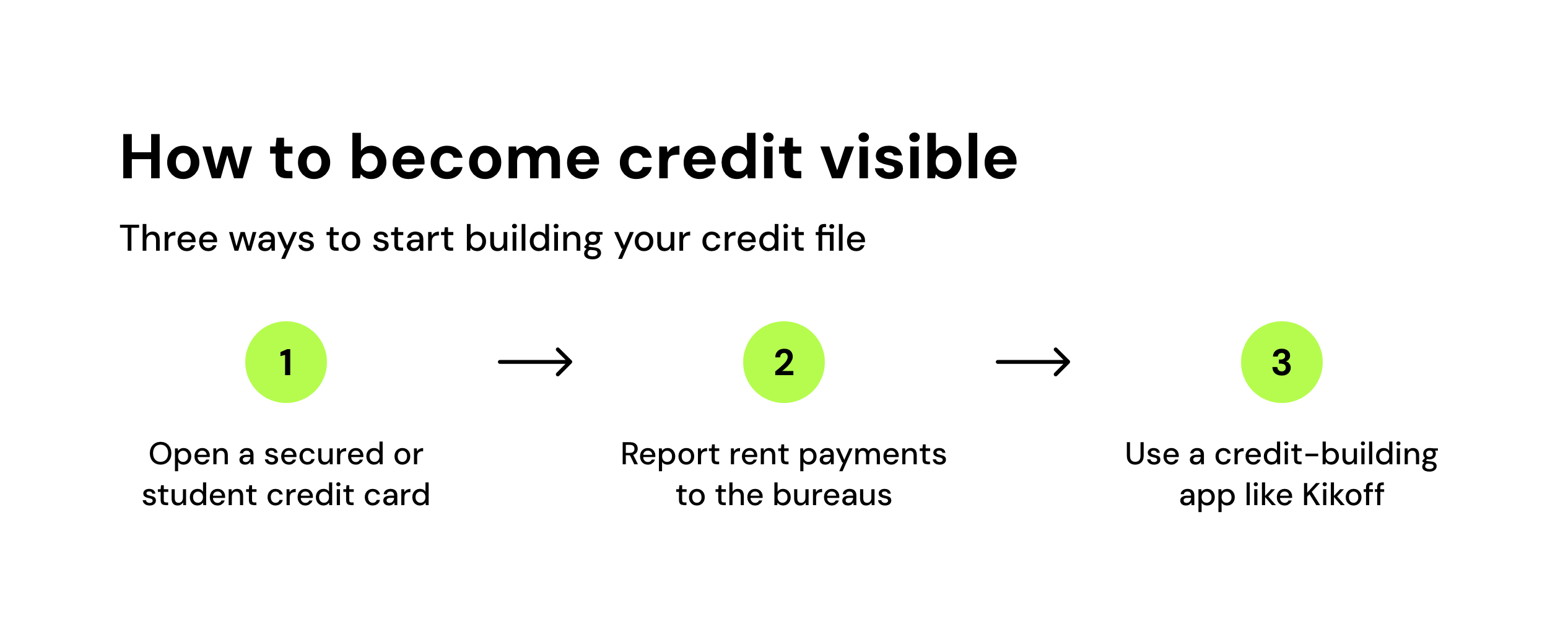
Here are some tips to build credit to get out of being credit invisible:
1. Apply for a secured or student credit card
Secured cards are similar to debit cards, where you deposit cash into them, but your purchases get reported to the credit bureaus.
Student cards, on the other hand, are proper credit cards, but they have reduced benefits to account for the more lenient application.
Using both secured cards and student credit cards (responsibly) is a great way to kick off your credit building journey.
2. Rent reporting
If you're paying for rent, you can now have that submitted to the credit bureaus.
Apps like Kikoff allow you to report your rent to all 3 bureaus, which will give you a good starting point from which to build your credit further.
3. Credit building apps
Nowadays, there are apps which allow you to build credit by paying small monthly payments on a credit line that gets reported to the bureaus.
Kikoff, as mentioned in the last section, is primarily built around this feature. For as little as $5 per month, you can build credit on a $750 tradeline that gets reported to the bureaus.
For more information on building credit, check out this complete guide on how to build credit.
Conclusion
Credit invisibility just means that you have no credit report, or your credit report is empty. If you're looking to apply for credit, such as a credit card, loans, etc, it's highly important that you take action to build credit history that the bureaus can see.
If you're looking to become visible as soon as possible, give Kikoff a try.
Frequently Asked Questions
About the editor

Disclaimer: The information provided in this blog post is meant for informational purposes only and does not constitute financial advice.