


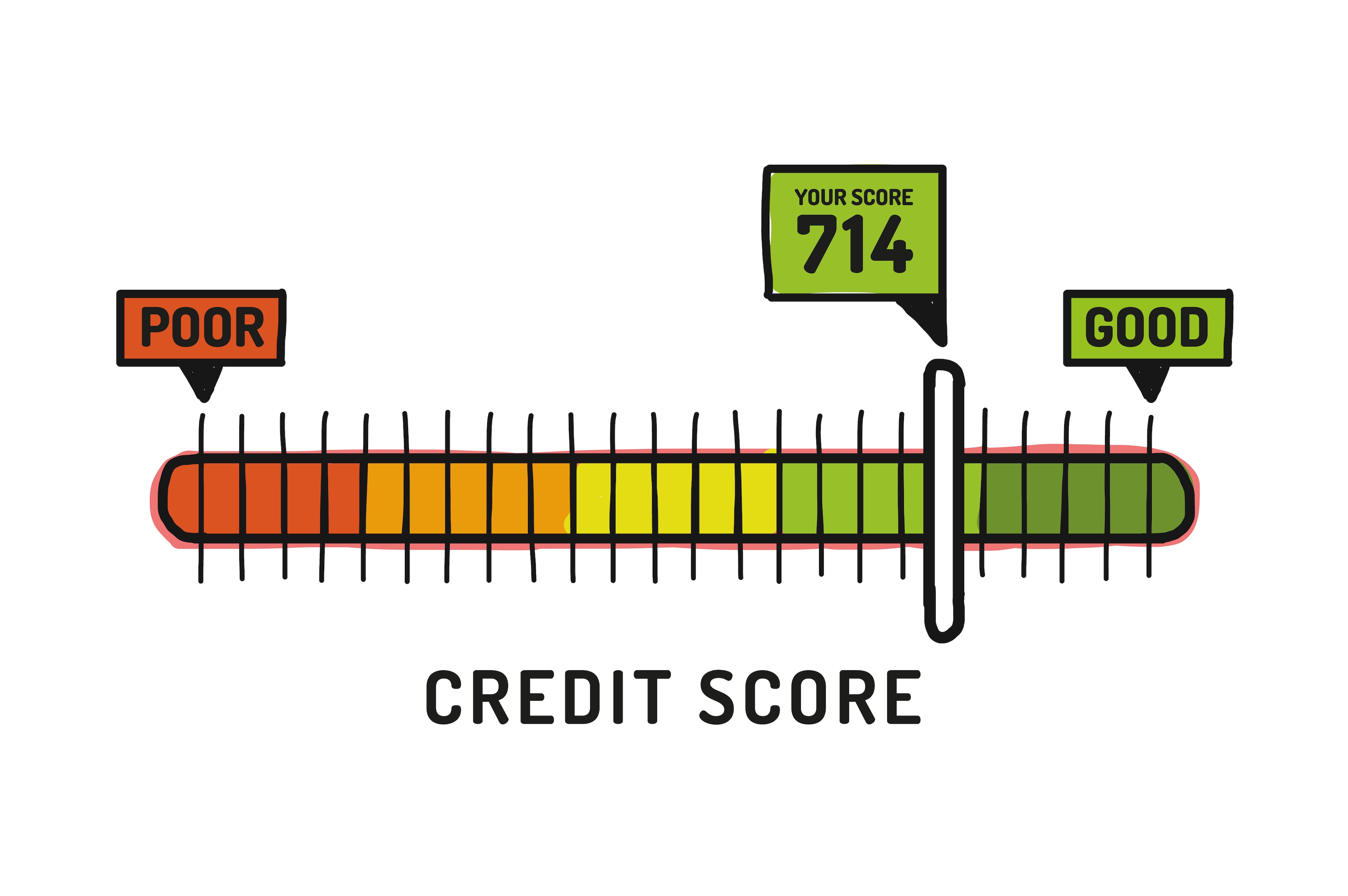


The average FICO Score in the U.S. is 714. It climbs steadily with age, from 678 for Gen Z to 760 for the Silent Generation.
Why does this matter? Because averages are the wrong benchmark for most people. Age, state, and income all track with credit scores, but none of them is part of the calculation. Your age doesn’t appear on your credit report. Where you live isn’t scored. Your income isn’t scored, and lenders don’t report it to the credit bureaus at all.
Read more >> What Are Credit Scores?
What’s the average credit score right now?
The national average FICO Score is 714, according to FICO’s Credit Insights report. But an average glosses over a lot. The real story is in the spread.
Here’s what stands out:
- The biggest group isn’t at the average. It’s above it in the “very good” range.
- About 71 million adults fall below 670. That’s roughly 30% of people with scores. If your score is in that range, you have more company than the headline number suggests.
Read more >> What Is a Good Credit Score?
Are you in these numbers at all?
Before you compare yourself to the numbers, there’s this: Do you have a credit score in the first place?
For a lot of people, the answer is no. An estimated 32 million American adults couldn’t be scored as of December 2020, according to a Kikoff analysis of CFPB data. That’s roughly 1 in 8. None of them show up in a single table of average scores anywhere, including our own. Averages are calculated only on people who have scores.
That group splits three ways, and the solution is different for each:
- No credit record at all. About 7 million adults, according to the CFPB. Nothing has ever been reported in their name, so they need a first account that reports to the bureaus.
- A record that’s gone quiet. An estimated 15 million adults have a credit file with nothing recent for a scoring model to use. They aren’t starting from zero, and they need current activity, not a first account. This is the largest of the three groups and the one hardly anybody talks about.
- A file that’s too thin. An estimated 10 million adults have something on file, just not enough of it yet.
If you’ve been told you have no credit score rather than a bad one, that’s a different situation with a different starting point. It also means the advice aimed at fixing bad credit isn’t written for you.
On top of that, the number most sources still quote for this is out of date. The CFPB corrected its own estimate in June 2025, cutting the widely cited figure by more than half. (Kikoff is digging into what changed and what it means. Keep an eye on our Insights page for more on that soon.)
Average credit score by age
Gen Z’s average FICO Score is 678, compared with 747 for baby boomers, according to Experian’s June 2026 data.
The gap looks dramatic, but the reason is mostly time. The length of your credit history is one of the factors scores weigh, and there’s no shortcut for it. Someone who opened their first account in 1985 has four decades of payment history working in their favor.
So a 24-year-old can do everything right and still land below the national average. Gen Z’s 678 average already sits in FICO’s good range, which means the typical Gen Zer isn’t falling short — they’re earlier in the same process.
Read more >> How Long Does It Take to Build Credit?
Average credit score by state
Minnesota has the highest average FICO Score in the country at 741, and Mississippi the lowest at 677, according to Experian’s September 2025 data. The spread between them is 64 points.
Where you live isn’t a scoring factor. No model knows your ZIP code.
What state averages reflect is everything else going on in those states: median income, cost of living, how many people live near a bank branch, how exposed households are to surprise expenses. States at the bottom of the list tend to be states where more people are a car repair away from a missed payment.
Your state’s average says something about your neighbors’ circumstances. It doesn’t say anything about what’s possible for you.
Average credit score by income
This is the data that’s harder to come by. Income isn’t reported to the credit bureaus, so it isn’t on your credit report, and no major scoring model uses it. Tables claiming to rank scores by income are estimated, not measured.
The confusion is understandable, because income and scores do move together. But the link isn’t a direct one. A higher income usually means lower credit utilization, because the same balance eats up a smaller share of your limit. It means more cushion to absorb a surprise bill without missing a payment. It often means higher credit limits, which lowers utilization without needing to change financial habits.
The pattern shows up in Experian’s data: Average credit utilization is 79% for people in the poor score range and 7% for those in the exceptional range (a spread you can see further down).
You can see it in the habits too: people with 800+ scores carry more credit cards than everyone else (4.6 versus 3.7 on average) but use about 7% of their limits, versus 29% for all consumers. What the model sees is low utilization, not the paycheck behind it.
Income can still matter when you apply for credit: Lenders use it to judge whether you can afford the payment. It just isn’t part of the score.
That’s good news, because it shows the behaviors that build a score are available at any income.
Read more >> How Many Americans Have an 800 Credit Score in 2026?
What to do if you fall below average
The two biggest factors in your score are also the two you have the most control over.
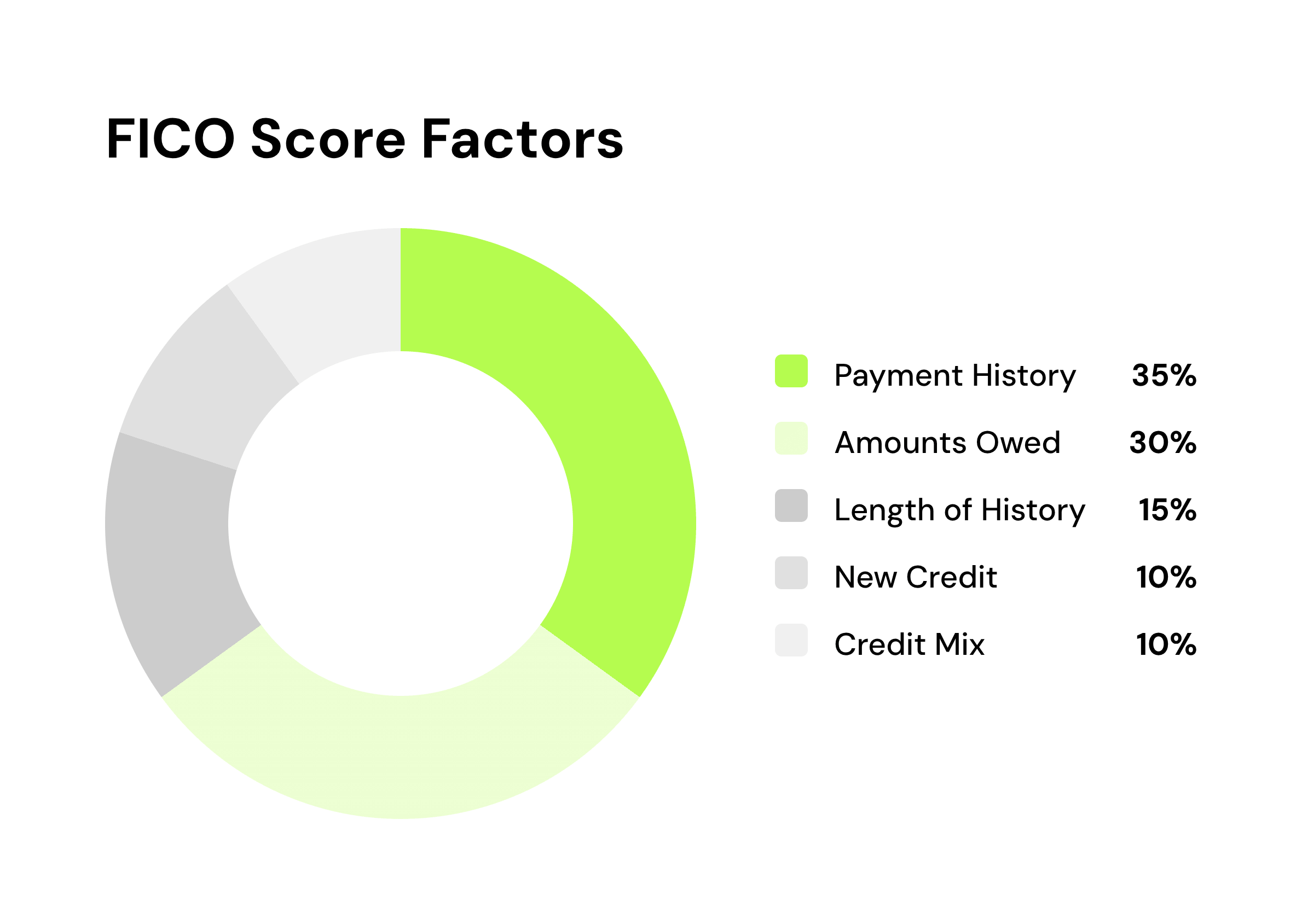
Payment history carries more weight for your credit score than any other factor at 35% of your score. Every on-time payment adds to it, and a payment reported on time counts the same whether your balance is $20 or $2,000.
Amounts owed is next at 30% of your score. The largest piece of it is credit utilization, how much of your available credit you’re using, and it’s the fastest-moving factor on the chart. Unlike the age of your accounts, your utilization can shift within one or two billing cycles. Paying down balances before your statement closes is the place to start.
Age of accounts matters too, but it depends on time. That’s why the first few months of building credit can feel glacial: You’re accumulating something that can’t be rushed.
One heads-up: The score you see in a financial app may be a VantageScore, a different scoring model from the FICO Score many lenders use, which means it may not line up exactly with these ranges.
If paying down balances feels out of reach, the National Foundation for Credit Counseling can connect you with free or low-cost debt counseling at 800-388-2227.
Bottom line
The average credit score tells you what’s typical, not what’s expected of you. Age explains most of the gap between generations, state averages reflect local economics rather than anything about you, and income isn’t scored at all. If you don’t have a score yet, you’re one of roughly 32 million adults in that position, and the path from there is clearer than most people expect. Kikoff’s Credit Account reports your on-time payments to all three credit bureaus, with no credit check to sign up. Plans start at $5 a month.
Article Sources
Disclaimer: The information provided in this blog post is meant for informational purposes only and does not constitute financial advice.