


.jpg)
.jpg)


The Fair Debt Collection Practices Act (FDCPA) protects consumers from abusive, deceptive, and unfair debt collection practices. Regulation F fills in many of the details, including when collectors may contact you, what information they must provide, and how they may use email, text messages, and social media.
Knowing these rules can help you respond without feeling pressured into making an immediate payment. Regulation F does not erase a valid debt, but it gives you important rights while a collector is trying to collect it.
What is Regulation F?
Regulation F is the federal rule found in 12 CFR Part 1006. It implements the FDCPA and provides more specific standards for debt collection practices.
The Consumer Financial Protection Bureau revised Regulation F through two final rules that took effect on November 30, 2021. The revisions addressed issues such as call frequency, electronic communication, validation notices, credit reporting, and time-barred debt.
Regulation F generally applies to debt collectors covered by the FDCPA, including collection agencies, debt buyers, and collection law firms. It usually does not apply to an original creditor collecting its own debt. The FDCPA also covers consumer debts, not business debts. State laws may provide broader protections.
Read more >> What Is the Fair Debt Collection Practices Act?
How often can debt collectors contact you?
Debt collectors generally may not contact you before 8 a.m. or after 9 p.m. based on the local time where you are located. They also must respect times and places they know are inconvenient for you.
If you tell a collector that you cannot receive personal calls at work, for example, the collector generally may not continue calling you there.
Regulation F also establishes presumptions about excessive calling. A collector is presumed to violate the law if it calls about a particular debt:
- More than seven times within seven consecutive days
- Within seven consecutive days after having a telephone conversation with you about that debt
These limits apply separately to each debt. They also concern telephone calls, not every form of communication.
The seven-call rule is not permission to harass you: Even when a collector stays below the numerical threshold, the frequency, timing, and pattern of its calls may still violate the law.
What must a collector tell you about the debt?
A debt collector generally must provide validation information during its first communication with you or within five days afterward. This is commonly called a validation notice.
The notice should include information such as:
- The name of the creditor
- The account number associated with the debt
- An itemization of interest, fees, payments, and credits
- The current amount claimed
- Information about how to dispute the debt
- The end date of the 30-day validation period
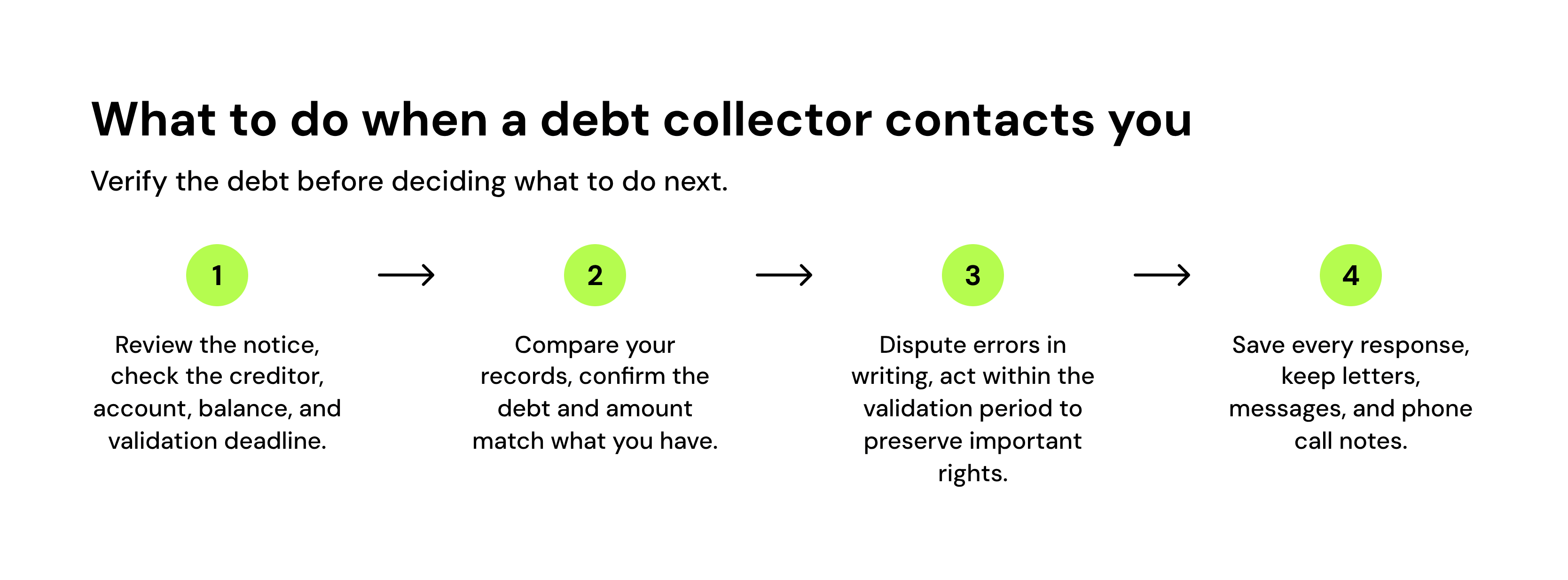
Review this information before agreeing to pay. Compare the creditor, balance, and account details with your records.
If you do not recognize the debt or believe the amount is wrong, dispute it in writing. When the collector receives a written dispute during the validation period, it generally must pause collection of the disputed debt or disputed portion until it sends you verification.
The collector may resume collection after providing verification. A dispute does not necessarily mean the collector must remove the debt or agree with your position.
What rules apply to email, text messages, and social media?
Regulation F allows debt collectors to use electronic communication, but it places limits on how they do so.
Emails, text messages, and other electronic communications must provide a clear and simple way to opt out. You do not have to use the collector’s preferred wording to request that it stop using a particular email address or phone number.
A debt collector may contact you through social media only in a private message. It may not post about the debt where your friends, contacts, followers, or the public can see it. If the collector sends a request to add you as a friend or contact, it must identify itself as a debt collector.
Regulation F also defines a limited-content message. This is a voicemail that includes only certain basic information intended to encourage a return call without revealing the debt to someone else who hears the message.
What does Regulation F say about credit reporting and older debts?
Before reporting a debt to a credit bureau, a collector generally must speak with you about it or send you a letter or electronic message. If it sends a message, it must wait a reasonable period, generally 14 days, to see whether the message is returned as undeliverable.
This rule is intended to reduce debt parking, which occurs when a collector reports a debt without first attempting to notify the consumer.
Regulation F also prohibits a collector from suing or threatening to sue over a time-barred debt. A debt becomes time-barred when the applicable statute of limitations for filing a collection lawsuit expires.
A collector may still ask you to pay a time-barred debt unless state law says otherwise. The collector must still follow federal and state debt collection rules.
Before paying an older debt: In some states, making a partial payment or acknowledging that you owe the debt can restart the time available to file a lawsuit. Check the law that applies to your debt or speak with a consumer-law attorney or legal aid organization before acting.
The statute of limitations for a lawsuit is separate from how long a collection may appear on a credit report. Paying a collection also does not guarantee that it will be removed.
Read more >> How to Remove Collections From Your Credit Report
Can you make a debt collector stop contacting you?
You have the right to limit how a debt collector contacts you. You can tell the collector that a particular time, place, or communication method is inconvenient.
You can also tell the collector in writing to stop contacting you. After receiving your request, the collector generally may contact you only to confirm that communications will stop or to tell you about a specific action it may legally take.
Stopping communication does not erase the debt or prevent other lawful collection activity. A creditor or collector may still report accurate information or file a lawsuit when legally permitted.
If an attorney represents you regarding the debt and the collector knows how to reach that attorney, the collector generally must contact the attorney instead of you.
What should you do if a collector violates Regulation F?
Keep copies of letters, emails, text messages, validation notices, and other records. For phone calls, write down the date, time, number used, and what was discussed.
You can report suspected violations to:
- The Consumer Financial Protection Bureau
- The Federal Trade Commission
- Your state attorney general
You may also have the right to sue under the FDCPA. An individual lawsuit may seek actual damages plus additional statutory damages of up to $1,000. In a successful action, the court may award costs and reasonable attorney’s fees. An FDCPA lawsuit generally must be filed within one year of the violation.
Consider speaking with a consumer-law attorney or legal aid organization if you are being threatened, sued, contacted about a debt you do not recognize, or pressured to pay an older debt.
Bottom line
Regulation F gives debt collectors clearer rules to follow and gives you practical ways to respond. Start by reviewing the validation notice, checking the debt against your records, and saving every communication.
Do not let a collector pressure you into paying before you understand the debt and your options. This is especially important when the debt is old or the amount appears incorrect.
If you confirm that the debt is valid and decide to explore settlement, Kikoff’s debt negotiation tool is available to Premium and Ultimate customers for eligible debts. With your permission, Kikoff contacts the collector to request an offer. You’ll typically be notified of any available offer within five business days. You decide whether to accept it, and nothing is settled without your approval.
Frequently Asked Questions
Article Sources
Disclaimer: The information provided in this blog post is meant for informational purposes only and does not constitute financial advice.