

.jpg)



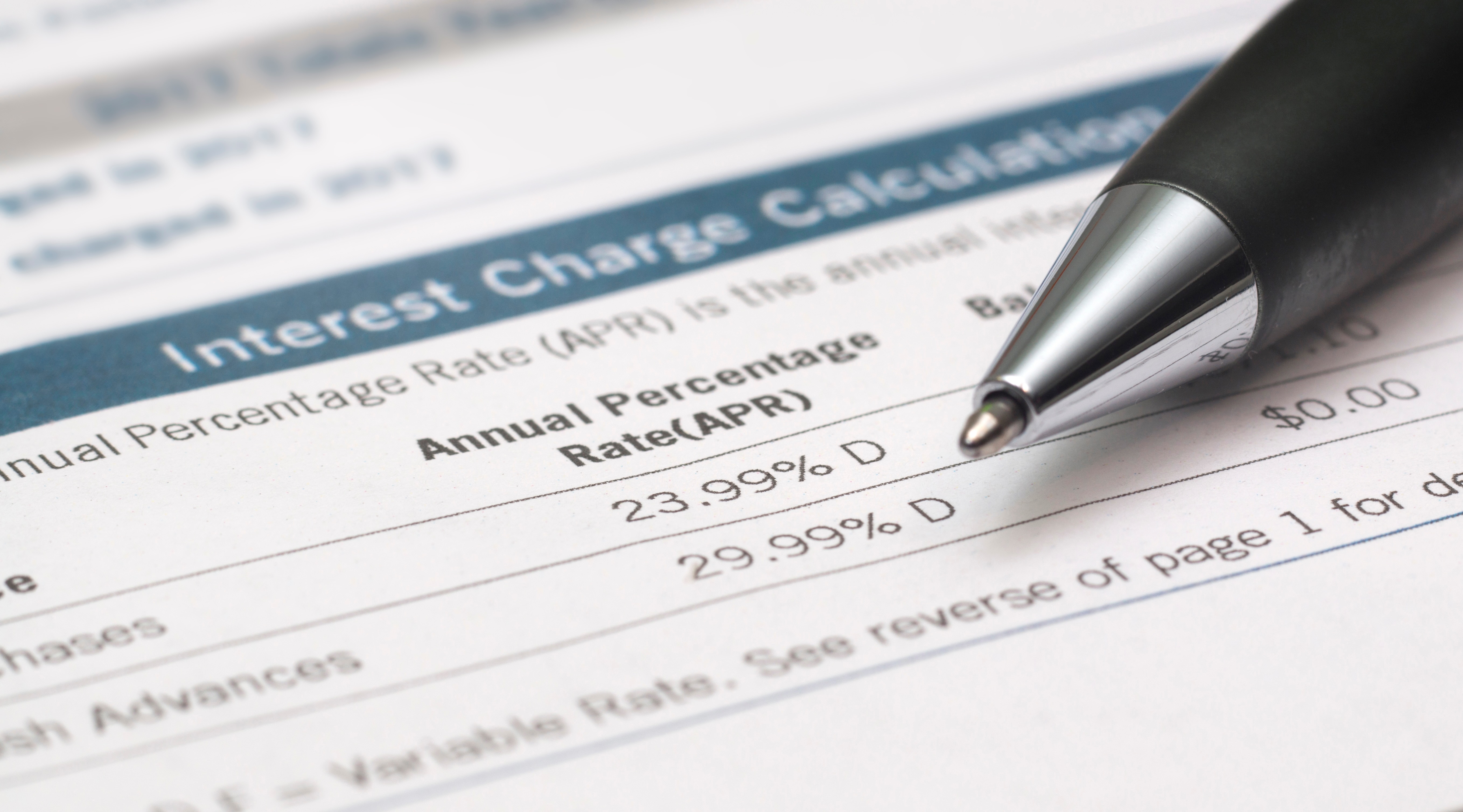
Two people can apply for the same credit card in the same week and be quoted rates eight points apart. Neither did anything wrong; the card just prices by credit score. The current national average on balances carrying interest is 22.15%, and that's the benchmark for "good." But the number that matters is the one your own profile qualifies for.
What is a good APR for a credit card?
Generally, a credit card’s APR is considered “good” if it’s below the national average. The average rate on card accounts that carry a balance was 22.15%, according to the Federal Reserve. Across all accounts, including people who pay in full and never see interest, the average was 20.94%. Rates on brand-new card offers run higher than both.
However, there are a few caveats. That average rate accounts for borrowers across all credit score ranges. Credit cards that offer rewards programs, cash back, and other perks also tend to have higher APRs than those that don’t.
Average credit card APRs by credit score range
Before you start looking for a credit card, understand how your credit score may affect APR. That way, you’ll have realistic expectations of the rates you may qualify for.
| FICO Score range | Average APR |
|---|---|
| 760+ | 25.8% |
| 740–759 | 27.3% |
| 720–739 | 28.2% |
| 700–719 | 28.7% |
| 680–699 | 29.0% |
| 660–679 | 29.2% |
| 640–659 | 29.4% |
| 620–639 | 29.9% |
| 619 and under | 30.0% |
| Overall | 27.5% |
| Source: The Consumer Credit Card Market, Consumer Financial Protection Bureau, December 2025. Data as of year-end 2024. | |
How credit card APRs compare to other types of debt
Credit card APRs tend to be higher than APRs on most other kinds of debt, including:
- Mortgages
- Personal loans
- Car loans
- Student loans
A payday loan is the expensive exception. A typical two-week payday loan charging $15 for every $100 borrowed comes out to an APR of almost 400%, according to the CFPB. In states that allow higher fees, it runs well past that.
How credit card APR works
Many people use interest rate and APR interchangeably. On a credit card, they're the same number.
Federal law requires credit card issuers to show the rate as an APR, and on a credit card, that APR is interest only. Costs like annual fees, balance transfer fees, and cash advance fees aren't factored in.
Mortgages and car loans work differently. Their APRs include some of the loan's fees, so those loans show you two numbers: the interest rate and a slightly higher APR.
Variable vs. fixed APR
A credit card's APR is either variable or fixed. A variable APR moves with the U.S. Prime Rate, a benchmark that follows the Federal Reserve. Some cards follow a different benchmark instead, which you can find in your terms and conditions.
A fixed APR doesn't move with the prime rate. But "fixed" doesn't mean it's permanent: After your first year, an issuer can raise it, though it's required to tell you in writing at least 45 days before the new rate starts. That higher rate generally applies only to new purchases, not to the balance you're already carrying.
Understanding different types of APRs
It’s not unusual for the same credit card to come with multiple types of APRs. Different APRs may apply depending on the circumstances.
| APR type | What it means |
|---|---|
| Introductory APR | A low or 0% promotional rate for a set number of months after you open the card. It lasts at least six months by law, and your card's terms give the exact end date. After that, the regular rate takes over. |
| Purchase APR | The rate on everyday spending. You're only charged it if you don't pay your full balance by the due date. This is the one to ask about if you call for a lower rate. |
| Balance transfer APR | The rate on a balance you move over from another card. It's often 0% for a set number of months, but most cards charge a fee of 3% to 5% of the amount you transer, adding to what you owe. |
| Cash advance APR | The rate when you use your card to get cash — at an ATM, but also money orders, wire transfers, and some bill payments. It's usually the highest rate on the card, there's a separate fee, and interest starts the day you take the money instead of at the due date. |
| Penalty APR | A much higher rate some cards apply after a late or returned payment. Not every card has one, so check your terms. If a payment runs more than 60 days late, this rate can apply to the balance you already owe, not just new spending. |
3 ways to get a lower APR on a credit card
1. Improve your credit score
The higher your credit score is, the greater your chances of qualifying for a low-rate credit card become. On-time payments are the largest factor in your credit score, and lowering a card balance cuts utilization within a cycle or two.
2. Ask your card company for a lower rate
Card companies rarely lower a rate on their own. But you ask by calling the number on the back of your card.
First, ask about your purchase APR. That's the one costing you money if you carry a balance from month to month.
Lead with what's in your favor, including how long you've had the card and your on-time payments, if you have them. If another card company has offered you a lower rate, let them know. Then ask: "What's the lowest purchase APR you can give me on this account today?"
If they say no, you can push it further by asking whether there's a department that handles rate requests or hardship accounts, and what would need to change for the answer to be yes. Usually it's a run of on-time payments.
No matter what, a no today isn't a no forever. You can always call back in a few months.
3. Look into balance transfer cards
If your card company won't lower your rate, another option is moving the balance to a different card. Many of these cards come with a 0% introductory APR for a set number of months, allowing payments to go to your balance instead of interest.
Moving a balance isn't free, however. Most cards charge a fee equal to 3% to 5% of each transferred amount, and the fee gets added to your new balance. Move $4,000 and you'd owe roughly $4,120 to $4,200 on the new card before paying a cent of interest.
These offers also tend to go to people with good credit, and applying puts a hard inquiry on your credit report either way, temporarily dropping your credit score by a few points.
If you are approved, work out what you'd need to pay each month to clear the full balance (including transfer fees) before the 0% period ends. Whatever's left when it ends starts collecting interest at the card's regular APR.
Read more >> How Credit Utilization Affects Your Credit Score
Does APR matter if you pay your balance in full?
Yes. Most credit card issuers provide a grace period between your statement closing date and the due date to pay the balance in full. If you pay your full statement balance by the due date every month, you won't owe interest on purchases.
Issuers aren't required to offer a grace period, though most do. It only covers purchases: Balance transfers and cash advances start accruing interest right away.
Once you carry a balance past the due date, you lose the grace period, and new purchases start accruing interest from the day you make them until you pay in full again.
Read more >> Why Paying Only the Minimum Hurts Your Credit
Bottom line
A good APR is one that's below the national average. But you don't choose your APR: Your credit score does.
If your file is thin or your score is holding you back, Kikoff's Credit Account is one way to add payment history in your own name. It requires no deposit and no credit check to sign up, and Kikoff reports your payments to Equifax, Experian, and TransUnion, which builds payment history and keeps utilization low. Plans start at $5 a month.
Frequently Asked Questions
Article Sources
Disclaimer: The information provided in this blog post is meant for informational purposes only and does not constitute financial advice.