.jpg)



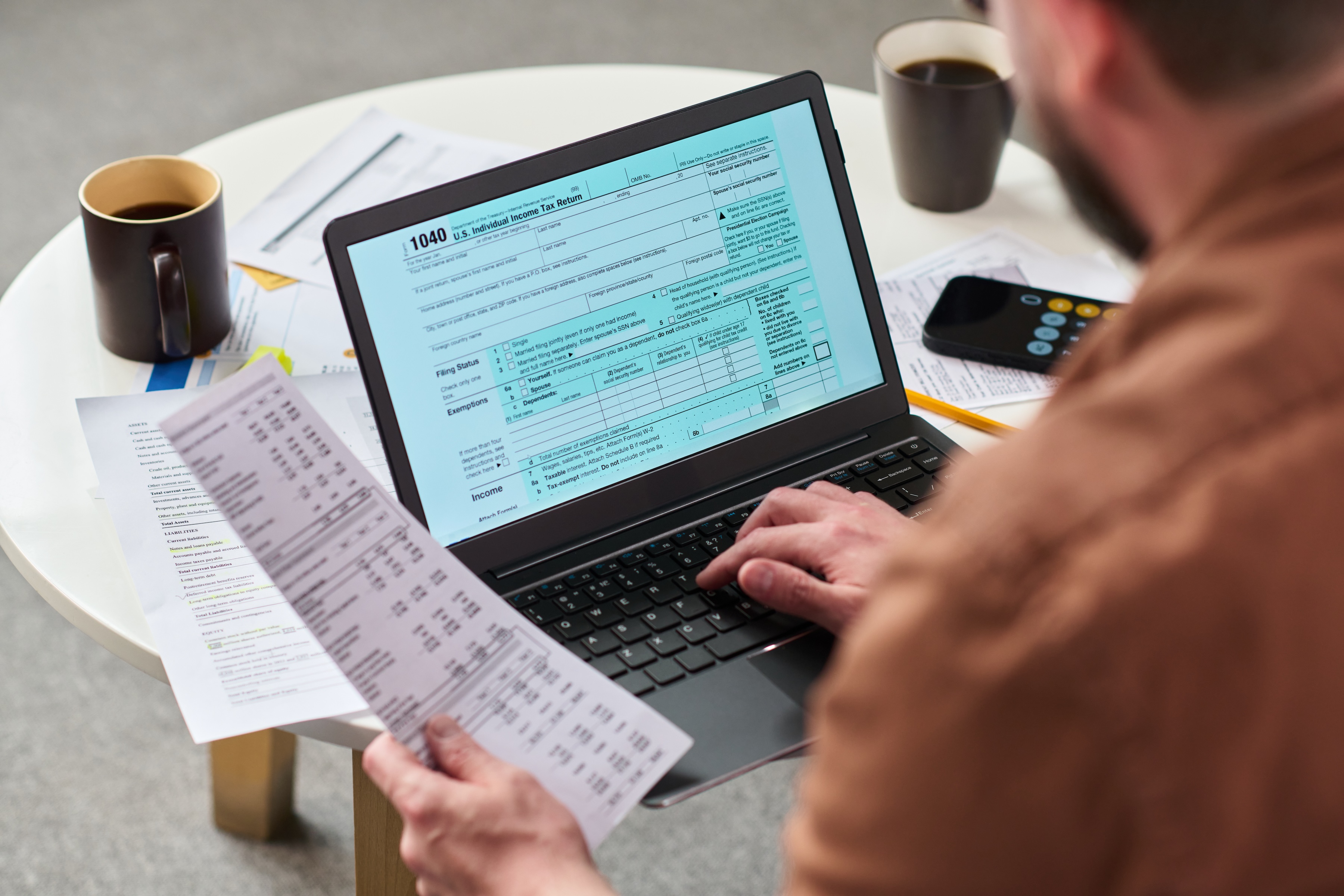
The IRS accepts credit cards through two approved processors, and you’ll pay a fee of 1.75% or more on top of your tax bill. That fee is worth it in only a few cases. If you can’t pay your taxes in full right now, an IRS payment plan usually costs less than carrying the balance on a card.
How to pay your taxes with a credit card
To pay federal taxes by card, you go through one of two IRS-approved processors: Pay1040 or ACI Payments, Inc. You can pay online or by phone. Each processor sets its own fees, and no part of the fee goes to the IRS.
You can make two card payments a year toward a Form 1040 balance due, and two per quarter toward estimated taxes.
States set their own rules. If you owe state income tax, check the payments page on your state tax agency’s website for its card options and fees, which are separate from the IRS’s.
When paying taxes with a credit card makes sense
It works when you can pay the card off in full before interest starts.
Your rewards beat the fee
The math results in slim margins. On a $5,000 tax bill, Pay1040’s 1.75% fee is $87.50. A card that earns 2% cash back returns $100, so you come out $12.50 ahead. A card that earns 1.5% returns $75, and you lose $12.50. Any interest further erodes the savings.
You’re working toward a signup bonus
If a new card offers a bonus for spending a set amount in the first few months, a tax payment can help you reach it. The processing fee is what that bonus costs you. Compare the two.
When it doesn’t make sense
If you can’t pay the card off right away, an IRS payment plan usually costs less. The average credit card rate on accounts that carry a balance is 22.15%, according to the Federal Reserve. On an IRS plan, you’ll pay a 7% underpayment rate plus a failure-to-pay penalty that drops to 0.25% a month while you’re on an approved plan. That’s roughly 10% a year.
Here’s what that looks like on a $5,000 tax bill paid off over 12 months:
- On a card at 22% — about $620 in interest, plus the $87.50 processing fee, for about $710
- On an IRS plan — about $275 in interest and penalties, plus a $29 setup fee, for about $300

How paying taxes with a credit card affects your credit
The payment itself doesn’t hurt your credit. What happens to the balance after can.
How much of your credit you’re using
Credit scores look at how much of your available credit you’re using, called credit utilization. Lower is better. A large tax payment can push it up until you pay the balance down.
Your minimum payment
A bigger balance means a bigger minimum payment. A payment that’s 30 days late or more can be reported to the credit bureaus and stay on your report for up to seven years.
Read more >> Does Paying Taxes Late Affect Your Credit Score?
Alternatives to paying taxes with a credit card
Pay from your bank account
If you have the money, IRS Direct Pay is free. Paying in full also stops interest and penalties.
Short-term payment plan
If you can pay within 180 days and owe less than $100,000 in tax, penalties, and interest combined, you can apply for a short-term payment plan. There's no setup fee. Interest and penalties continue until you've paid in full.
Installment agreements
If you need longer and owe $50,000 or less, you can set up a monthly installment agreement. Setup fees depend on how you apply and pay:
If you can't pay, free help is available. A Low Income Taxpayer Clinic can represent you for free or a small fee if you qualify, which is useful if you're weighing a plan against borrowing, or the IRS has already sent notices. Call 800-829-3676 for clinics near you.
One thing to plan for: An IRS plan doesn't cover state tax. If you owe both, you'll need to set up a plan with your state agency too.
Bottom line
Paying taxes by card makes sense when you can clear the balance right away and your rewards beat the fee. If you can’t, an IRS payment plan costs less than a card’s rate.
The rate on borrowed money depends on your credit. A Kikoff Credit Account reports on-time payments to all three bureaus. There’s no credit check, and plans start at $5 a month.
Frequently Asked Questions
Article Sources
Disclaimer: The information provided in this blog post is meant for informational purposes only and does not constitute financial advice.