
A credit card network is the company that carries your payment from the store’s register to the company that gave you the card, then sends back a yes or no in seconds. Visa, Mastercard, American Express, and Discover are the four big networks in the U.S.
If you’re choosing a first card, the logo matters less than it looks. The network mostly decides where your card works. Your card company decides whether you’re approved, what you pay, and what lands on your credit reports.
How a credit card network works
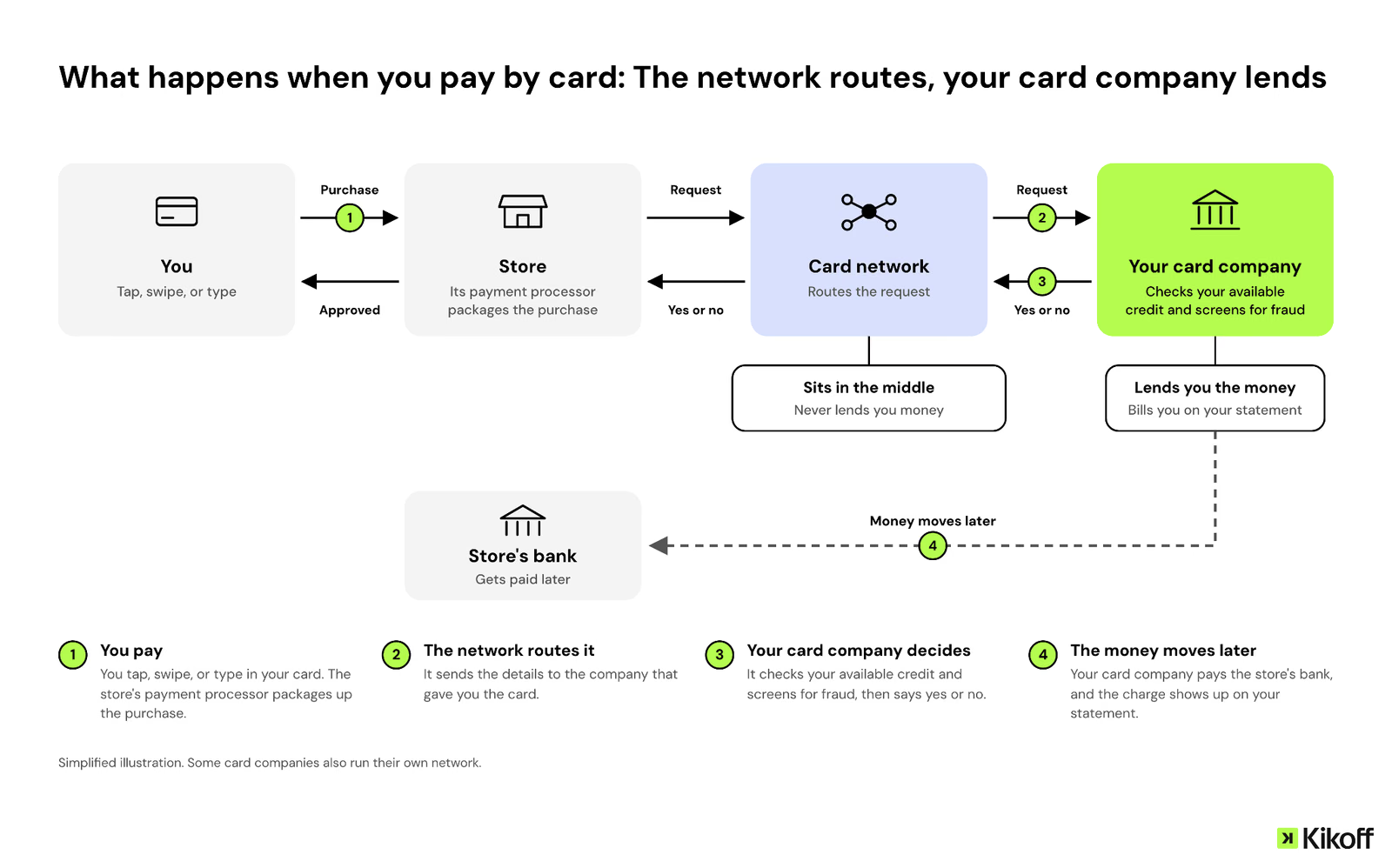
Every card purchase makes a quick round trip:
- You tap, swipe, or type in your card. The store’s payment processor packages up the purchase.
- The network routes the request. It sends the details to the company that gave you the card.
- Your card company says yes or no. It checks your available credit and screens for fraud.
- The money moves later. Your card company pays the store’s bank, and the charge shows up on your statement.
The store pays a fee on each card sale, often called a swipe fee. The biggest piece is the interchange fee. The network sets those rates, and it goes to your card company. It’s one reason some stores add a card surcharge.
Your network vs. your card company
Your card issuer, or the bank or company that gives you the card, runs your account day to day. The network runs the rails underneath it.
For a Visa or Mastercard card, here’s who does what.
Visa and Mastercard don’t issue cards themselves. Banks and credit unions do. American Express and Discover can be both network and card company. Discover is now part of Capital One, which completed its purchase of Discover in May 2025 and told customers they didn’t need to take any action.
Your APR and fees vary by card and by your credit history. Before you apply, find the rates and fees table in the card offer and compare the purchase APR, annual fee, and late fee.
Read more >> What Are the Fees and Costs of Using a Credit Card?
Does the network matter when you pick a card?
A little, mostly for where you can use it. If you travel, check whether the places you’re going take your card’s network before you rely on it.
The network doesn’t change your approval odds or your credit. Your card company looks at your credit reports and income, not the logo. Two details people often mix up:
- Foreign transaction fees come from your card company. Check your card agreement to see whether it charges one.
- Debit and prepaid cards run on the same networks. They spend your own money, though, so they don’t add a credit account to your credit reports.
If you don’t have credit yet, a secured card, backed by a refundable deposit, usually carries one of these logos too.
Read more >> Secured Credit Cards vs. Unsecured Credit Cards
Your protections come from federal law
If someone uses your credit card without permission, federal rules cap what you owe at the lesser of $50 or the amount charged before you report it. If you report the card missing before anyone uses it, you aren’t responsible for charges you didn’t authorize. Some networks and card companies add zero-liability policies on top. Ask your card company what its policy covers.
The Credit CARD Act of 2009 added more rules, carried out through a federal regulation called Regulation Z:
- Notice before changes. Your card company generally has to give you written notice at least 45 days before raising your APR or making another significant change to your terms.
- Rate increases on balances you already carry. A missed payment can show up on your credit reports around 30 days late. Your card company generally can’t raise the rate on your existing balance unless your minimum payment is more than 60 days late. Pay at least the minimum as soon as you can to protect both.
- Time to pay. Your statement has to be mailed or delivered at least 21 days before the due date.
- Where extra payments go. Anything you pay above the minimum generally goes to the balance with the highest APR first.
- Cards for people under 21. You’ll need to show your own ability to pay or apply with a cosigner who’s at least 21.
See a charge you don’t recognize? Call your card company right away, using the number on the back of the card, and ask for a new card number. The network doesn’t manage your account, so it can’t reverse the charge. Then check your free credit reports at AnnualCreditReport.com for accounts you didn’t open. If you find one, report it at IdentityTheft.gov and dispute it with each credit bureau for free.
You can file those disputes yourself, or use Kikoff’s AI Credit Disputes, which is free and works for inaccurate items only.
Read more >> How to Protect Yourself From Credit Card Fraud
Bottom line
A credit card network moves your payment and decides where your card works. Your card company handles nearly everything else, including whether you’re approved and what you pay. What no network can give you is a credit history. That comes from an account that reports your payments to the credit bureaus, and card companies look for one before they approve you. If you don’t have one yet, Kikoff’s Credit Account reports your on-time payments to Equifax, Experian, and TransUnion, with no credit check to sign up. Plans start at $5 a month.
Frequently Asked Questions
Article Sources
Disclaimer: The information provided in this blog post is meant for informational purposes only and does not constitute financial advice.