




Credit card fees can add up fast, especially if you carry a balance. As of the second quarter of 2026, the average credit card APR was 22.15%, according to the Federal Reserve. Then there are annual fees, late fees, foreign transaction fees, and cash advance fees you might end up paying on top of interest. Many of them are avoidable once you know what triggers them.
Common credit card fees and costs
The costs of using a credit card depend on your card issuer and if you use your account responsibly. Here’s a breakdown of common credit card fees to look out for.
Annual fees
There are plenty of no-fee credit cards out there, but some charge an annual fee to unlock perks. That may include special rewards or benefits like:
- Sign-up bonuses
- Annual travel credits and other travel perks
- More points or miles on what you already buy
You might also come across annual fees on subprime credit cards, which are designed for borrowers with less-than-perfect credit. At the end of 2024, the average annual fee on a credit card was $127, according to the CFPB. You’ll likely pay the fee when you open the card, and then again every year after.
Interest charges (APR)
A credit card’s interest rate, more typically called the annual percentage rate (APR), represents your borrowing costs. The higher your interest rate, the more money you’ll pay for maintaining a balance.
While 3 percentage points might not sound like much, here's what it’d cost you across two cards with the same balance.
Late payment fees
Failing to pay your credit card bill on time can trigger a late payment fee. Late fees are capped by federal regulation. Under the CFPB's safe harbor, issuers can charge up to $30 for a first late payment and up to $41 if you're late again within the next six billing cycles. Most large issuers charge at or near that ceiling, while smaller ones can charge considerably less.
The good news is that it might be possible to have the fee waived. If it’s a one-off situation and you have a history of on-time payments, your card issuer may be willing to work with you.
Payments that are 30 days late can be reported to three major credit bureaus (Experian, Equifax, and TransUnion), which can hurt your credit score. Setting up automatic monthly payments is one way to prevent fees and potential credit damage.
Balance transfer fees
A balance transfer is when you move some or all of your existing credit card debt over to a new card with a lower interest rate. Some balance transfer cards offer a low or 0% promotional APR for a limited time of 12 to 21 months, allowing you to pay down your debt in a way that leaves you paying less interest compared with a traditional card. There’s a cost, though: Most balance transfer cards charge 3% to 5% of the transferred amount.
Make sure the fee is worth the interest savings, and have a plan to pay off the balance before the intro period ends and higher interest rate kicks in.
Cash advance fees
If your credit card issuer allows it, you can borrow cash against your card with a short-term loan called a cash advance. Your cash advance limit may be lower than your overall credit limit.
And unlike everyday purchases, these transactions come with no grace period, which means interest accrues from the day you take the advance, often a higher cash advance APR. Most cards also charge upfront fees of 3% to 5% of the advance amount.
Foreign transaction fees
These are fees your card issuer charges if you use your card outside of your home country or in another currency. And they can add up fast while traveling, with some cards charging 1% to 3% of the U.S. dollar amount on every purchase.
Many cards skip this fee entirely. Capital One waives foreign transaction fees on all its cards, as do most premium and travel rewards cards.
Overlimit fees
In practice, overlimit fees have all but disappeared. Once the CARD ACT required issuers to get your opt-in before approving overlimit charges, most major issuers dropped the fee.
If you’re charged for going over your limit, the typical first-time fee is $25, according to the CFPB, increasing to $35 for future incidents.
Maxing out a credit card can also hurt your credit score because it increases your credit utilization ratio. The effect doesn’t depend on whether you’re charged a fee, however. A balance at or near your limit works against you either way.
Returned payment fees
If you don’t have enough in your bank account for your card payment to complete, your credit card issuer can charge a returned payment fee. The amount typically ranges from $25 to $40, depending on the card and issuer.
How interest works on a credit card
Most card issuers use a daily periodic rate that compounds on a daily basis. Let’s say your credit card APR is 20%. Issuers divide that amount by 365 (or 360, in some cases):
- Your daily periodic rate is 0.0548%.
- That rate applies to your balance. So if you owe $1,000, a day’s worth of interest would be $0.548.
- Each day’s interest is added to your balance before your card issuer calculates the next day’s interest.
- After 30 days, you’d owe close to $17 in interest.
It’s possible to avoid interest entirely. If your credit card issuer offers a grace period, and you don’t have an existing balance, you won’t pay interest on new purchases if you pay off what you owe by the next due date.
How to minimize credit card fees
Most of these costs are avoidable with four key habits:
- Pay your balance in full each month. A balance cleared by the due date generally costs nothing in interest. Carry any of it forward and interest applies.
- Set up autopay. Even the minimum payment on autopay protects you from a late fee.
- Match the card to how you spend. If you travel, a card without foreign transaction fees saves you the 1% to 3% most issuers add to every purchase abroad. If you carry a balance, a lower APR matters more than rewards.
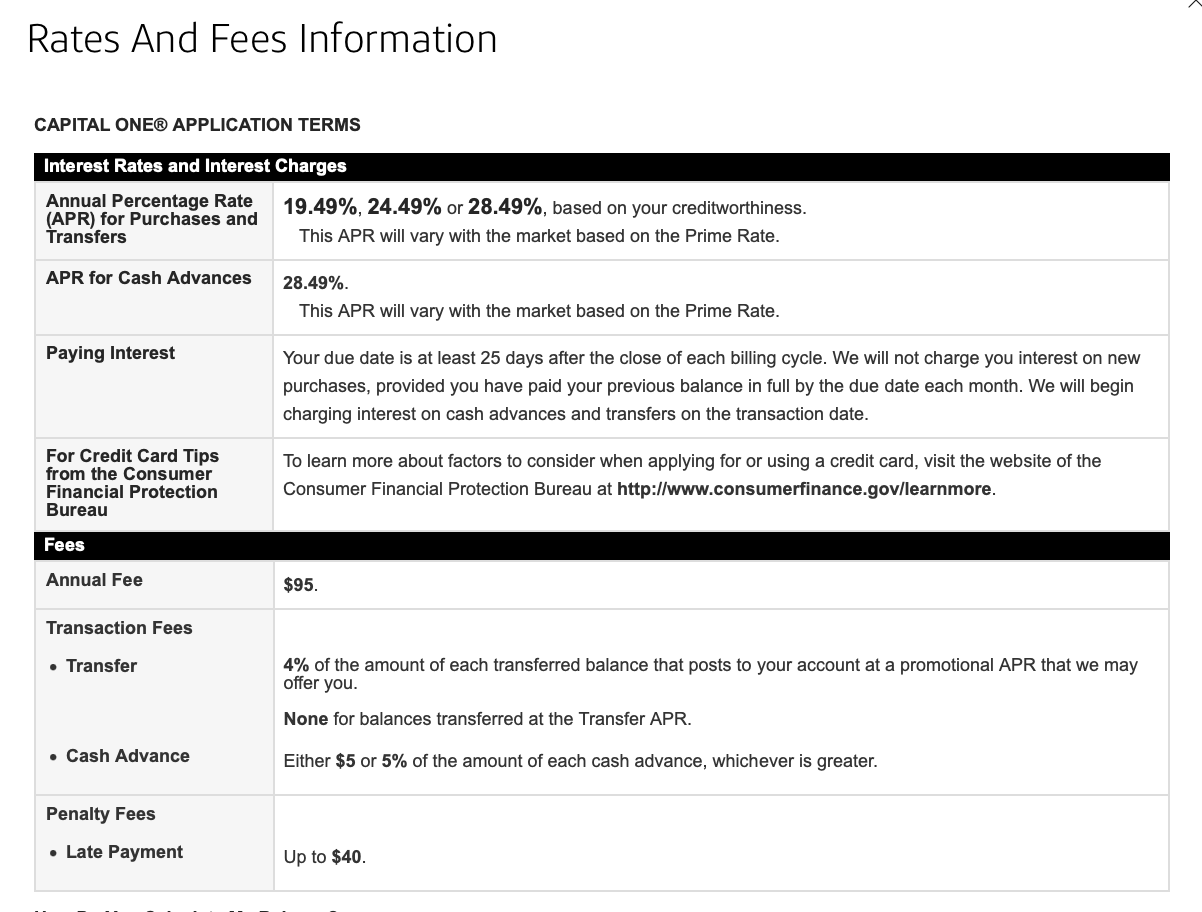
- Read the fine print before you apply. Every card discloses its fees in a table called the Schumer Box. It lists the APR, annual fees, and the charges for balance transfers, cash advances, and late payments.
How credit card fees can affect your credit
Credit card fees can indirectly affect your credit score if:
- They increase your credit utilization ratio. Credit card fees are added to your balance. A higher credit utilization ratio can reduce your credit score.
- They're triggered by a late payment. Late payments appear on your credit report and stay there for seven years.
- They make financial problems worse. A cycle of debt that accrues credit card fees can strain your budget, making it harder to keep up with future payments.
Bottom line
What a credit card costs comes down to your issuer and your habits. Paying in full every month eliminates interest entirely, which is the largest cost for most people, though annual fees, foreign transaction fees, and cash advance fees can still add up.
The cost that varies most from cardholder to cardholder is your APR. That's set by your credit, not your spending, and if you carry a balance, it's the difference between a manageable balance and an expensive one.
So if you're carrying a balance or expect to, your credit is the lever. Kikoff's Credit Account reports your on-time payments to all three credit bureaus, with no credit check and plans starting at $5 a month.
Frequently Asked Questions
Article Sources
Disclaimer: The information provided in this blog post is meant for informational purposes only and does not constitute financial advice.