
A student credit card is a regular credit card with an easier way in. It’s built for people with little or no credit history, so a card company may approve you on a thin credit report, usually with a lower limit and simpler rewards. Interest, bills, and the effect on your credit work the same way on both.
If you’re worried you can’t get either one without a full-time job, the rule to know is about your age, not the card. Under 21, federal rules require income of your own or a cosigner age 21 or older, and that income doesn’t have to be a paycheck.
How student and regular credit cards compare
Federal limits on late fees and first-year fees apply to both.
A lower limit does change how much of your available credit you’re using, one of the factors scoring models weigh most. For example, $150 on a $500 limit is 30%. The same $150 on a $2,000 limit is 7.5%.
Who can get a student credit card
Card companies set their own rules about who counts as a student, so ask what proof of enrollment a card company accepts before you apply.
The bigger hurdle is age. Under federal ability-to-pay rules, a card company can’t open a card for someone under 21 unless that person shows an “independent ability” to make the minimum payments or has a cosigner age 21 or older who can pay. Before you turn 21, a higher limit takes the same proof.
What counts as your own income or assets under 21
The CFPB’s official interpretation of the rule spells it out:
- Counts: wages, tips, and savings or assets in your name, plus money someone regularly deposits into a joint account you share or transfers into your own account
- Counts in part: student loan money left after tuition and other school costs
- Doesn’t count: your household’s income, or money a parent spends on your bills directly
When an application asks for income, give your own, not your household’s. Grants and scholarships aren’t named in the rule, so if you have money left after tuition, ask the card company whether it counts.
Under 21 with no income of your own? A cosigner age 21 or older can sign on, but they can be on the hook for what you owe. Or a parent can add you as an authorized user, which the under-21 rules don’t cover. Ask whether the card company reports authorized users to the bureaus, since the owner’s late payments can show up too.
What student cards cost
Student cards from major card companies list variable purchase APRs from the mid-teens to about 30%, depending on your credit, and many charge no annual fee.The average APR across all credit card accounts was about 21% in the third quarter of 2026, according to preliminary Federal Reserve data. Rates move, so check the card’s rates table before you apply.
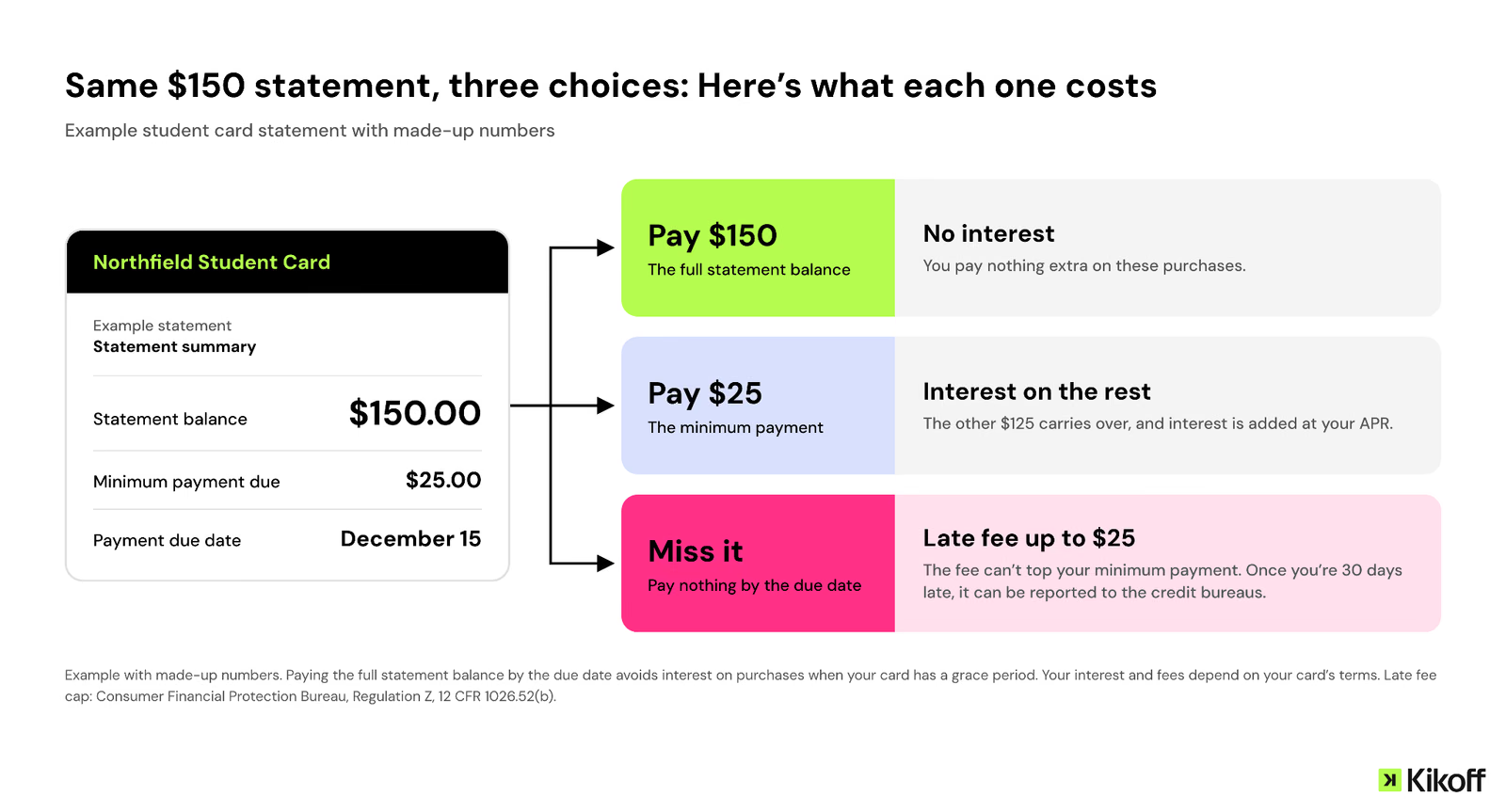
You pay interest only on a balance you carry past the due date. In an example with made-up numbers, $400 carried at a 25% APR costs about $8 for the month.
Federal rules also cap two costs:
- Late fees: A late fee can’t be more than your minimum payment. With a $25 minimum, the fee can’t top $25.
- First-year fees: Required fees, such as an annual fee, can’t add up to more than 25% of your starting limit in the first year. On a $400 limit, that’s $100. Late fees don’t count toward this cap.
If you miss a payment, pay at least the minimum as soon as you can. Before 30 days late helps keep it off your credit reports. Autopay for the minimum can keep it from happening again.
What happens when you graduate
It depends on the card company. Capital One says its Savor Student card stays with you after graduation. Discover asks you to update your information, which may make you eligible for a higher limit. Others may move you to a non-student card.
Either way, update your income once you start working, and keep a no-annual-fee card open so its history keeps counting. Switching cards with the same company? Ask whether it keeps the same account, so your history doesn’t start over.
Rules that protect students on campus
Federal rules bar card companies from offering college students a tangible item, such as a T-shirt or gift card, to apply on campus, within 1,000 feet of campus, or at a school-related event. Discounts and rewards points aren’t covered.
Schools must also publicly disclose card marketing deals, and card companies report what they pay schools to the CFPB, which published its 2026 college credit card report on November 19, 2026. If a card carries your school’s logo, ask the school for the agreement, and compare that card’s APR with others.
Bottom line
A student credit card is a regular credit card with an easier way in: lower limits, simpler rewards, same rules. Either way, a card company sets your approval and APR from your credit report, and if you’re starting out, there may not be much on it. Kikoff’s Credit Account reports your on-time payments to Equifax, Experian, and TransUnion, with no credit check to sign up. Plans start at $5 a month.
Frequently Asked Questions
Article Sources
Disclaimer: The information provided in this blog post is meant for informational purposes only and does not constitute financial advice.