
A debit card spends money you already have in your checking account. A credit card spends the card company’s money, and you pay it back later. They look the same at the register, but that one difference changes what you can lose to fraud, what you might pay in interest, and whether your spending counts toward your credit.
If you’ve stuck with debit because a credit card sounds like a fast way into debt, that’s a fair instinct. Paid in full each month, a credit card with a grace period usually costs no interest. What debit can’t do is build credit, because debit spending never shows up on your credit reports.
How each card works
Some debit purchases start as a hold. A gas station or hotel may set aside money in your account before the final charge posts, and that can leave your balance low enough to cause an overdraft.
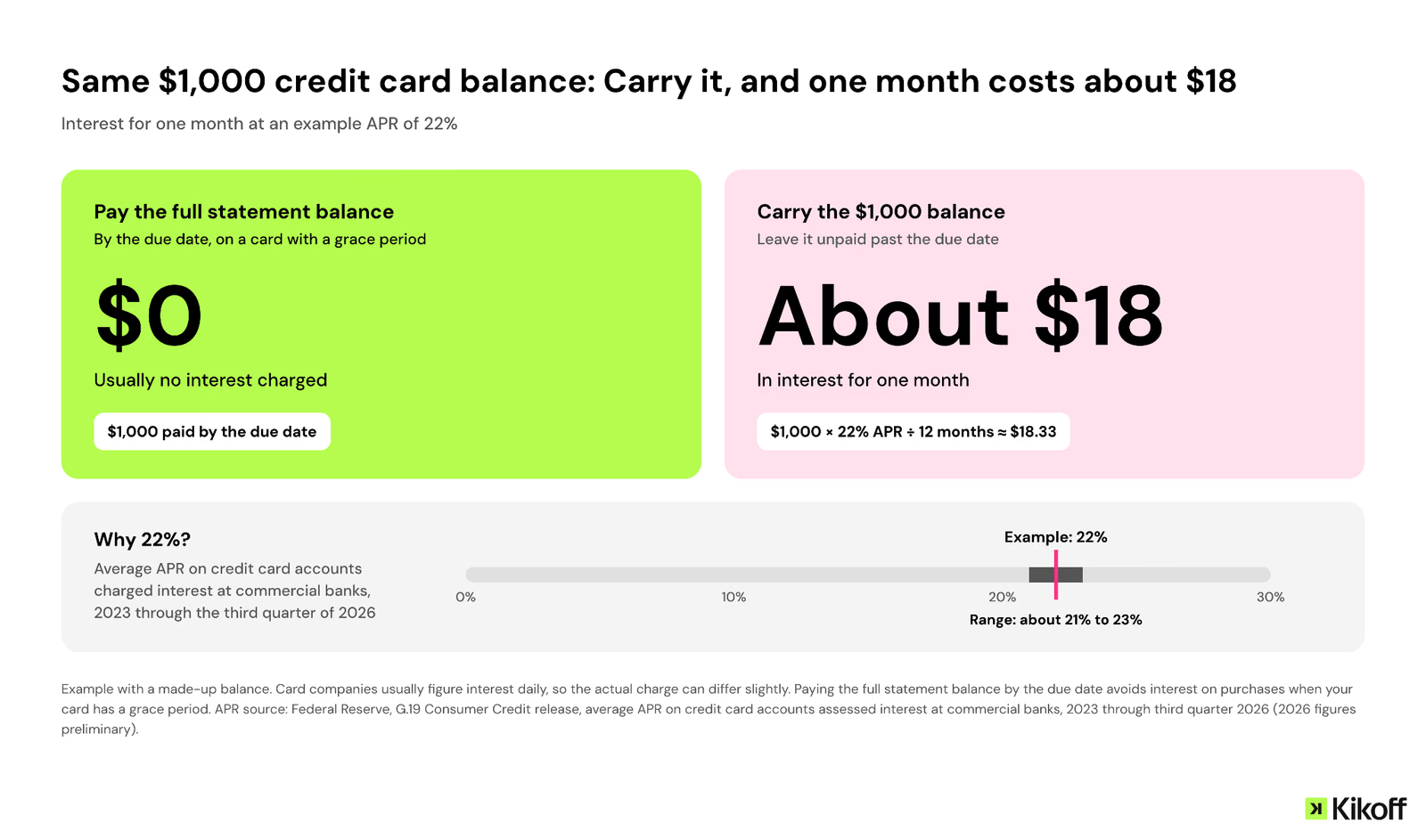
With a credit card, the cost to watch is interest. From 2023 through the third quarter of 2026, the average APR on credit card accounts charged interest at commercial banks ranged from about 21% to 23%, according to Federal Reserve data. Say you carry a $1,000 balance at an example APR of 22%. That’s roughly $18 in interest for one month. Pay the full statement balance instead, and on a card with a grace period, that charge is usually $0.
Read more >> Are Credit Cards Safer Than Debit Cards?
How federal rules protect you on each card
Credit cards fall under Regulation Z. Debit cards fall under Regulation E, a separate set of federal rules.
If your card is lost or stolen
- Credit card: Federal rules cap what you owe for unauthorized use at $50 or less. Ask your card company whether it also offers $0 liability.
- Debit card: Report it through your bank’s app or phone line within two business days of learning it’s gone, and your losses are generally capped at $50. After that, they can reach $500. Report charges you didn’t make within 60 days after the statement showing them is sent, or you could owe for later charges your report would have stopped.
If a charge is wrong
- Credit card: Send your card company a written dispute within 60 days after the first statement that shows the error. It has 30 days to acknowledge it and two billing cycles, no more than 90 days, to resolve it. While it investigates, it can’t try to collect the disputed amount. These rights also cover items you paid for but never received.
- Debit card: Your bank generally has 10 business days to investigate. It can take up to 45 days, or up to 90 for many debit card purchases, if it puts the money back in your account temporarily within those 10 business days. Until then, the money is out of your checking account.
What you can dispute with debit is also narrower than with credit. That makes a credit card the stronger choice for online shopping, as long as you pay it off.
Overdraft on a debit card. Federal rules bar your bank from charging an overdraft fee on ATM withdrawals or one-time debit card purchases unless you’ve opted in. If you haven’t, the bank may decline the purchase instead. Automatic bill payments can still trigger a fee. Check your choice in your bank’s app.
Read more >> What Is a Chargeback and How Does It Work?
Credit card rules from the CARD Act
Under the Credit CARD Act of 2009 and the Regulation Z rules that carry it out:
- Time to pay. Your card company has to send your statement at least 21 days before your payment is due.
- Notice before changes. It has to give you written notice at least 45 days before raising your rate or making another significant change to your terms.
- Your existing balance. Your card company generally can’t raise the rate on the balance you already carry unless you’re more than 60 days late. (Separately, card companies typically report a payment to the credit bureaus as late once it’s 30 days past due.)
- Penalty fees. A late fee has to be reasonable and proportional, and it generally can’t be more than the minimum payment that was due.
If a payment slips, pay at least the minimum as soon as you can. Before 30 days late helps keep it off your credit reports. Before 60 days helps keep a higher rate off your existing balance.
Which card builds credit
Only the credit card. How you use and pay back a credit card gets reported to the credit bureaus, and payment history is one of the biggest things scoring models weigh. Debit spending doesn’t show up at all, even after years of using the same card carefully.
Debit still has a place: outside of overdraft, you can’t spend money you don’t have. One low-risk way to use both is to put one small recurring bill, like a streaming plan, on a credit card and set autopay for the full statement balance. Keep debit for everything else.
A first credit card can be harder to get with no credit history. A secured card, where your deposit usually sets your limit, is one way in.
Read more >> Secured Credit Cards vs. Unsecured Credit Cards
Bottom line
Use debit when you want money to come straight out of your account. Use a credit card for stronger fraud and dispute protection, and pay the full statement balance to skip interest. Careful debit spending still leaves your credit reports empty, and a first credit card is hard to get without history. Kikoff’s Credit Account reports your on-time payments to Equifax, Experian, and TransUnion, with no credit check to sign up. Plans start at $5 a month.
Frequently Asked Questions
Article Sources
Disclaimer: The information provided in this blog post is meant for informational purposes only and does not constitute financial advice.