.jpg)
.jpg)


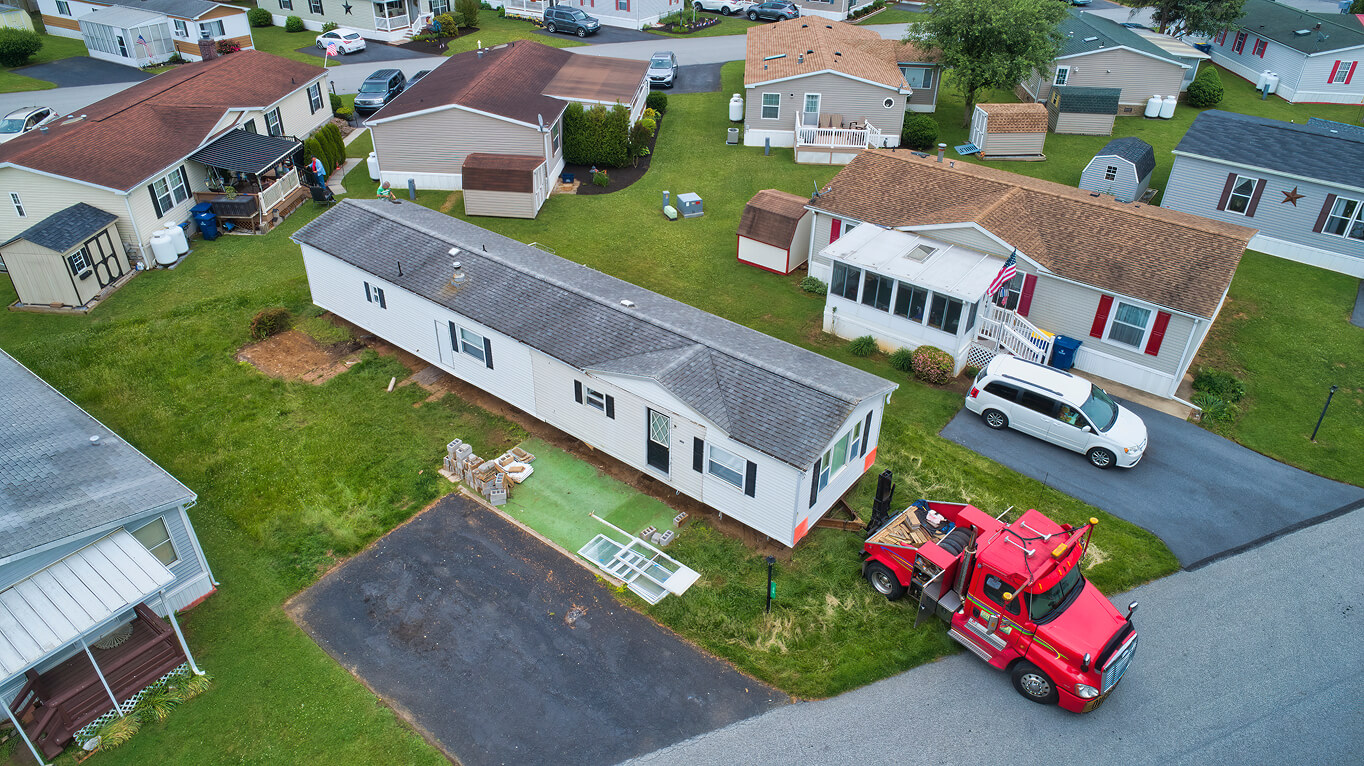
Buying a manufactured home does not automatically mean you need a chattel mortgage. Your financing options depend on how the home is legally titled, whether you own the land, and whether the home is permanently attached to it.
A chattel mortgage, more commonly called a chattel loan, finances a manufactured home that is treated as personal property rather than real estate. These loans can make homeownership possible when a traditional mortgage is unavailable, but they often come with higher rates, shorter terms, and fewer mortgage-specific protections.
What is a chattel mortgage?
A chattel mortgage is a loan secured by movable personal property. In manufactured housing, the lender holds a security interest in the home but not necessarily the land beneath it.
The home may sit on land you own or on a leased lot in a manufactured home community. If you stop making payments, the lender may be able to repossess the home, subject to the loan agreement and state law.
Although people use “chattel mortgage” and “chattel loan” interchangeably, the second term is more common in the manufactured housing market. It is not the same as a traditional mortgage secured by real estate.
The type of home matters: According to HUD’s manufactured housing guidance, a manufactured home is built to federal HUD Code standards. “Mobile home” generally refers to a factory-built home constructed before June 15, 1976. Modular homes follow state and local building codes and are generally financed more like site-built homes.
How title and land ownership affect financing
The home’s legal classification is one of the biggest factors determining whether you need a chattel loan or may qualify for a mortgage.
A manufactured home titled as personal property may be financed with a chattel loan. The lender’s lien generally covers the home rather than the land.
A manufactured home may qualify for mortgage financing if it is legally classified as real property, permanently attached to an eligible foundation, and meets the lender’s other requirements. The process for converting a manufactured home from personal property to real property varies by state.
Owning the land does not automatically turn the home into real property. You may need to surrender its certificate of title or complete other state-specific steps. Conversely, leasing the land does not necessarily prevent every kind of financing.
You also do not always need two separate loans when purchasing a manufactured home and land. For example, HUD’s Title I Manufactured Home Loan Program allows participating lenders to finance a manufactured home, a qualifying lot, or both together. Availability and eligibility depend on the lender and program requirements.
Read more >> Can I Get a Loan on My Mobile Home?
Chattel loan vs. traditional mortgage
The Consumer Financial Protection Bureau has found that manufactured home buyers using chattel loans generally face higher interest rates and shorter repayment terms than borrowers using mortgages. Chattel loans may have lower upfront costs and close more quickly, but they also provide fewer mortgage-specific consumer protections.
| What to compare | Chattel loan | Traditional mortgage |
|---|---|---|
| Collateral | Usually secured by the manufactured home, not the land | Typically secured by the home and the land |
| Property classification | The home is generally titled as personal property | The home is legally classified as real property |
| Rates and terms | Generally higher rates and shorter terms | Generally lower rates and longer terms for comparable borrowers and homes |
| Upfront process | May have lower origination costs and a faster closing | May involve more closing costs, title work, and property requirements |
| If you default | The lender may repossess the home | The lender may begin foreclosure proceedings |
These are general differences. Your actual rate, term, costs, and protections depend on the lender, loan program, property, and state law.
What to compare before choosing a chattel loan
Do not compare offers using the monthly payment alone. A shorter term can produce a higher payment even when the amount borrowed is relatively small, while a longer term can increase the total interest you pay.
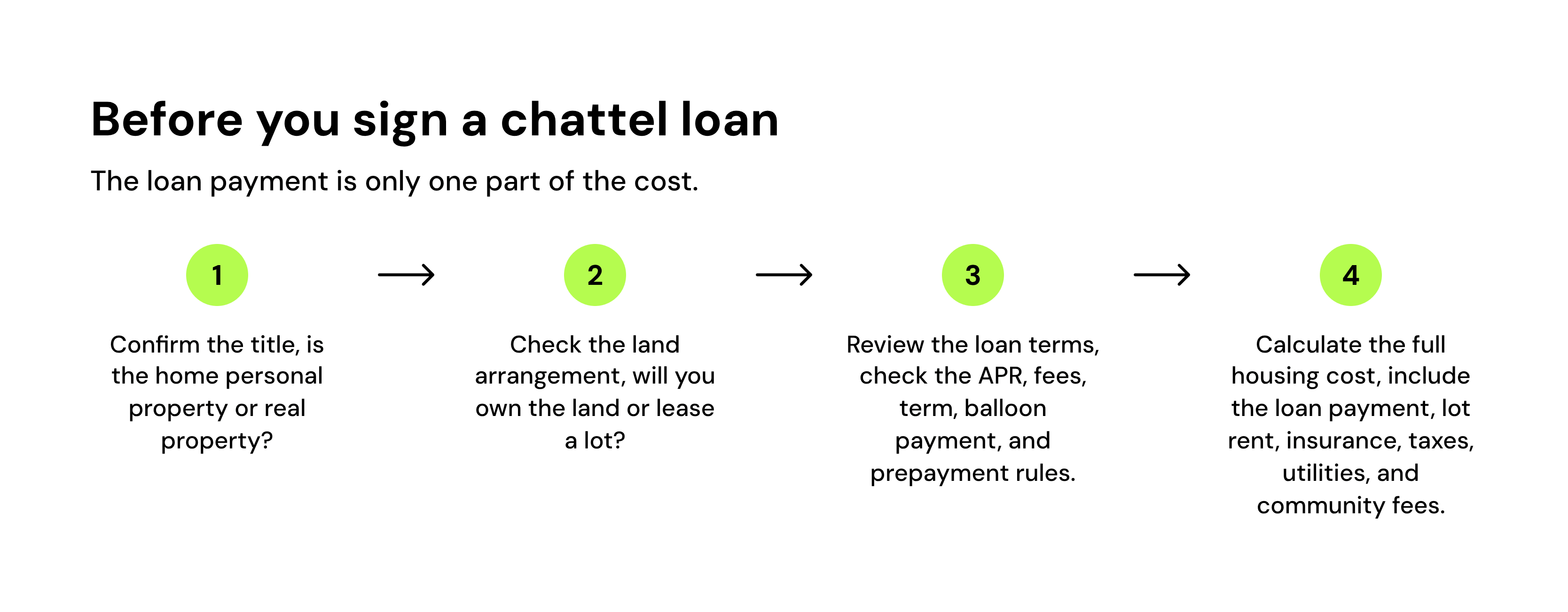
Review:
- The interest rate and annual percentage rate
- The total amount financed
- The repayment term
- Origination and documentation fees
- The total of all scheduled payments
- Whether the rate is fixed or variable
- Whether the loan has a balloon payment
- Whether there is a prepayment penalty
- Insurance and tax requirements
- Installation, transportation, utility, and site-preparation costs
- Monthly lot rent and possible rent increases if you lease the land
- What happens if you miss payments
A chattel loan may not come with all the disclosures and protections required for a real estate mortgage. Ask the lender for the complete written terms and take time to review them before signing.
Look beyond the home payment: If you will lease a lot, include lot rent, utilities, insurance, taxes, and community fees in your housing budget. Ask how often the rent can change and what happens if the community is sold or closes.
If you are unsure which financing structure fits your situation, consider speaking with a HUD-approved housing counselor. A counselor can help you compare costs and understand how the home’s title and land arrangement affect your options.
How credit affects a chattel mortgage
Chattel lenders may consider your credit history, income, debts, down payment, and ability to repay. They will also look at the home, its title, and the land arrangement.
There is no single credit-score requirement that applies to every chattel loan. A stronger credit profile may help you qualify for more competitive terms, but it does not guarantee approval or a particular rate.
Before applying, you can:
- Review your credit reports for inaccurate information
- Dispute errors with the bureau reporting them
- Make existing credit payments on time
- Reduce credit card balances when your budget allows
- Avoid submitting several unnecessary credit applications at once
- Compare offers from more than one lender
Read more >> How to Get a Home Loan With Bad Credit
Bottom line
A chattel mortgage finances a manufactured home that is treated as personal property. It may be useful when the home sits on leased land or does not qualify as real property, but it can carry higher borrowing costs and fewer protections than a traditional mortgage.
Before choosing one, confirm how the home is titled, whether the land is included, and what the loan will cost from beginning to end. Compare chattel financing with any mortgage or government-backed options available for the property.
If buying a home is a future goal, Kikoff’s Credit Account reports your on-time payments to all three credit bureaus, with no hard credit check to sign up. Credit is only one part of loan eligibility, so also consider your income, debts, down payment, and overall housing budget.
Frequently Asked Questions
Article Sources
Disclaimer: The information provided in this blog post is meant for informational purposes only and does not constitute financial advice.