







When your credit card expires, the card itself stops working, but your account doesn’t close. Your credit limit, balance, due date, and payment history stay the same, and your card company usually sends a replacement before the old card runs out.
If you’re worried an expiring card will cost you credit history, it won’t on its own. Federal rules let a card company send you a new card without a new request when it’s a renewal of an accepted card. There’s no new application, so there’s no hard inquiry. The real risks are smaller and easy to head off: an autopay that fails, a replacement lost in the mail, or a yearly fee you forgot about.
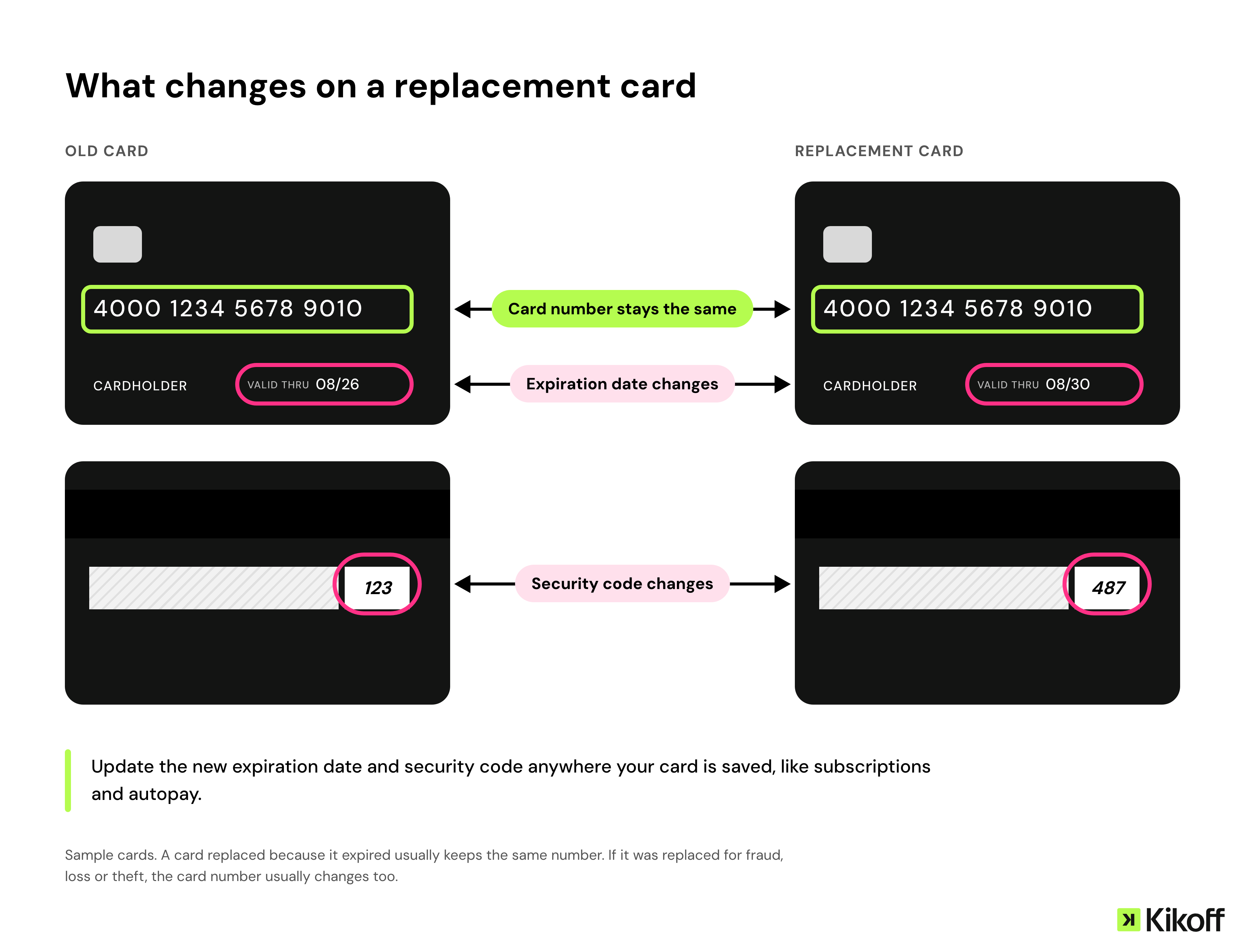
What changes on your new card
Cards usually work through the last day of the month printed on them. For example, a card marked 03/27 should work through March 31, 2027. After that, purchases with the old card are declined.
Read more >> What Is a CVV?
What to do when the new card arrives
- Activate it. Use your card company’s app or website, or call the number on the sticker. The new card may not work until you do.
- Update autopay and saved cards. Look through a few months of statements for repeat charges, like streaming, your phone bill, or insurance. Card networks run services such as Visa Account Updater that pass your new card details to stores that are signed up, but not every store is enrolled. Update the rest yourself, plus your phone’s wallet app. A declined payment can mean a late fee from that company or a paused service.
- Destroy the old card. Cut through the chip, the number, and the magnetic stripe. For a metal card, ask your card company whether it can send a prepaid envelope to mail it back.
Your card’s own bill isn’t affected. If you pay it by autopay from your checking account, that payment keeps going, because it comes from your bank account, not the card.
Read more >> What Are the Fees and Costs of Using a Credit Card?
If your new card doesn’t show up
If the expiration month starts and you still don’t have a replacement, call the number on the back of your current card. Ask whether the new card was mailed and whether it’s been activated. If it was sent and never reached you, ask the company to cancel it and send another one with a new number. Confirm your mailing address on that call too.
A card stolen from the mail comes with real federal protection. If you report a lost or stolen credit card before it’s used, you can’t be held responsible for any unauthorized charges. If it’s used before you report it, the most you’ll owe is $50. If you think someone is taking your mail, report it to the U.S. Postal Inspection Service.
What if your new card was activated and you didn’t do it? Call your card company right away and ask it to close the card and send one with a new number. Go through recent charges and report any you didn’t make. Then get your free credit reports at AnnualCreditReport.com. If you see an account you didn’t open, report it at IdentityTheft.gov.
Renewal fees, rate changes, and unused cards
- Annual fees. An annual fee runs on your account’s yearly schedule, not your card’s expiration date. Under Regulation Z, a card company that charges a yearly renewal fee has to tell you at least 30 days or one billing cycle, whichever is less, before the statement where that fee first shows up. The notice also has to tell you how and when to close the account to avoid the fee. If the fee isn’t worth it to you, ask your card company whether you can switch to a no-annual-fee card on the same account. That keeps the account’s history going.
- Rate and fee changes. A new card doesn’t come with a new APR unless your card company has told you so. Card companies are generally required to notify you 45 days in advance of any significant changes to your account.
- Unused cards. A card company can close a card you don’t use instead of renewing it. Under Regulation Z rules that carry out the CARD Act, it can’t charge you a fee for inactivity. A closed account in good standing stays on your credit reports for up to 10 years, but its limit stops counting toward your available credit.
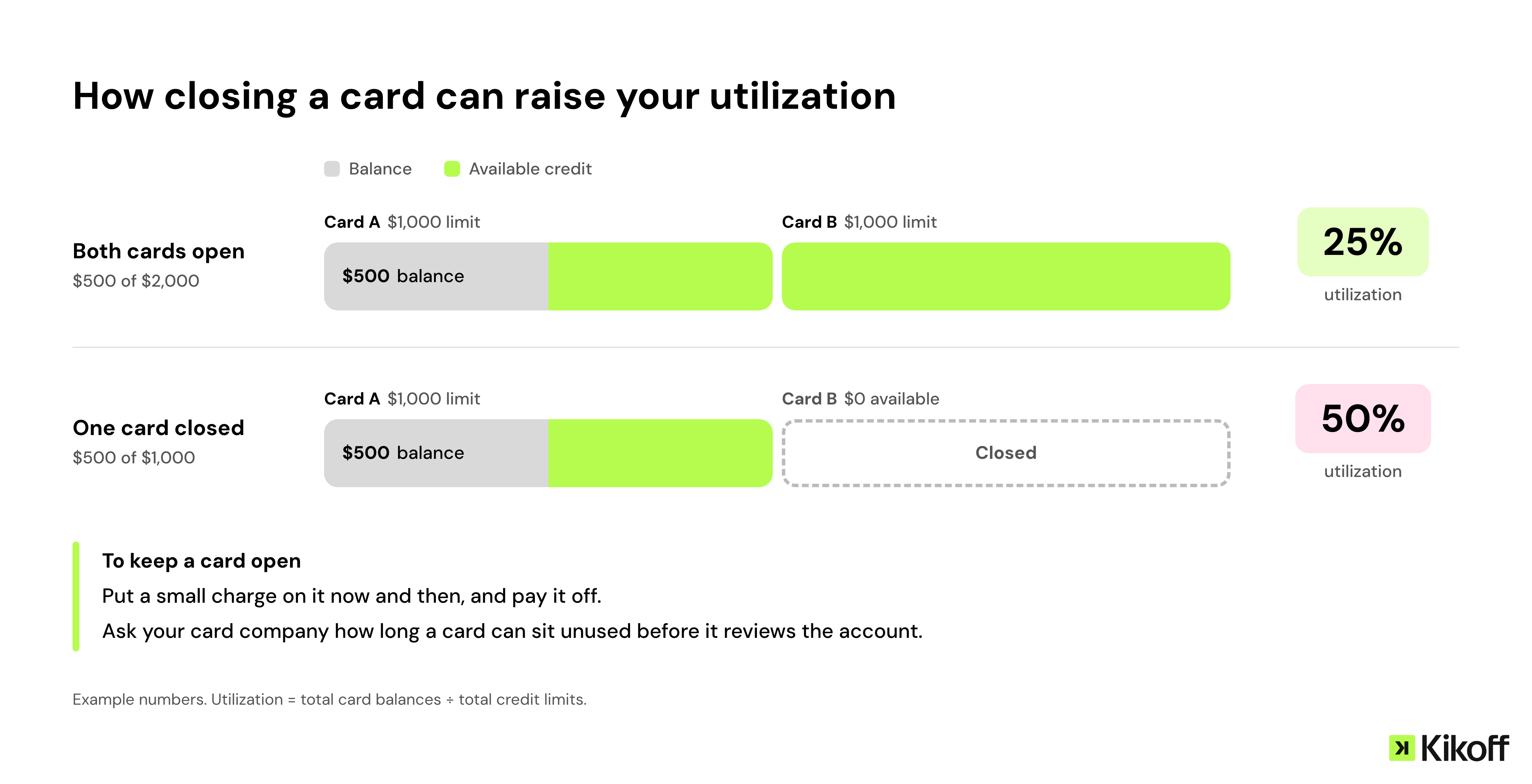
Say you have two cards with $1,000 limits each and a $500 total balance. You’re using 25% of your available credit. If one card closes, that same $500 is 50% of what’s left. If you want to keep a card open, put a small charge on it now and then and pay it off. You can also ask your card company how long a card can sit unused before it reviews the account.
Read more >> How to Lower Your Credit Utilization
Bottom line
When your credit card expires, your account keeps going. Activate the new card, update anything that bills it, and call your card company if the replacement doesn’t arrive.
A renewal keeps your history going on one account, but it doesn’t add another. If that card is your only one and it’s closed for not being used, you’d have no open credit card on your reports. The Kikoff Credit Account reports your on-time payments to Equifax, Experian, and TransUnion, with no credit check to sign up. Plans start at $5 a month.
Frequently Asked Questions
Article Sources
Disclaimer: The information provided in this blog post is meant for informational purposes only and does not constitute financial advice.