







A statement credit is an amount your card company subtracts from what you owe. It shows up on your credit card statement as a minus sign or in a “payments and credits” section, and it lowers your balance the same way a payment would. You’ll usually see one after you return something, redeem rewards, or meet the terms of a card offer.
If you’re new to credit cards, a credit can look like it covers your bill. Usually it doesn’t. A statement credit isn’t a payment, so skipping your payment because a credit posted can still lead to a late fee.
Where statement credits come from
Not sure which one you’re looking at? Look at the description next to the credit on your statement. It often names the store or the program. If it just says credit, call the number on the back of your card.
Read more >> How to Read a Credit Card Statement
How a statement credit shows up on your bill
Federal rules require your monthly statement to list any credit to the account during the billing cycle, with its amount and the date it was credited. So you shouldn’t have to guess.
Here’s how a credit can change a bill.
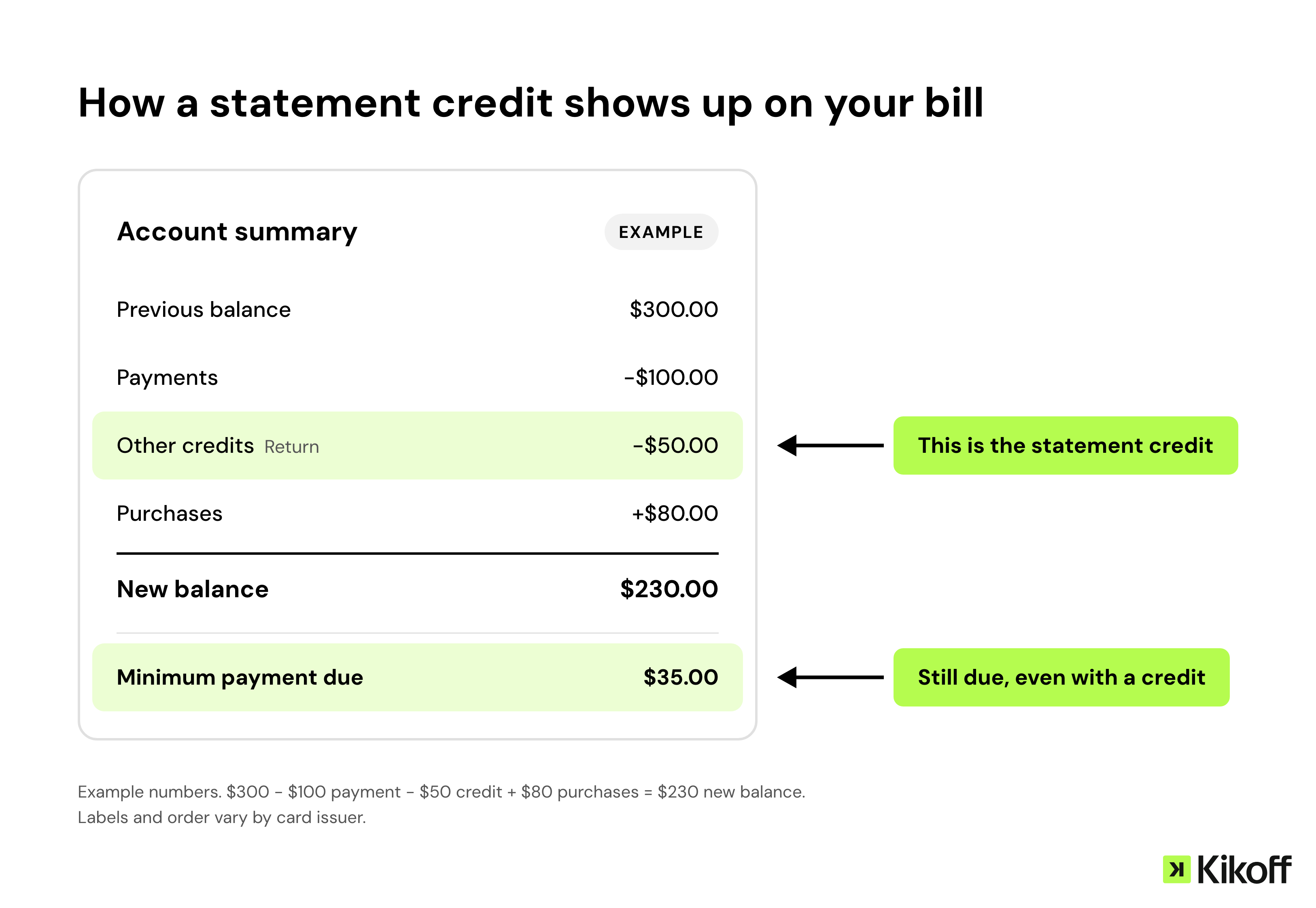
In this example, the $50 credit shrinks the balance, but the minimum payment due is still on the bill. The minimum is the number to pay by the due date.
The 2009 Credit CARD Act added a protection that helps: your card company has to mail or deliver your statement at least 21 days before your payment is due, so you have time to check for credits before you pay. Your statement also has to show the late fee you could be charged and how long it would take to pay off your balance making only minimum payments.
One more thing to check: a credit that posts after your statement closes won’t be on that statement, and it may not change the amount due. If you’re not sure, ask your card company whether the credit changed your minimum that month.
Read more >> How long should you keep credit card statements?
What happens when credits push your balance below zero
If your credits add up to more than you owe, your balance goes negative. That’s called a credit balance, and it means the card company owes you money.
You have two choices:
- You can leave it there, and it’ll cover your next purchases.
- You can ask for it back.
When a credit balance is more than $1, federal rules say the card company must refund it within seven business days after it gets your written request. If the money sits there for more than six months, the card company has to make a good-faith effort to refund it to you by check, money order, cash, or a deposit to your bank account.
Got a negative balance? Call the number on the back of your card and ask where to send a written request for a refund of your credit balance. Then send it, note the date, and keep a copy with your statements. Federal rules give your card company seven business days from when it receives your request.
Read more >> Why Do I Have a Negative Balance on My Credit Card?
Are statement credits worth it?
Statement credits from rewards and perks can save you money, but only on things you’d buy anyway.
Say a card charges a $95 annual fee and offers a $50 credit at one store. If you’d shop there anyway, the card costs you about $45 a year after the credit. If you wouldn’t, the credit doesn’t make up for any of the fee.
Rewards terms come from your card’s rewards program, so read them before you count on a credit. The CFPB has said that devaluing rewards you’ve already earned, or taking them away over buried or vague conditions, may break the law. If a credit you earned disappears, contact your card company first. If that doesn’t work, you can submit a complaint to the CFPB.
Before you redeem, ask whether the statement credit is worth the same per point as your other choices.
Read more >> When Do Cashback Rewards Show Up on Your Bank Statement?
Bottom line
A statement credit lowers what you owe, but it doesn’t replace your payment, and if credits push you below zero, you can ask for that money back.
What a credit can’t do is add to your credit history. It changes one month’s balance, while lenders look at your record of paying on time, month after month. If this is your first card, that record rests on one account. Kikoff’s Credit Account adds a second account that reports your on-time payments to Equifax, Experian, and TransUnion, with no credit check to sign up. Plans start at $5 a month.
Frequently Asked Questions
Article Sources
Disclaimer: The information provided in this blog post is meant for informational purposes only and does not constitute financial advice.