







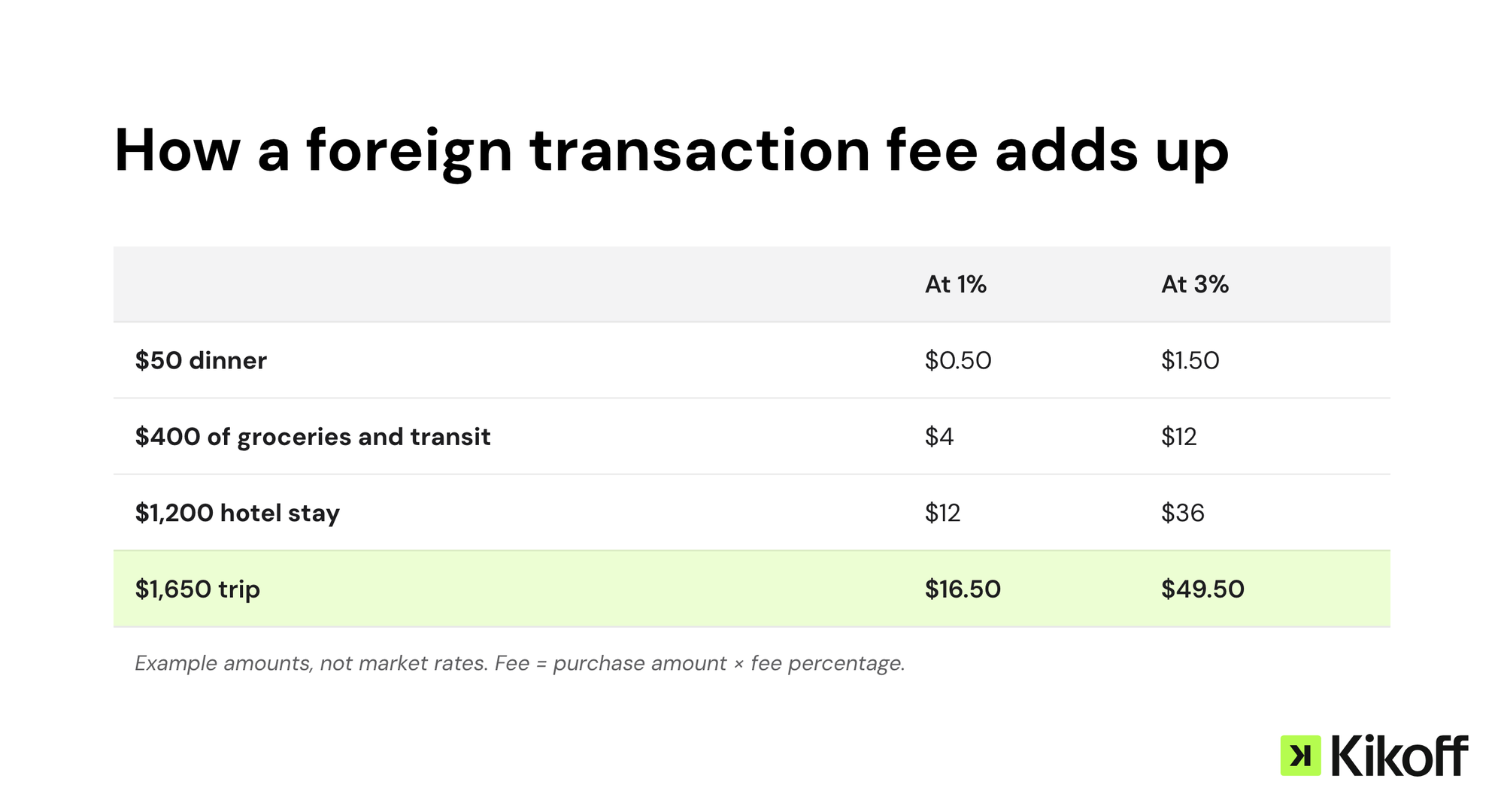
A foreign transaction fee is an extra charge your card company or bank may add when you buy something in a foreign currency, outside the U.S., or from a seller based in another country. It’s usually a percentage of the purchase, not a flat fee, so it grows with every purchase on a trip. It can also show up when you never leave home, such as an online order from a store overseas. One line in your card’s terms tells you whether you’ll pay it and how much.
How a foreign transaction fee works
When you pay in another currency, the purchase gets converted to dollars. The card network, such as Visa or Mastercard, may charge for that, and your card company may pass that charge on, add its own, or both. Navy Federal Credit Union, for example, says Visa assesses a 1% International Service Assessment on its debit card purchases overseas. For credit cards, federal rules count a network’s fee as part of the foreign transaction fee only when it’s passed on to you.
On a credit card, the fee can apply to:
- Purchases in a foreign currency, like paying in euros at a café in Spain.
- Purchases outside the U.S., even if the bill is in dollars.
- Purchases from a foreign seller, including online orders you make at home.
Cash from an ATM abroad is a cash advance on a credit card. It usually comes with its own fee and interest, which card companies list separately.
Read more >> What Are the Fees and Costs of Using a Credit Card?
What a foreign transaction fee can cost
Fees vary by card and can change. Here’s what six major card companies listed for their own cards when we checked in November 2026.
How debit card foreign transaction fees work
Debit cards can charge the fee too, with three differences:
- The money leaves right away. The purchase and the fee come straight out of checking. On a tight trip budget, check your balance after a few purchases so a fee doesn’t lead to an overdraft.
- ATM withdrawals can stack fees. Navy Federal, for example, says an ATM outside its network abroad can bring an access fee from the ATM owner plus a $1 Navy Federal fee, and the 1% Visa assessment may also apply. Fewer, larger withdrawals mean fewer flat fees.
- The fee is in a different document. Your bank must disclose its fees before you open the account. Search its fee schedule for “international” or “foreign.” For a prepaid card, check your cardholder agreement before you travel.
Where to find the fee before you go
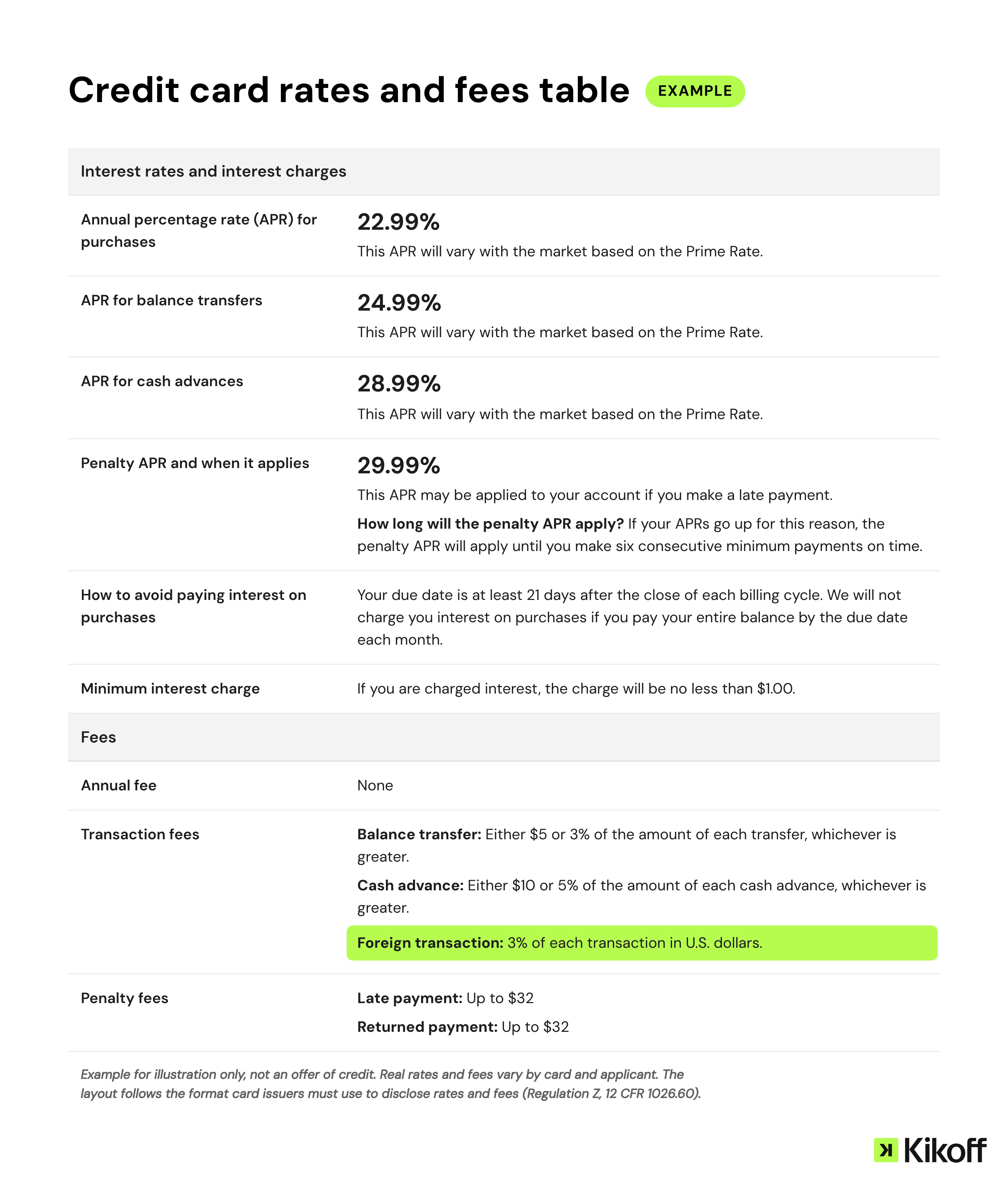
For a credit card, look at the rates and fees table you get when you apply. Federal rules require card companies to list transaction charges for purchases there, in bold, including a fee for purchases in a foreign currency or outside the U.S.
No “Foreign transaction” row? A card with no fee can leave it out or list it as “none.” You can also look up your card in the CFPB’s credit card agreement database.
The fee can change after you open the card. In general, your card company has to send written notice at least 45 days before a change takes effect.
How to avoid or lower the fee
- Pay in the local currency. A store or ATM abroad may offer to charge you in dollars. That’s called dynamic currency conversion, and Visa says that price includes exchange rate and additional fees. Your card company doesn’t have to disclose a fee the store adds when it does the conversion.
- Bring a card with no foreign transaction fee, if you have one. Check its table first.
- Ask about returns before you buy. Ask your card company whether it refunds the foreign transaction fee on a return, and which exchange rate it uses for the refund.
Read more >> Are Travel Credit Cards Worth It? How to Run the Math
You can say no. Visa says merchants and ATMs should let you accept or decline currency conversion and must not choose for you. Declining won’t stop your purchase or withdrawal. If you feel pushed, choose the local currency and tell your card company.
Bottom line
A foreign transaction fee is usually a percentage added to purchases in another currency, outside the U.S., or from a foreign seller. Your card’s rates table or your bank’s fee schedule shows what you’ll pay, and a card that doesn’t charge one is the simplest way around it. Cards with no foreign transaction fee exist at every credit level, but your credit history shapes which ones you qualify for and the rate you’d pay on the balance. Kikoff’s Credit Account reports your on-time payments to Equifax, Experian, and TransUnion, with no credit check to sign up. Plans start at $5 a month.
Frequently Asked Questions
Article Sources
Disclaimer: The information provided in this blog post is meant for informational purposes only and does not constitute financial advice.