







A CVV is the three- or four-digit security code printed on your credit or debit card. When you pay online or over the phone, the store asks for it to help confirm that the card is actually in your hands, not just a copied card number.
If typing it into a checkout page makes you a little uneasy, that’s a healthy instinct. Federal law backs you up too. If someone uses only your card number and code, you aren’t responsible for charges you didn’t make, as long as you report them in time. Debit cards have tighter deadlines.
What CVV stands for
CVV stands for card verification value. Card companies don’t all use the same name for it. You might see CVV2, CVC (card verification code), CSC (card security code), or CID (card identification number). On a checkout form, they all mean the same thing.
Your CVV isn’t your PIN. The PIN is the number you type at an ATM or a store keypad, and it isn’t printed on your card. An online checkout has no reason to ask for your PIN, so treat a request for it as a warning sign.
Where to find your CVV
American Express cards usually show the CVV as a four-digit number on the front, while most other cards use three digits on the back. If your card has no printed numbers, or you use a virtual card, ask your card company where you can find the security code in the app.
When a replacement card arrives, check whether the code changed. Then update any subscriptions or autopay that use the card, so a bill doesn’t bounce.
Read more >> How Many Numbers Are on a Credit Card?
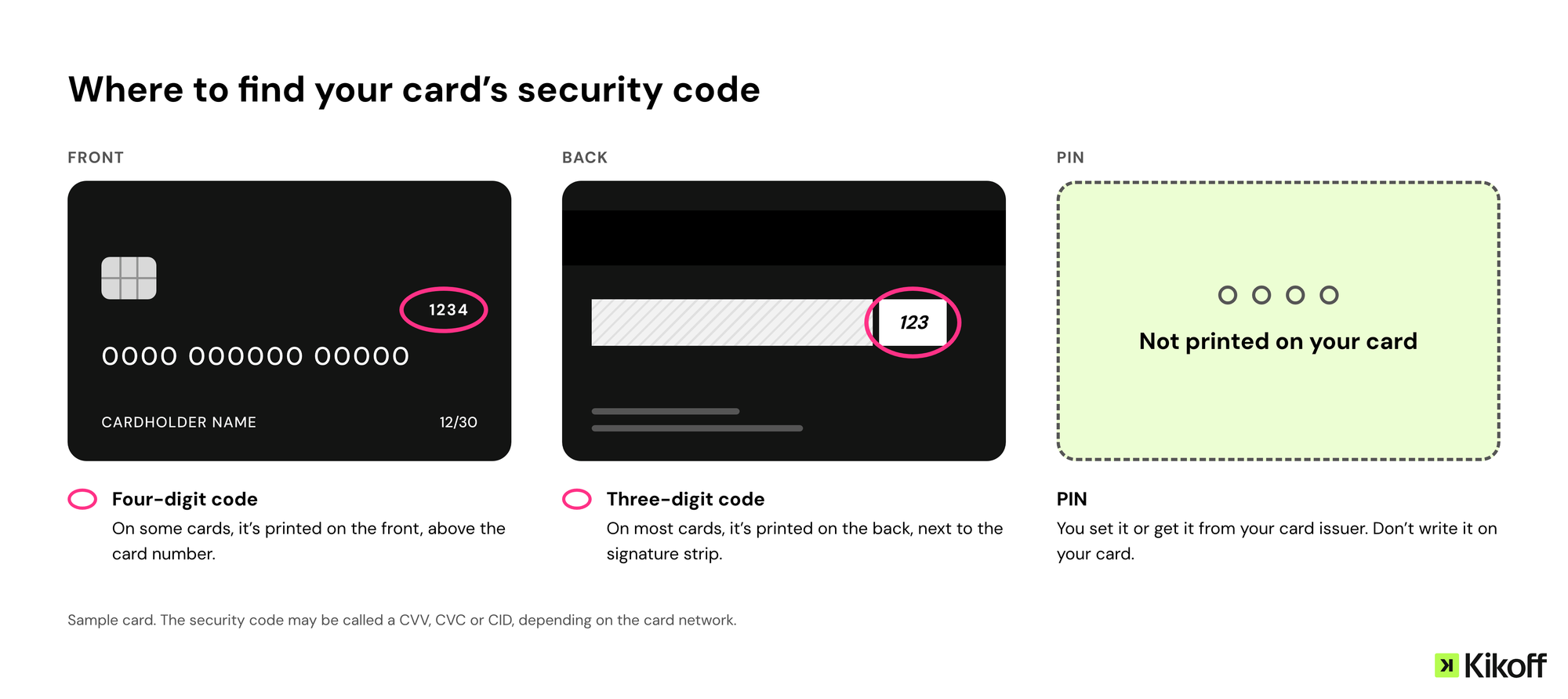
What the CVV actually does
The CVV matters most when there’s no card to tap, insert or swipe. A store that only sees typed-in numbers has no other way to check that you’re holding the card.
Its other safeguard is that stores aren’t allowed to keep it. Under the PCI Security Standards Council’s rules for the card industry, a store has to delete the code once the purchase it was collected for goes through. That’s an industry rule enforced through card network contracts, not a law. So if a store’s database gets hacked, the stolen card numbers shouldn’t come with CVVs attached.
When it’s safe to share your CVV
The short answer: It comes down to who started the conversation.
Read more >> 6 Common Credit Card Scams and How to Avoid Them
Red flags before you share your card code. Someone called, texted, or emailed you first. They say there’s a problem with your account and rush you. They ask for your CVV, PIN, or a one-time passcode.
Hang up or close the message. Then call the number on the back of your card or on your statement.
What to do if someone gets your CVV
If you shared your code with someone you now don’t trust, or you see charges you don’t recognize, take these steps.
- Call your card company. Use the number on the back of your card. Ask them to close the card and send a new one with a new number.
- Follow up in writing. Send a letter to your credit card’s billing-disputes address or debit card’s error-resolution address on your statement. Keep a copy and your call notes.
- Go through recent transactions. Report every charge you didn’t make. Write down the date and the name of the person you spoke with.
- Update saved cards and autopay. Add the new number wherever the old one was saved.
- Freeze your credit. A credit freeze stops lenders from pulling your credit report, so most new accounts can’t be opened in your name. It’s free, but you have to place it separately with each bureau. You can lift it for a few days whenever you apply for credit yourself.
Read more >> How to Protect Yourself From Credit Card Fraud
Check your credit reports for accounts you didn’t open. You can get them free every week at AnnualCreditReport.com, and checking your own report doesn’t hurt your credit. If you find an account you didn’t open, report it at IdentityTheft.gov.
Credit vs. debit: what you could owe
Credit cards and debit cards fall under different federal rules. The FTC lays out both, and debit has tighter deadlines.
With a debit card, the money comes straight out of your checking account, so you may be short on cash while the bank looks into it. Your bank generally has 10 business days to investigate. If it needs longer, it has to put the money back provisionally while it finishes. That’s one reason to use a credit card for online purchases when you have one.
If you only have a debit card, turn on transaction alerts in your bank’s app so you see every charge as it happens.
Read more >> Are Credit Cards Safer Than Debit Cards?
Bottom line
A CVV has one job: showing you have the card when the store can’t see it. Type it only into purchases you start, and if anything looks off, call the number on the back of your card.
That call protects the card, but your card company sees only its own account. A credit card someone opens in your name would show up on your credit report, not your statement. Kikoff Credit Monitoring puts your Equifax credit report in the app every week. Plans start at $5 a month.
Frequently Asked Questions
Article Sources
Disclaimer: The information provided in this blog post is meant for informational purposes only and does not constitute financial advice.