





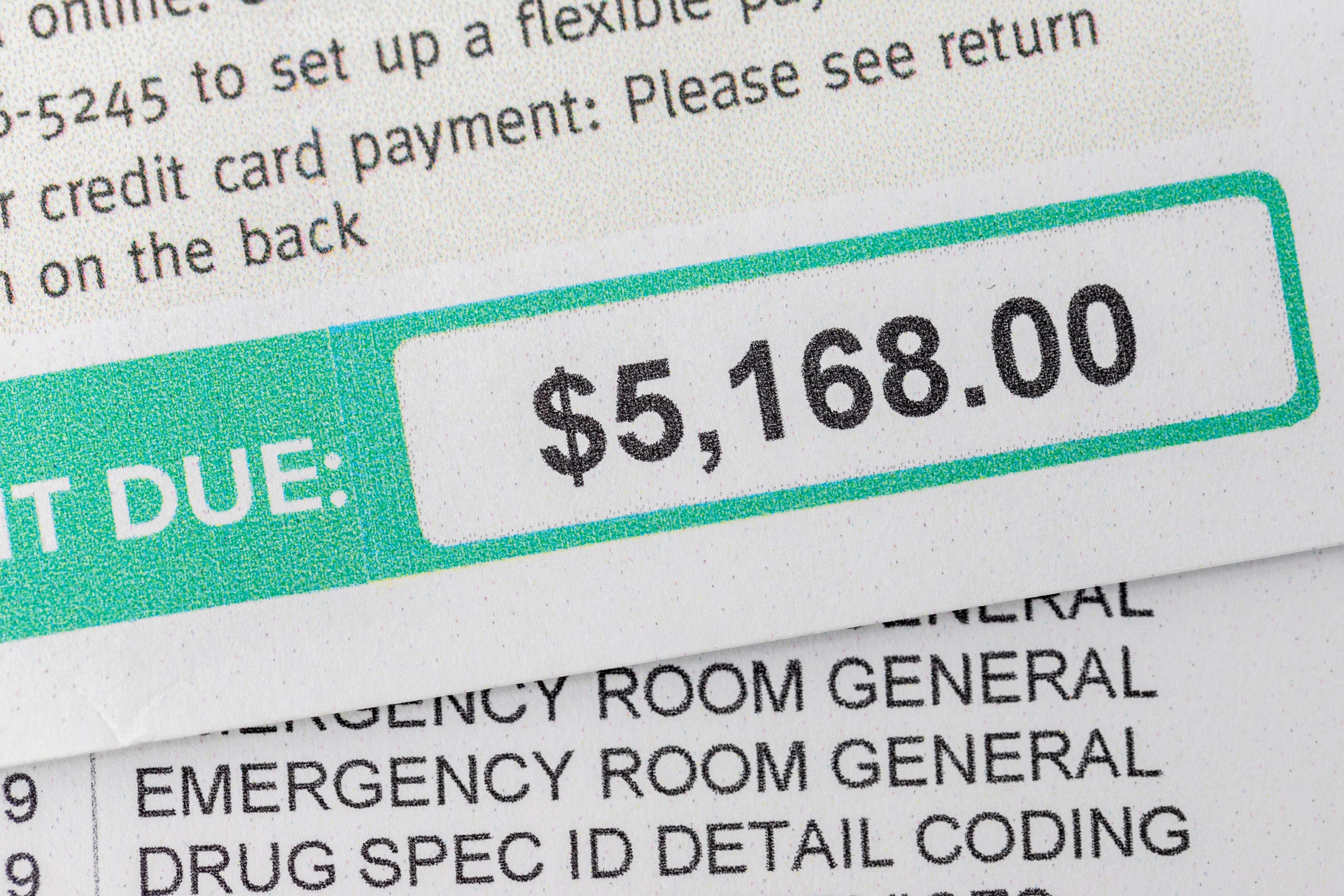
Unpaid medical bills follow a predictable series of steps, and each one takes longer than you may think. This works in your favor, giving you time to reduce or eliminate the impact to your credit.
What happens if you don't pay your medical bills?
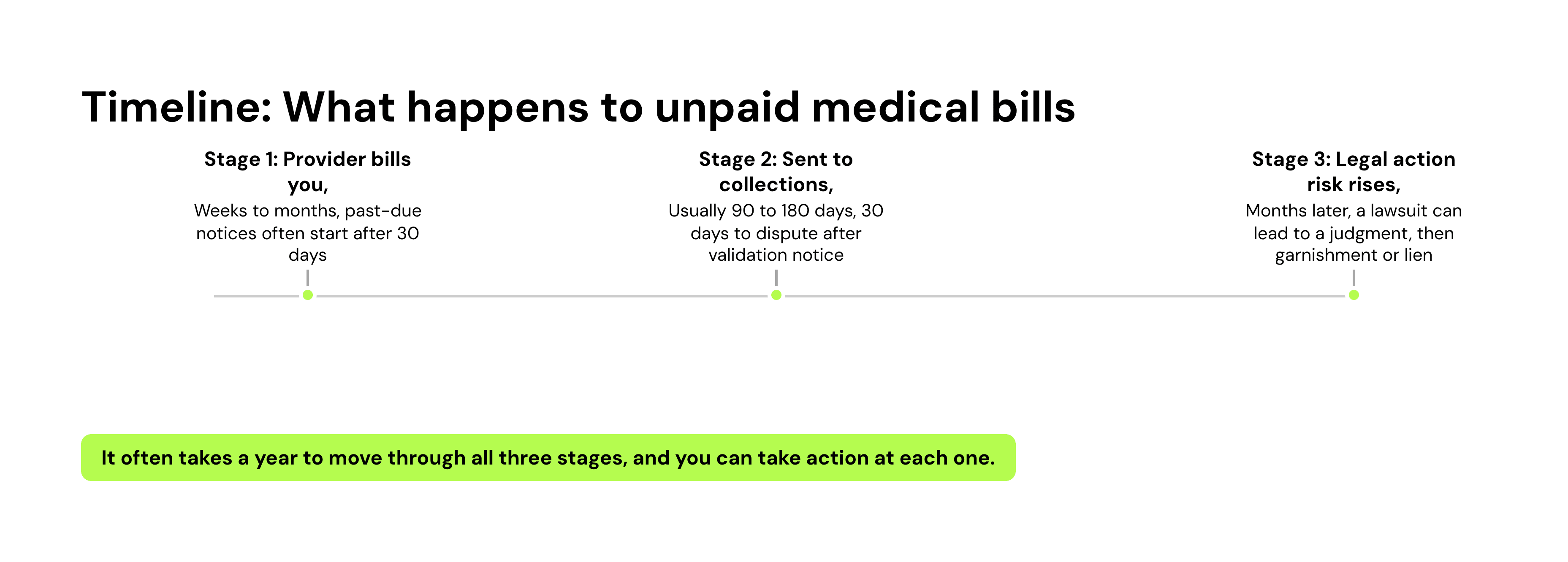
Unpaid medical bills go through three stages. It usually takes at least a year to reach the last one, and you can take action at each step.
1. The provider bills you
For the first several weeks or months after a bill goes unpaid, not much happens. The provider sends you a bill, then past-due notices after 30 days. Those notices can continue for 90 days or more, sometimes with follow-up calls.
At this stage, you still have time to call the hospital or provider to:
- Request a discount on the balance
- Set up an interest-free payment plan
- Ask to correct any billing errors
Your odds are better than you might expect: 76% of people who called about a bill they couldn’t afford got some form of financial relief, according to JAMA, and 62% of those who tried to negotiate got a lower price.
These options typically aren't available once the bill moves to the next stage.
2. The bill goes to collections
Timing varies, but most providers send an unpaid balance to a collection agency after 90 to 180 days. From there you're dealing with a debt collector, who must send you a “validation notice” confirming who the debt is owed to, how much it’s for, and how to dispute it.
You have 30 days from receipt of that notice to:
- Ask for more information about the bill
- Dispute it if you think the amount is wrong
- Dispute it as not yours if you don't recognize it
If you do nothing at this stage:
- Interest and fees can pile up. Medical providers often don't charge interest, but a collector can add interest or fees where your original agreement or state law allows it.
- You may face lawsuits or wage garnishment. This is the outcome with the most at stake, and it can happen while the bill’s still in collections.
A lawsuit can result in wage garnishment or a lien on your property, but that takes a court judgment first. Never ignore a summons, because the court can enter a default judgment against you, which means you may lose the ability to dispute the debt at all.
Collection accounts are often negotiable, but that means getting on the phone with a debt collector. If that’s a conversation you’d rather avoid, Kikoff's debt negotiation tool contacts the collector for you and comes back with an offer, usually within five business days. You review it and decide. Nothing is settled without your approval.
3. It may reach your credit report (but not right away)
Even if a debt is in collections, it can't appear on your credit report until it's at least 12 months past the date of that service. And even then, not all of them get reported.
Under a voluntary policy the three major credit bureaus adopted in 2022:
- Nothing is reported until the debt is at least a year past due. This gives you 12 months to negotiate or set up a payment plan before your credit takes a hit.
- If you pay a medical debt collection, it comes off your credit report entirely. Once you settle a medical debt with a debt collector, it’s removed from your credit file.
- Medical debt under $500 is no longer reported. On April 11, 2023, Experian, Equifax and TransUnion removed medical debt under $500 from existing credit files, and they don’t report it going forward. That means a $250 urgent care debt should never reach your credit report, but a $2,500 hospital balance still unpaid after a year could.
Two things that may protect your credit further:
• A growing number of states limit medical debt reporting altogether, including California, Colorado, and New York, which means it may never reach your credit report depending on where you live.
• Nonprofit hospitals must check whether you qualify for financial assistance before reporting your debt. If you do, they’re not allowed to report it.
What to do if you can't afford to pay medical bills
If you can't pay, contact your provider as soon as possible. Billing offices deal with this situation all the time, and bills can often be negotiated.
Negotiate directly with the provider
Start by asking the medical billing office for an itemized bill. The CFPB finds people are frequently pursued for bills they had already paid or didn't recognize.
If the amount looks right, here's what to try:
- Ask about a cash price. Many providers offer a lower rate for people paying out of pocket without insurance.
- Negotiate your balance. If you have insurance, ask for a discount on whatever's left after your insurer pays, or offer a one-time payment for less than that amount.
If none of that brings the bill low enough, ask about a payment plan. And know that you can often ask for a discount first, then set up payments on the reduced amount.
Set up a payment plan
Many billing offices offer zero- or low-interest payment plans. Ask them how low the monthly payment can go and get the terms in writing. If they’re offering 0% interest, stretching out the payments keeps more cash in your pocket each month.
Ask about financial assistance or charity care
If you were treated at a nonprofit hospital, it’s required by law to have a written financial assistance policy. Each hospital sets its own income limits for who qualifies, but you might be eligible for free or significantly reduced care. Just be sure to apply within 240 days of your first bill.
Several states go further and require charity care in all hospitals (not just nonprofits), so it's worth checking the rules in your state. If your bill is already in collections, you can ask the collector to pause while your application is reviewed.
Read more >> Does Medical Debt Affect Your Credit Score?
Check your state's rules before you accept a bill. Nonprofit hospitals must offer financial assistance. Several states extend that requirement to all hospitals, including for-profit ones — your state health department can tell you which rules apply.
Can you remove medical debt from your credit report?
Sometimes. If the account is inaccurate, isn't yours, or should have been covered by insurance or financial assistance, you can dispute it.
How to dispute errors on your credit report
Pull your credit reports for free at AnnualCreditReport.com. Review each one, as a medical debt may appear on one and not the others. Then look for anything that seems off:
- Accounts you don't recognize. It may be a billing error, a duplicate charge, or someone else's debt mixed in with yours.
- Numbers that don't add up. If insurance was supposed to cover part of the bill, the balance on your report should reflect that.
- Debt reported too soon. Nothing should appear until it's at least a year past due.
- Collections you paid off. It may still be showing up, even though paying it off should have triggered a removal.
To save time, Kikoff's dispute tools can help you find errors and generate dispute letters with just a few taps.
Read more >> How to Remove Negative Marks on Your Credit Report
Bottom line
An unpaid medical bill rarely goes away on its own, but time is on your side. Use the 12 months before it to ask for an itemized bill, dispute anything that looks wrong, negotiate the balance, or set up a payment plan. If you're facing a lawsuit or garnishment, consider talking with a financial advisor, licensed attorney, or a nonprofit credit counselor.
A medical debt on your report is one small chapter, not the whole story. Kikoff's Credit Account reports your on-time payments to all three credit bureaus, helping you build the payment history that carries the most weight in your score. No credit check to sign up, with plans starting at $5 a month.
Frequently Asked Questions
Article Sources
Disclaimer: The information provided in this blog post is meant for informational purposes only and does not constitute financial advice.