.jpg)



Each time you take out a credit card, loan, or other credit product, you're making a decision to take on debt. The same can't be said for medical debt. If you get sick or injured, you could be stuck with tens or hundreds of thousands in medical bills that you can't pay.
But does medical debt affect credit scores? Unfortunately, it can.
Does medical debt affect credit scores?
Medical debt can affect your credit score, but the rules have changed recently. Before 2022, medical debt that had gone to collections could impact your credit score just like any other past-due debt. But from 2022 to 2025, several changes took place:
- 2022: Experian, Equifax, and TransUnion stopped including paid medical collections on credit reports
- 2023: All three credit bureaus stopped including medical debt under $500 on credit reports
- January 2025: The Consumer Financial Protection Bureau (CFPB) issued a rule removing all medical debt from credit reports
- February 2025: The federal government puts that rule on hold, so it doesn't go into effect
The CFPB rule would have removed about $49 billion in medical debt from credit reports. However, groups involved in the financial industry argued that the rule would violate the Fair Credit Reporting Act and make it harder for lenders to assess financial risk.
However, if you live in certain states, you may not have to worry about medical debt impacting your credit score.
According to Experian, there are 15 states that either prohibit credit reporting agencies from including medical debt on credit reports, bar healthcare providers and collection agencies from reporting medical bills to credit bureaus, or prohibit lenders from considering medical debt information:
- California
- Colorado
- Connecticut
- Delaware
- Illinois
- Maine
- Maryland
- Minnesota
- Oregon
- New Jersey
- New York
- Rhode Island
- Vermont
- Virginia
- Washington
If you live in one of these states, medical debt over $500 might not impact your credit score. However, you should check your state's laws to make sure.
When medical debt shows up on your credit report
If you're concerned about medical debt credit report damage, it may be helpful to understand how medical debt shows up on your credit report. Fortunately, it's not immediate. Here's a quick look at the timeline.
The grace period before a medical bill goes to collections
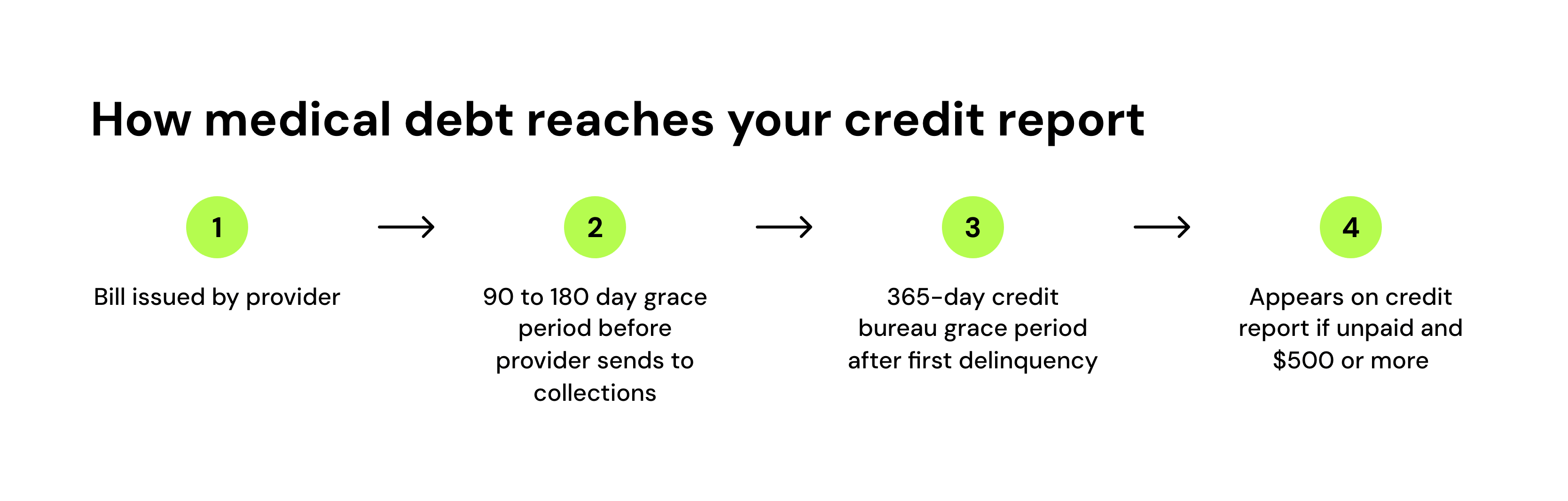
You should get several statements in the mail before your medical bill goes to collections. If your medical bills are from a non-profit hospital, they generally cannot be sent to collections for at least 120 days.
For-profit hospitals can sometimes send bills to collections earlier, but many states have laws requiring them to wait at least 120-180 days. Non-hospital providers will usually wait 90-120 days before sending a bill to collections.
However, even if a provider sends your bill to collections, you still have time to pay it before it starts impacting your credit.
All three credit bureaus, Experian, Equifax, and TransUnion, give you a 365-day grace period after your bill first becomes delinquent.[4] That means even if a medical bill goes to collections, it won't appear on your credit report for a year after the first delinquency.
What happens when medical debt is sent to a collections agency?
Once your debt is sent to a collections agency, you might start getting letters and phone calls trying to collect the debt.[2] If you don't pay it or set up a payment plan with the debt collector, you might experience other consequences:
- If the debt is $500 or more and at least a year old, it may appear on your credit report
- The debt collector may file a lawsuit against you if you don't pay
- If they win the lawsuit, they may garnish your wages or take other aggressive collection actions
Notably, if you pay a medical collection account, it must be removed from your credit report. Other types of collection accounts stay on your report for seven years.[1]
How to handle medical debt before it damages your credit
If you're worried about paying medical debt, credit report damage might be a major concern. If you're proactive, you may be able to avoid having your debt go to collections (and, therefore, avoid damage to your credit score). Here are a few tips for doing so:
Negotiate directly with the provider
If you can't pay your bill, reach out to the provider as soon as possible. Some have low-income assistance programs that can reduce or eliminate the debt.
Set up a payment plan
Many providers will allow you to make payments over time. The sooner you get in touch, the more likely they are to work with you.
Check your bill for errors
Billing and coding errors are common.[3] If the bill seems suspiciously high, it's worth requesting an itemized version and verifying that you're only being billed for services you received. You can also use a dispute letter if you find errors.
Looking to build or rebuild credit?
If your credit score has been damaged by medical debt (or even if it's just not where you want it to be), you might be unsure of how to start rebuilding. Kikoff can help! We're a credit-builder app aiming to empower people to take their finances into their own hands.
Our credit lines, secured credit cards, and other tools can help you build credit while learning more about personal finance. It's free to sign up, and we don't check your credit. Get started with us today!
Frequently Asked Questions
About the editor

Article Sources
Disclaimer: The information provided in this blog post is meant for informational purposes only and does not constitute financial advice.