


.jpg)




If you're thinking about freezing your credit, you might worry it'll undo the work you've put into your score. It won't. A freeze controls who can pull your report to open a new account, and it has no effect on the score itself.
When does a credit freeze hurt your credit score?
No. A security freeze doesn’t affect your score. That holds whether a freeze is active for one week or one year. Your score keeps moving up or down based on the same things as always, like your payments and balances.
What a credit freeze actually does
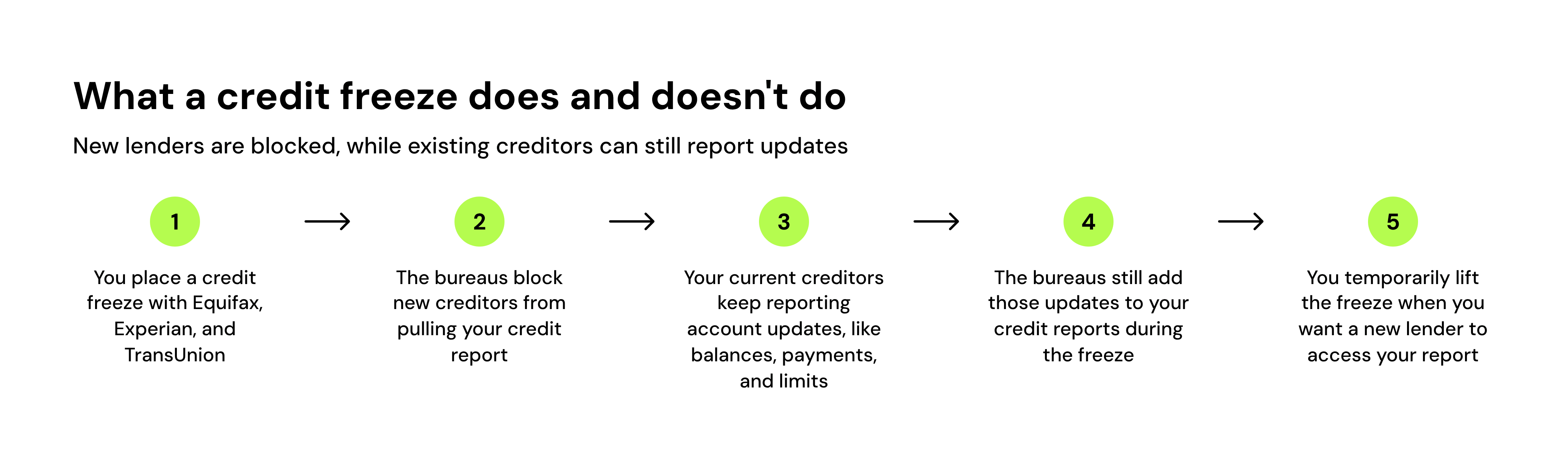
A credit freeze blocks lenders and other companies from pulling your credit report to approve a new account. Most credit applications start with that pull, so a freeze stops most new accounts and credit cards from being opened in your name, including by someone using your stolen information.
You don’t need a data breach to justify one. A freeze makes sense any time you aren’t planning to apply for credit soon. If your Social Security number is stolen or exposed, start with IdentityTheft.gov, the FTC’s site for reporting identity theft and getting a recovery plan.
To freeze your credit, contact each bureau separately: Equifax, Experian, and TransUnion. You can do it online, by phone, or by mail, and it’s free. A freeze requested online or by phone has to be in place within one business day.
Read more >> How to Freeze Your Credit
What a credit freeze doesn’t affect
A freeze blocks new access to your report. Everything you already have keeps working:
- Your credit score. It isn’t paused. It keeps moving up or down with your activity.
- Your existing accounts. Cards and loans you already have keep working, and those creditors can still check your report.
- Your own access. You can still check your reports for free every week at AnnualCreditReport.com.
- Prescreened offers. Companies can still use your report to send preapproval credit offers. Opting out is a separate step at OptOutPrescreen.com
Federal law also lets insurers, landlords, and employer screening applicants see your report while it’s frozen. A freeze won’t stop you from renting an apartment, buying insurance, or applying for a job
When to lift a credit freeze
Before you apply for a new credit card, loan, or other new credit, ask the lender which bureau or bureaus it pulls from. Then lift the freeze at those bureaus only. A request made online or by phone takes effect within one hour. By mail, it takes three business days.
You can lift a freeze for a set window, like the week you’re car shopping, and it goes back on by itself when the window ends. You can also lift it until you choose to put it back. Lifting the freeze doesn't affect your score. The application itself might, because the lender’s pull counts as a hard inquiry.
Read more >> What Are Hard Inquiries?
Credit freeze vs. credit lock
A credit freeze is your right under federal law. All three bureaus have to offer one free, and the law sets how fast they have to act.
A credit lock is similar, but it’s a product, not a legal right. Bureaus and monitoring services offer locks you can turn on and off in an app. The company’s terms of service set the rules, not federal law, and many locks come bundled with paid memberships.
Bottom line
A credit freeze won't hurt your score, and it's one of the few free protections that blocks new-account fraud outright. Just lift it before you apply for new credit.
What a freeze can't do is add anything to your credit. It keeps other people from opening accounts in your name, but your score only grows when something reports on-time payments. Kikoff's Credit Account reports your payments to Equifax, Experian, and TransUnion, and signing up doesn't require a credit check, so there's no freeze to lift. Plans start at $5 a month.
Frequently Asked Questions
Article Sources
Disclaimer: The information provided in this blog post is meant for informational purposes only and does not constitute financial advice.