




A tradeline is any account that appears on your credit report, whether it’s a credit card, a car loan, or a debt in collections. Each tradeline is an ongoing record of how you’ve managed that account, and together, your tradelines are what your credit scores are based on. If your report has only one or two tradelines, or none yet, each account you add and pay on time carries more weight.
What is a tradeline?
Tradeline is the term credit reporting agencies use to describe the credit accounts listed on your credit reports. Lenders send account information to the credit bureaus, and each account appears on your report as its own tradeline. For example, two credit cards show up as two separate tradelines.
Equifax, Experian, and TransUnion each keep their own files about you, and not every lender reports to all three. That’s why one bureau’s report may list a tradeline that another bureau’s report doesn’t. If a lender checks a report that’s missing one of your accounts, your score from that bureau may be different too, so it’s worth checking all three.
Types of tradelines
Revolving tradelines
Revolving tradelines include credit cards and lines of credit, which don’t have fixed repayment terms. You can borrow up to your credit limit, pay the balance down, and borrow again.
Your balance can change from month to month, and the amount of your available credit you’re using at a given time is an important factor in your credit score. Paying down the balance before your statement closes keeps the number that gets reported low.
Two dates, two different jobs
Your statement's closing date is when the balance gets reported. Pay before it and your utilization looks lower. Your due date comes about three weeks later, and paying before it is what protects your payment history.
They’re not interchangeable. Paying early doesn’t excuse the due date, and paying on time doesn’t undo a balance that was already reported. Do both.
Installment tradelines
Installment tradelines are loans with fixed disbursements and repayment terms. Common examples include auto loans, student loans, mortgages, and personal loans. You borrow a set amount and repay it in scheduled payments. Unlike credit cards, installment loans are typically closed once they’re paid in full.
But paying one off doesn’t erase it. The tradeline stays on your report with its full payment history until it ages off.
Open tradelines
Open tradelines are accounts that require you to pay the full balance each billing cycle, such as charge cards and some business accounts. These are less common on personal credit reports.
“Open” can also describe an account’s status. An open account is still active, while a closed account has been paid off or shut down. When you read your report, check the account type to see what kind of tradeline it is, and check the account status to see whether it’s still open.
Read more >> What to Look For in Your Credit Report
What information does a tradeline include?
If a past-due account is sold or sent to a collection agency, it can show up as a separate tradeline.
How long a tradeline stays on your report depends on its status. Experian says open tradelines stay indefinitely, and closed accounts in good standing stay for 10 years. For negative information, such as late payments, a credit reporting company generally can report most negative information for seven years, according to the CFPB.
Read more >> How to Remove Closed Accounts From Your Credit Report
How tradelines affect your credit score
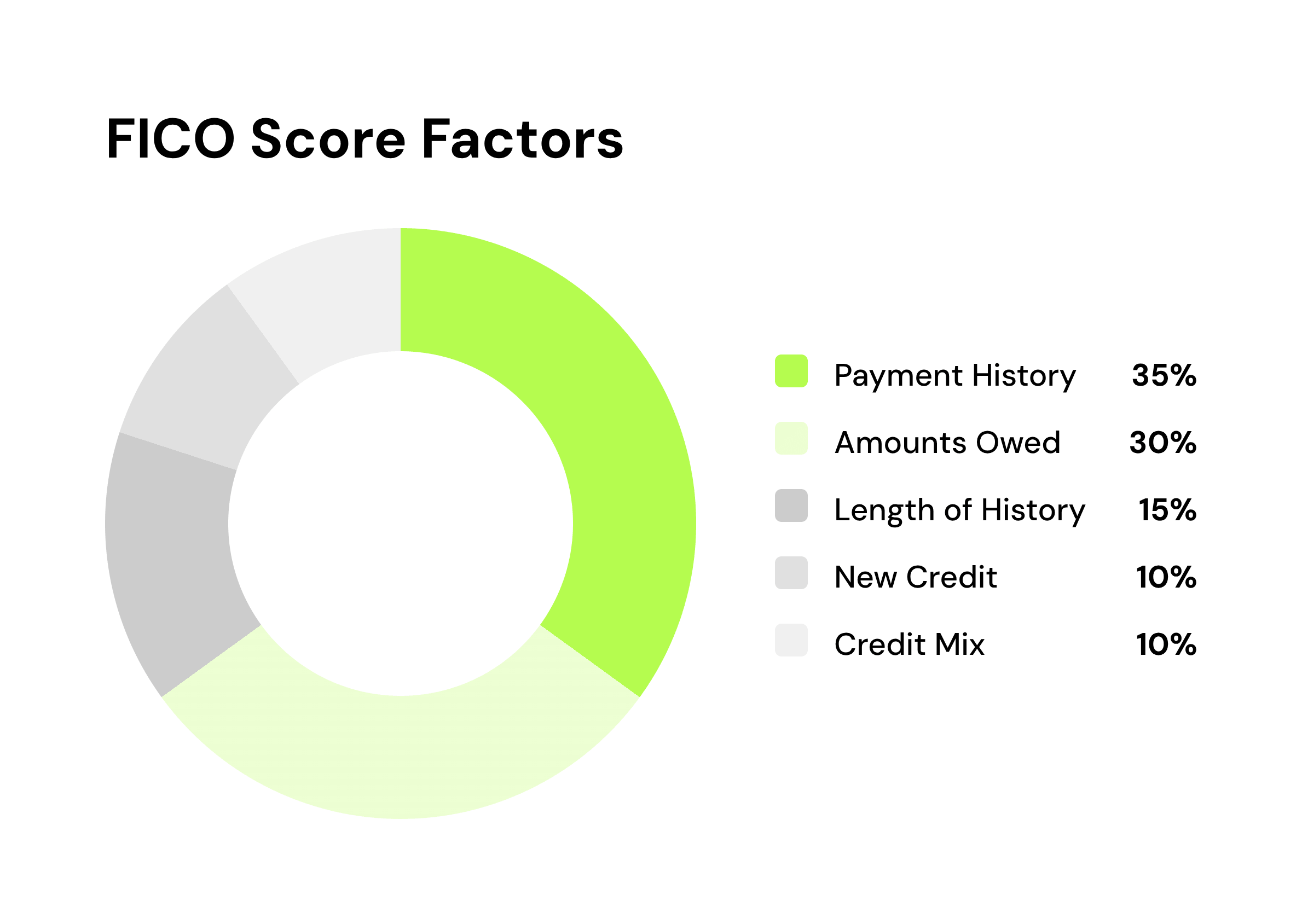
Credit scores are calculated mostly from the information in your tradelines. FICO groups that information into five categories, and payment history accounts for 35% of your FICO Score, the largest share. Here’s how your tradelines affect four of those categories.
Payment history
Every month you pay an account on time, that tradeline adds to your positive payment history. A payment reported as late does the opposite and can stay on your report for years. One late payment doesn’t undo everything else on your report, though. The on-time months that follow still count, and their effect adds up over time.
If you have only a few tradelines, each payment has a larger effect because there’s less other information on your report. That can work against you if you miss a payment, but it also means every on-time month counts more. Set up autopay for at least the minimum payment as a safeguard.
Credit utilization
Credit utilization is how much of your available revolving credit you’re using. For example, a $300 balance on a $1,000 limit is 30% utilization. Utilization is one part of the amounts owed category, along with your total balances. Only revolving tradelines affect utilization. Keeping balances low compared with your limits generally helps your credit.
Length of credit history
Scoring models use open and closed dates to calculate the age of each account, as well as the average age of all of your accounts. Your oldest tradelines count toward this factor even after they’re closed.
Closing a paid-off card in good standing doesn’t remove its history from your report right away. However, closing it does remove that card’s limit from your utilization calculation. If the card has no annual fee, keeping it open and using it occasionally is a simple choice.
Credit mix
Credit mix looks at the types of tradelines you have, such as revolving and installment accounts. It’s a smaller factor than payment history or amounts owed.
It usually isn’t worth taking out a loan you don’t need just to change your credit mix. Interest can add up quickly, and a new loan adds a hard inquiry on your report. Your credit mix tends to change naturally as you finance what you actually need.
Read more >> What Is a Good Credit Score in 2026?
How to add tradelines to your credit report
- Open an account in your own name. A secured card, credit-builder loan, or credit-builder account can help you build credit, even if you have little or no credit history yet. Pay on time every month, and the tradeline builds history in your name.
- Become an authorized user. You can ask someone you trust to add you to their credit card. Their account history may then appear on your report. Ask how they usually pay and how much of their limit they use, since their habits become part of your record.
- Get credit for payments you already make. Rent and bill reporting services can turn regular payments into tradelines. Most landlords don’t send payment history to the bureaus, so years of on-time payments won’t appear on your credit report. A reporting service like Kikoff fixes that for future payments and backfills past payments for a fee.
- Skip paid tradelines. Some companies charge a fee to add you as an authorized user on a stranger’s account. The FTC calls it piggybacking, where you’re listed as an “authorized user” without actual access to the account, and it’s taking action against companies that sell it.
Don’t recognize a tradeline? It could be a reporting error or a sign of ID theft. Dispute it with the bureau. If you think someone opened the account in your name, report it at IdentityTheft.gov. The FTC will help you create a recovery plan for free.
How to check the tradelines on your credit report
You can get your credit reports from all three bureaus for free every week at AnnualCreditReport.com. Other sites may charge you or ask you to sign up for a subscription.
Checking your own report doesn’t affect your credit score. When you review each tradeline, check whether:
- You recognize the account
- The balance and credit limit look correct
- Any payments are marked late when you paid on time
- Closed accounts are listed as closed
If something is wrong, you can dispute it for free with the credit bureau and the lender that reported it. You don’t need to pay a company to file a dispute for you.
Disputes correct only inaccurate information. You can’t remove negative information, such as late payments, from a credit report if it’s accurate.
Kikoff’s free AI Credit Disputes tool can help you spot errors and create a personalized dispute letter in a few taps.
Read more >> Common Credit Report Errors to Watch For
Bottom line
Tradelines are the accounts your credit report is built from, and each on-time payment adds to your history. You can add tradelines by opening an account in your own name or becoming an authorized user. You can also check every tradeline for free each week.
An authorized user tradeline depends on someone else, though. If the account owner pays late or removes you, that affects your credit history too. An account in your own name builds history that belongs to you. Kikoff’s Credit Account reports your on-time payments to Equifax, Experian, and TransUnion, with no credit check to sign up. Plans start at $5 a month.
Frequently Asked Questions
Article Sources
Disclaimer: The information provided in this blog post is meant for informational purposes only and does not constitute financial advice.